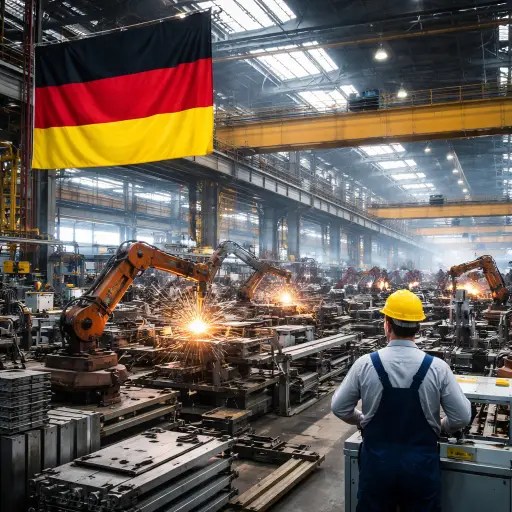
A steeper-than-expected drop in factory production at the end of the year has reignited concerns about the resilience of Europe’s largest economy, even as trade figures offer a partial cushion.
Germany’s industrial engine stumbled sharply at the end of the year, dealing a blow to hopes that Europe’s largest economy was finally finding stable footing. Industrial production fell more than anticipated in the final month, underlining the fragility of a recovery that has been repeatedly delayed by weak global demand, high costs, and lingering structural challenges.
The decline came as a surprise to many analysts who had expected a more modest pullback following a volatile year for manufacturers. Instead, the data pointed to broad-based weakness across key sectors, including energy-intensive industries and capital goods, long considered the backbone of German industrial strength. The result has fueled renewed debate about whether existing policy measures are doing enough to revive momentum in European industry.
At first glance, the broader trade picture appears less bleak. Germany’s trade surplus widened over the same period, reflecting resilient exports and subdued imports. For some policymakers, this suggests that German firms remain competitive abroad, benefiting from global demand pockets and easing supply-chain pressures. But economists caution that a stronger trade balance can also mask underlying weakness at home, particularly when driven by falling imports linked to softer domestic demand.
“The concern is not just the monthly drop itself, but what it says about the underlying trend,” said one Frankfurt-based economist. “Production has struggled to gain traction, and that raises questions about the sustainability of any rebound.”
Industry representatives point to a familiar list of headwinds. High energy prices continue to weigh on output, despite recent stabilization. Borrowing costs, while no longer rising, remain elevated compared with pre-crisis levels, discouraging investment. At the same time, uncertainty over global trade conditions and geopolitical tensions has made companies cautious about expanding capacity.
The downturn also highlights Germany’s exposure to shifts in global manufacturing cycles. As a major exporter of machinery, vehicles, and industrial equipment, the country is particularly sensitive to slowdowns in construction and investment elsewhere. Weak demand from key trading partners has translated into fewer new orders, leaving factories running below capacity.
Within Europe, the figures have reignited a broader discussion about industrial policy. Governments across the bloc have rolled out support measures ranging from energy subsidies to incentives for green investment. Yet critics argue that these efforts remain fragmented and insufficiently coordinated, limiting their overall impact.
“There is a growing sense that Europe is falling behind in the race to support strategic industries,” said a policy analyst in Brussels. “The German data adds urgency to calls for a more assertive and unified approach.”
For Berlin, the latest numbers arrive at an awkward moment. The government has emphasized fiscal discipline while trying to balance demands for targeted support to industry. Some business leaders argue that greater flexibility is needed, particularly to accelerate investment in infrastructure, digitalization, and the energy transition. Others warn that excessive intervention could distort markets and strain public finances.
The debate is not purely domestic. Germany’s industrial health has outsized implications for the rest of the euro area, given its role as a central supplier and export destination for neighboring economies. Prolonged weakness risks spilling over through supply chains, complicating the region’s broader economic outlook.
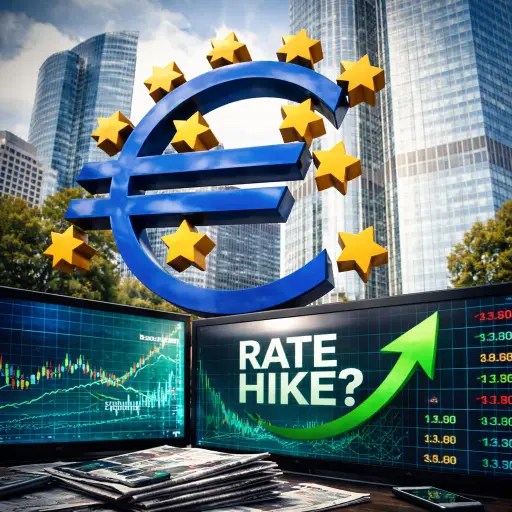
Financial markets have reacted cautiously. While the data reinforced expectations that monetary policy will eventually become more supportive, investors remain wary of reading too much into a single release. Still, the sharper-than-expected drop has strengthened the view that growth will remain subdued in the near term.
Looking ahead, much will depend on whether tentative signs of stabilization in global manufacturing translate into higher demand. Early indicators suggest that new orders remain uneven, offering little assurance of a swift turnaround. For now, companies appear focused on cost control rather than expansion, a stance that could prolong the slowdown.
The widening trade surplus may provide some comfort, but it is unlikely to offset concerns about domestic weakness. A recovery driven primarily by external demand would leave Germany vulnerable to further shocks, especially if global growth falters.
As policymakers weigh their next steps, the latest production figures serve as a reminder that Europe’s industrial challenges are far from resolved. Whether through bolder fiscal measures, deeper integration of industrial policy, or renewed investment in competitiveness, pressure is mounting to deliver results. Without a clearer revival in factory output, doubts about the strength and durability of the recovery are likely to persist.

 The Tower Post