Brussels Moves to Shield Manufacturers and Cool Transatlantic Trade Frictions

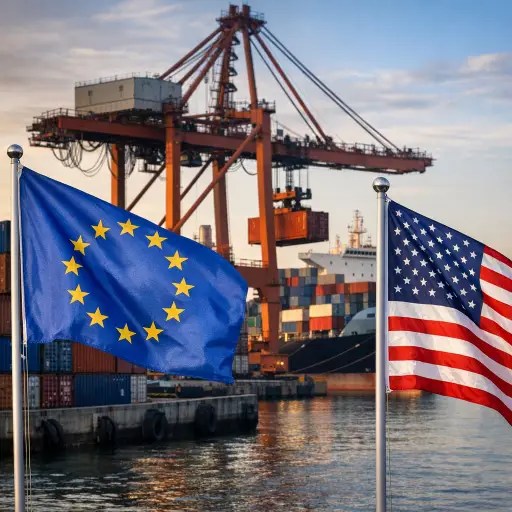
By extending a suspension on tariffs covering €93 billion ($109.8 billion) of U.S. imports, the European Union has opted for continuity over confrontation at a moment of fragile global economic confidence. The decision, agreed by EU member states and announced by the European Commission, keeps in place a temporary truce that has underpinned transatlantic trade relations through a period marked by inflationary pressure, slowing growth, and geopolitical uncertainty.
The six‑month extension is designed to protect European manufacturers from sudden cost shocks while preserving room for maneuver in ongoing negotiations with Washington. EU officials framed the move as pragmatic rather than political: a holding pattern that maintains stability for key industrial sectors without foreclosing the possibility of tougher measures should talks falter.
“This is about safeguarding European jobs and supply chains at a time when predictability matters,” said one senior EU diplomat involved in the discussions. “Escalation would serve no one’s interests right now.”
Temporary Relief, Strategic Intent
The suspended tariffs trace their origins to long‑running disputes between Brussels and Washington over subsidies and market access, disputes that in previous years spilled over into tit‑for‑tat measures affecting everything from aircraft components to agricultural goods. While several of those conflicts have been partially resolved or defused, the underlying issues have not disappeared.
By prolonging the suspension, the EU is effectively buying time. European manufacturers—particularly in sectors such as automotive components, machinery, chemicals, and advanced materials—stand to benefit from continued access to U.S. inputs without additional duties. For many firms, especially small and mid‑sized exporters, the difference between suspended and active tariffs can determine whether contracts remain viable.
Industry groups welcomed the announcement, describing it as a “necessary pause” in a volatile trade environment. “Our members need certainty to plan investment and production,” said a representative of a European manufacturing association. “This extension avoids sudden disruptions and keeps transatlantic supply chains functioning.”
Global Uncertainty Shapes Policy
The decision comes against a backdrop of uneven global recovery. While some economies have shown resilience, others face slowing demand, tight financial conditions, and persistent trade bottlenecks. In this context, policymakers in Brussels appear keen to avoid actions that could amplify external shocks.
EU trade officials also point to the broader strategic relationship with the United States. Cooperation on technology standards, critical raw materials, and supply‑chain security has intensified, even as disagreements remain. A tariff escalation, they argue, would undermine progress in these areas.
At the same time, the extension does not signal a blank check. EU officials stressed that the suspension remains conditional and reversible. Should negotiations stall or new disputes emerge, the bloc retains the option to reactivate tariffs.
Washington Reaction and Negotiation Track
U.S. officials have not publicly opposed the EU’s move, and trade watchers interpret the extension as a gesture of goodwill. Behind the scenes, talks continue on how to address legacy disputes and prevent new ones, particularly in sectors affected by green‑industrial policies and domestic subsidy programs on both sides of the Atlantic.
American exporters, like their European counterparts, benefit from the pause. Agricultural producers and industrial suppliers avoid retaliatory duties that could erode their competitiveness in the EU market. For multinational firms with operations on both continents, the suspension simplifies logistics and pricing decisions.
However, analysts caution that temporary measures cannot substitute for durable agreements. “A six‑month extension is useful, but it doesn’t resolve structural disagreements,” said a Brussels‑based trade economist. “The risk is that uncertainty simply gets pushed down the road.”
Political Balancing Act
Within the EU, the decision reflects a careful balancing act among member states with differing trade priorities. Export‑oriented economies favor stability and access to U.S. markets, while others emphasize the need to defend European industry against what they view as unfair competition.
The European Commission has sought to present the extension as aligned with its broader trade strategy: assertive when necessary, cooperative when possible. In recent months, Brussels has shown willingness to deploy trade defenses against other partners, while simultaneously signaling openness to negotiated solutions with allies.
What Comes Next
The coming months will test whether the breathing space created by the suspension can translate into progress at the negotiating table. Officials on both sides have indicated interest in deeper dialogue on subsidies, regulatory cooperation, and dispute‑prevention mechanisms.
For now, the extension offers a measure of calm in an otherwise unsettled trade landscape. European manufacturers gain temporary protection, U.S. exporters avoid new barriers, and policymakers keep their options open.
Whether this truce evolves into a more permanent settlement will depend on political will and economic conditions that remain in flux. As one EU official put it, “This is not the end of the story. It’s a pause—one we intend to use constructively.”