France’s backing marks a policy shift as Europe signals tougher stance on Tehran over human rights

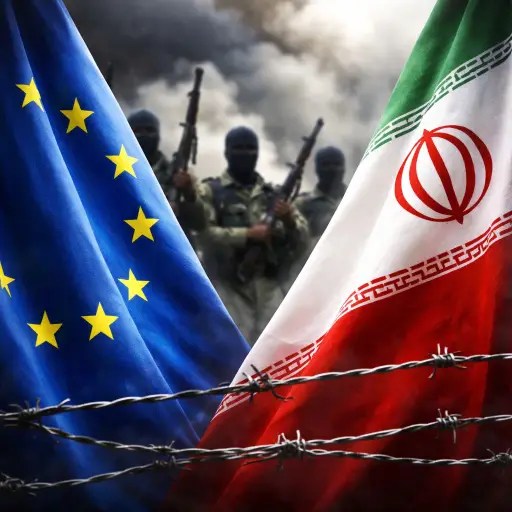
European Union foreign ministers have agreed in principle to support adding Iran’s Islamic Revolutionary Guard Corps (IRGC) to the bloc’s list of terrorist organizations, a move that would represent one of the most consequential escalations in Europe’s long-running standoff with Tehran.
The political agreement reflects mounting frustration among European capitals over Iran’s internal repression and regional posture. Diplomats say the decision is intended to tighten diplomatic pressure, curb the Guard’s international reach, and send an unambiguous signal of condemnation over human rights abuses following Iran’s harsh response to domestic protests.
At the heart of the breakthrough was France’s decision to support the designation, a shift that helped consolidate consensus among member states that had previously been divided over the legal and diplomatic risks of such a step. Paris’ backing is widely seen as emblematic of a broader recalibration in European policy toward Iran, moving away from cautious engagement toward a more confrontational approach.
The IRGC is not a conventional military force. Created after Iran’s 1979 revolution, it has evolved into a powerful institution with influence spanning security, intelligence, business, and foreign policy. European officials argue that its role in suppressing dissent at home and supporting allied armed groups abroad places it firmly within the scope of terrorist designation criteria.
Adding the Guard to the EU’s terrorism list would carry significant legal and economic consequences. Assets under European jurisdiction could be frozen, financial transactions restricted, and any form of material support criminalized. While the designation would not amount to a complete rupture of diplomatic ties with Iran, it would substantially narrow the channels through which engagement can occur.
Supporters of the move say the designation is overdue. They point to years of documented abuses, including violent crackdowns on demonstrators and the detention of dual nationals, as evidence that incremental measures have failed to alter Tehran’s behavior. For them, the listing is a necessary escalation to restore the credibility of Europe’s human rights policy.
Critics, however, warn that the step could provoke retaliation from Iran, including further constraints on diplomacy or regional escalation. Some European diplomats have expressed concern that labeling a state-linked military organization as terrorist could set a precedent with unpredictable consequences.
Despite these reservations, the political momentum appears decisive. The agreement among foreign ministers underscores a growing willingness within the European Union to accept diplomatic risk in pursuit of principled positions on human rights and security.
As the bloc moves toward the formal steps required to finalize the designation, the message to Tehran is clear: Europe’s tolerance for repression at home and destabilizing actions abroad has reached its limit.