Brussels targets fashion waste with new rules that push retailers toward resale, recycling, and donation
The European Union has taken a decisive step against one of the fashion industry’s most controversial practices: the destruction of unsold clothing and footwear. Under newly adopted rules linked to the sustainable products framework, companies operating in the EU will be prohibited from discarding excess apparel stock, a move designed to curb waste and accelerate the shift toward a circular economy.
For years, images of brand-new garments being shredded or incinerated have symbolized the environmental contradictions of fast fashion. While production volumes climbed and collections turned over at record speed, millions of items that never reached consumers were quietly destroyed to protect brand value or manage inventory. EU policymakers say that era is coming to an end.
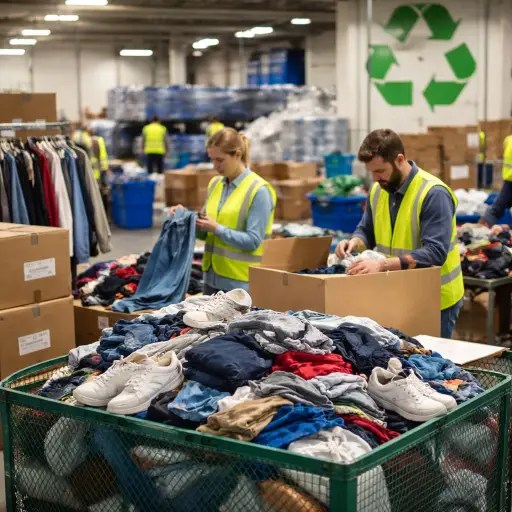
The new measures place responsibility squarely on producers and retailers. Instead of treating unsold stock as disposable, companies will be required to prioritize reuse options, including resale through secondary channels, recycling into new materials, or donation to social organizations. The aim is not only to reduce landfill and emissions, but also to rethink how value is preserved across a product’s life cycle.
At the heart of the initiative is a simple principle: products placed on the EU market should not be wasted. Officials argue that destroying unsold goods undermines sustainability goals and distorts competition, particularly for smaller businesses that already rely on resale or donation networks to manage inventory responsibly.
Retailers will not be left without support. The framework includes incentives to develop alternative pathways for excess stock, such as partnerships with second-hand platforms, investments in textile recycling technologies, and collaborations with charities. Policymakers see these measures as a way to unlock new business models rather than impose a purely punitive approach.
The fashion sector has responded with a mix of caution and cautious optimism. Large brands with complex supply chains acknowledge that adapting logistics and forecasting systems will take effort, but many also see an opportunity to professionalize resale operations and recover value from goods that would otherwise be written off.
Smaller labels and independent retailers, meanwhile, have welcomed the rules as a long-overdue leveling of the playing field. For them, resale and donation have long been practical necessities rather than marketing choices. By making destruction off-limits, the EU effectively raises the sustainability baseline across the market.
Environmental groups argue that the impact could be significant. Textile production is resource-intensive, consuming water, energy, and raw materials at every stage. Preventing the destruction of finished goods means extending product lifespans and reducing the pressure to manufacture replacements, a dynamic that could lower emissions across the supply chain.
Still, critics warn that enforcement will be key. Monitoring how companies handle unsold stock across borders is a complex task, and transparency requirements will play a crucial role. Regulators are expected to rely on reporting obligations and audits to ensure compliance, while leaving room for innovation in how companies meet their responsibilities.
Beyond fashion, the move is widely seen as a signal of the EU’s broader regulatory direction. By embedding circular-economy principles into product rules, Brussels is setting expectations that sustainability is no longer an optional add-on but a core condition of market access.
As the measures take effect, the success of the initiative will likely be judged not only by reduced waste figures, but by whether it reshapes industry behavior. If resale, recycling, and donation become standard practice rather than exceptions, the ban on destruction could mark a turning point in how Europe consumes and values clothing and footwear.
For consumers, the changes may be subtle but meaningful: more second-hand options, greater transparency, and a clearer sense that what goes unsold does not simply disappear. For the industry, the message is unmistakable. In the EU’s vision of a sustainable market, destroying perfectly usable products is no longer acceptable.




 The Tower Post