Chelsea’s Liam Rosenior hails intensity and belief as Liverpool confront mounting pressure in a tightening title race

The latest stumble from Liverpool FC has reignited debate across the Premier League, prompting a firm and public defence from the club’s manager after a chaotic defeat that laid bare both promise and fragility within his squad.
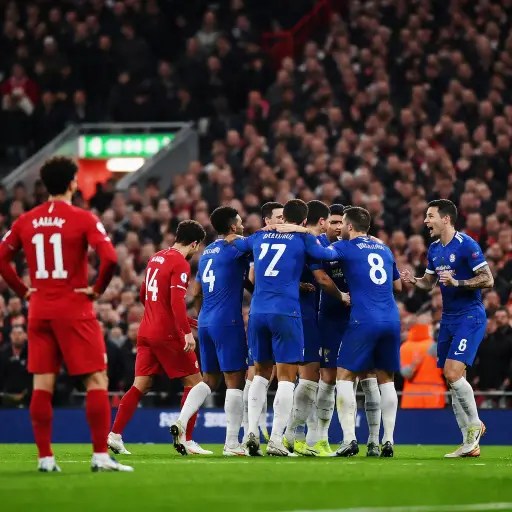
The match unfolded at a breathless pace, heavy with consequence and defined by defensive lapses, momentum swings, and moments of genuine quality. When the final whistle arrived, it was Chelsea FC who walked away with renewed confidence—while Liverpool were left to absorb a result that complicates an already demanding title pursuit.
Chelsea manager Liam Rosenior praised his players’ collective commitment and tactical clarity, framing the victory as evidence of a side learning to thrive amid pressure rather than retreat from it. He highlighted the discipline in Chelsea’s shape, the coordination of their press, and a calmness in transition that allowed them to manage Liverpool’s attacking surges without losing control.
Across the technical area, Liverpool’s response was notably defiant. The manager acknowledged that recent performances have lacked consistency but rejected the notion of deeper structural failure. He pointed instead to fatigue, evolving combinations, and the unforgiving rhythm of elite competition, arguing that the margins separating success from disappointment remain painfully thin.
Still, the implications are difficult to ignore. With rivals gaining traction, Liverpool’s room for error has narrowed considerably. Their trademark intensity has at times looked uneven, particularly in defensive transitions where gaps have appeared and opponents have been invited to attack space with confidence.
Analysis in the aftermath was swift and unsparing. Commentators questioned whether Liverpool’s midfield balance provided enough protection, while others focused on defensive rotations that struggled under sustained pressure. Yet there was also acknowledgment of Liverpool’s attacking threat—moments of tempo, invention, and belief that suggest solutions remain close at hand.
Among supporters, reaction has been mixed. Frustration simmers after another erratic display, but it is tempered by loyalty and a broader understanding of the demands placed on a squad navigating one of the most competitive Premier League seasons in recent memory. The manager’s defence of his players resonated with those who see resilience, not rupture, as the defining trait of this group.
For Chelsea, the result functions as more than just three points. It signals a growing assurance under Rosenior, a willingness to impose identity against elite opposition, and an understanding of how to manage volatile moments without losing cohesion. In a league where predictability is fading, such attributes carry increasing weight.
As the campaign grinds forward, Liverpool now face a defining stretch. Pressure is no longer abstract—it is immediate, shaped by expectations, rival results, and the standards the club has set for itself. The manager’s message remains one of trust and composure, urging patience as consistency is rebuilt.
Whether this defeat proves a temporary setback or a warning unheeded will be determined not by words, but by Liverpool’s response in the weeks ahead. In a title race tightening by the round, momentum has never mattered more.