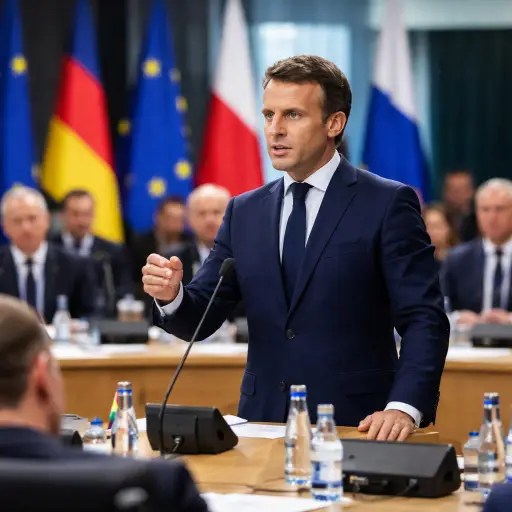
Ahead of a pivotal Brussels summit, France’s president calls for unity, economic reform, and a renewed “European preference” as pressure mounts from Washington and Beijing.
As global power rivalries intensify and long-standing alliances are tested, French President Emmanuel Macron has renewed his call for Europe to stand on its own feet. Speaking in the run-up to a crucial European Union summit in Brussels, Macron argued that the bloc must accelerate efforts to achieve strategic autonomy, warning that dependence on external powers leaves Europe vulnerable in an increasingly unstable world.
Macron’s message lands at a moment of heightened geopolitical strain. Relations between the United States and China continue to shape the global agenda, from trade and technology to security and climate policy. Caught between these two giants, Europe faces growing pressure to choose sides or risk being sidelined. For the French president, the answer is neither alignment nor isolation, but autonomy — the capacity to act independently while remaining open to cooperation.
“Europe must be able to decide for itself,” Macron told an audience of European policymakers and business leaders. “Our values, our economic model, and our security cannot depend on decisions taken elsewhere.”
A Call for Unity at a Critical Juncture
At the heart of Macron’s appeal is a demand for greater unity among EU member states. Internal divisions, he warned, weaken Europe’s negotiating power and credibility on the world stage. Whether on defense procurement, industrial policy, or foreign affairs, fragmented approaches have often slowed decision-making and diluted impact.
The upcoming summit is expected to focus on competitiveness, security, and the future of the European economy. Macron has urged leaders to move beyond incremental adjustments and embrace deeper coordination, particularly in strategic sectors such as energy, digital infrastructure, and defense.
European officials familiar with the summit preparations say France is pushing for concrete commitments rather than broad declarations. The aim is to translate the concept of strategic autonomy into actionable policies that can deliver tangible results for citizens and businesses alike.
Economic Reform and Strategic Industries
Macron’s vision of autonomy is closely tied to economic reform. He has repeatedly argued that Europe must modernize its industrial base to remain competitive against heavily subsidized rivals abroad. In recent years, U.S. and Chinese industrial policies have raised concerns in European capitals about unfair competition and the risk of deindustrialization.
To counter this, Macron has championed the idea of a stronger European industrial strategy, including more flexible state aid rules and increased investment at the EU level. He has also called for faster implementation of joint funding mechanisms to support innovation, clean technologies, and advanced manufacturing.
“Strategic autonomy is not protectionism,” Macron insisted. “It is about ensuring that we have the capacity to produce, innovate, and defend our interests within a fair and open global system.”
The Push for a “European Preference”
One of the most debated elements of Macron’s agenda is his emphasis on “European preference” policies. The concept, which prioritizes European companies in public procurement and strategic projects, is intended to strengthen domestic industries and reduce reliance on foreign suppliers.
Supporters argue that such measures are essential to level the playing field, particularly in sectors where non-European competitors benefit from massive state support. Critics, however, fear that an overly restrictive approach could provoke trade disputes or undermine the EU’s commitment to open markets.
Macron has sought to strike a careful balance, framing European preference as a pragmatic response to global realities rather than a retreat from international trade. “We must be lucid,” he said. “Others protect their strategic interests. Europe cannot afford to be the only power that does not.”
Security, Defense, and Global Responsibility
Beyond economics, Macron’s call for autonomy extends to security and defense. Ongoing conflicts and rising instability in neighboring regions have reinforced arguments for stronger European defense capabilities. While reaffirming the importance of existing alliances, Macron has stressed that Europe must be able to act independently when necessary.
This includes greater investment in defense industries, improved coordination among armed forces, and a clearer strategic vision. For Macron, autonomy is not about distancing Europe from its partners, but about ensuring it can shoulder more responsibility for its own security.
A Defining Moment for Europe
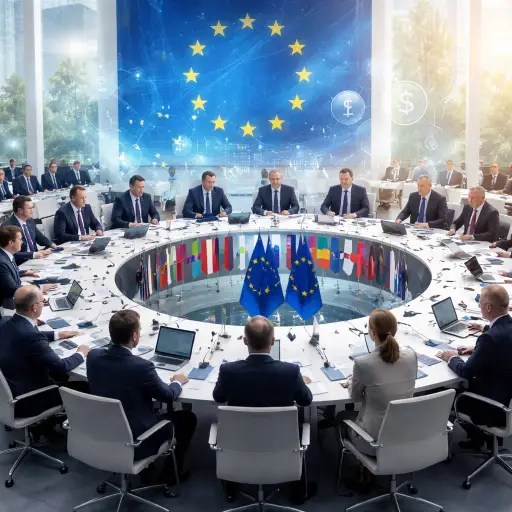
As European leaders gather in Brussels, the debate over strategic autonomy is set to take center stage. Macron’s intervention underscores a broader question facing the EU: how to preserve its economic strength, political influence, and social model in a world defined by competition among major powers.
Whether his calls translate into decisive action will depend on the willingness of member states to compromise and invest in a shared future. What is clear is that the status quo is no longer an option. In Macron’s view, Europe stands at a crossroads — and the choices made now will shape its role in the world for years to come.

 The Tower Post