Milan–Cortina’s Winter Games opening ceremony signals a new era where fashion takes center stage at global events.

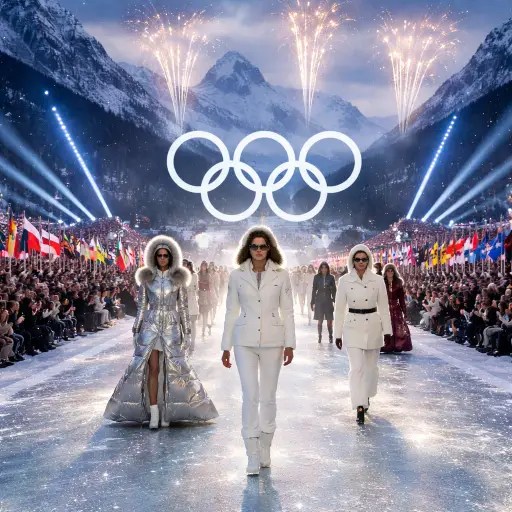
The opening ceremony of the Milan–Cortina Winter Olympics unfolded like a carefully choreographed fashion show, signaling how deeply style has woven itself into the fabric of international sport and marking a turning point in how global events communicate identity, creativity, and power.
What was once primarily a patriotic ritual has evolved into a cultural broadcast of global scale, and the hosts made clear from the first moments that fashion would not be decorative but structural, shaping the rhythm, visuals, and emotional tone of the spectacle.
Athletes entered the stadium wearing uniforms that blurred the line between performance wear and luxury design, combining advanced technical fabrics with refined tailoring, sculptural silhouettes, and a color language drawn from both alpine landscapes and Italian sartorial tradition.
Behind the scenes, designers and heritage brands worked in close collaboration with creative directors and choreographers, ensuring that garments moved in harmony with lighting, music, and staging, turning the ceremony into a living narrative rather than a sequence of isolated looks.
Italy’s role as a global fashion capital was central to the creative vision, with subtle references to craftsmanship, artisanal textures, and regional materials reinterpreted through a contemporary lens that avoided nostalgia while celebrating continuity.
The ceremony presented heritage as something dynamic and adaptable, aligning closely with how luxury fashion now positions itself in a world shaped by innovation, sustainability, and cultural hybridity.
Within minutes, the fashion world responded, with editors, designers, and buyers describing the opening as a masterclass in how style can elevate large-scale events without eclipsing their core purpose or drifting into spectacle for its own sake.
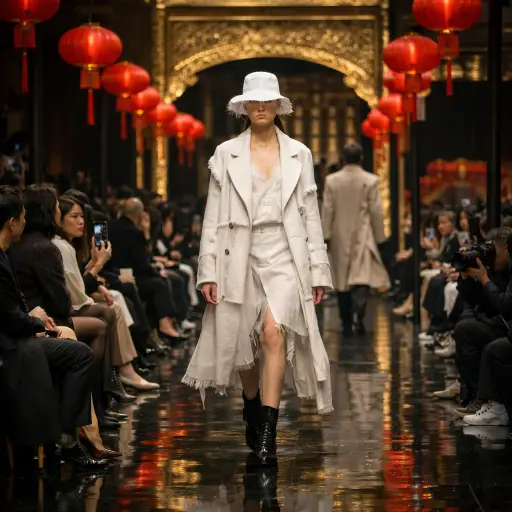
Fashion’s influence extended beyond clothing alone, as the pacing, staging, and visual storytelling echoed the language of major runway shows, transforming the stadium into a hybrid space where sport, performance, and design coexisted seamlessly.
In an era where global events compete for attention across fragmented digital platforms, Milan–Cortina demonstrated how fashion can function as a universal language, instantly legible across cultures and capable of carrying complex messages with emotional precision.
By integrating style as narrative rather than ornament, the opening ceremony set a new benchmark for cultural relevance and reaffirmed that the future of international sporting events lies not only in athletic achievement, but in the stories they tell and the elegance with which they are told.