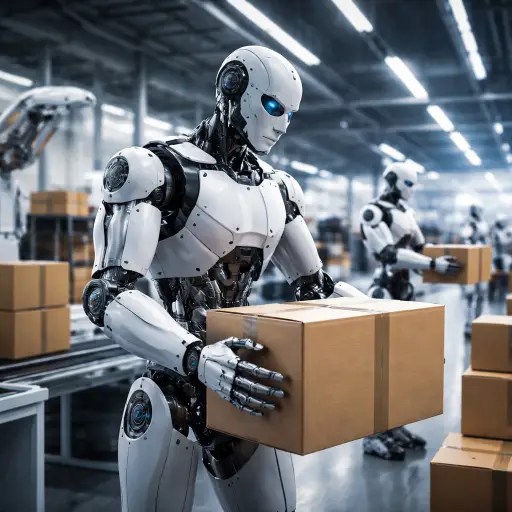
Backed by Google and Mercedes-Benz, the Austin-based company intensifies the global race to deploy humanoid robots across factories and logistics hubs
In a move that underscores the accelerating race to commercialize humanoid robotics, Apptronik has secured $520 million in new funding, with backing from Google and Mercedes-Benz. The capital injection positions the Texas-based startup at the forefront of a rapidly evolving sector, where robotics firms are vying to bring human-shaped machines out of research labs and into real-world industrial environments.
The investment signals growing confidence among major technology and automotive players that humanoid robots may soon play a practical role in warehouses, factories, and logistics centers. For Apptronik, the funding represents both validation and responsibility: scaling production, refining artificial intelligence systems, and proving that humanoid platforms can operate safely and efficiently alongside human workers.
Unlike traditional industrial robots—often bolted to the floor and programmed for repetitive, narrowly defined tasks—humanoid robots promise flexibility. Built with arms, legs, and dexterous hands, they are designed to navigate spaces originally created for people. This adaptability is central to Apptronik’s strategy. By developing robots that can move through existing facilities without costly infrastructure overhauls, the company aims to lower the barrier to automation.
Executives close to the deal describe the funding as transformative. The capital will be directed toward expanding manufacturing capacity, accelerating research and development, and strengthening partnerships with enterprise customers. The backing from Google brings not only financial muscle but also potential synergies in artificial intelligence and cloud computing. Mercedes-Benz, meanwhile, offers direct pathways into automotive production environments where precision, endurance, and safety are paramount.
The announcement intensifies competition in a field that has seen a flurry of breakthroughs and bold claims. Over the past year, robotics startups and established tech giants alike have unveiled increasingly sophisticated humanoid prototypes capable of lifting heavy objects, sorting packages, and performing assembly-line tasks. Investors have poured billions into the sector, betting that labor shortages and rising operational costs will drive demand for automation solutions.
Apptronik’s approach emphasizes modularity and safety. Engineers have focused on lightweight materials and advanced sensor systems to ensure that robots can detect obstacles and adapt to dynamic environments. Machine learning algorithms enable continuous improvement, allowing the robots to refine their movements and decision-making processes over time.
Industry analysts suggest that the fresh funding round reflects a broader shift in how automation is perceived. Once confined largely to manufacturing giants, advanced robotics is now seen as a strategic necessity across logistics, retail distribution, and even infrastructure maintenance. Companies are seeking resilient supply chains and greater operational predictability—goals that humanoid robots could help achieve.
Yet significant challenges remain. Building a robot that can reliably replicate the dexterity and judgment of a human worker is no small feat. Battery life, mechanical durability, and real-time decision-making under unpredictable conditions are persistent hurdles. Moreover, cost will be decisive: to gain widespread adoption, humanoid robots must demonstrate clear economic advantages over existing automation technologies.
For Mercedes-Benz, participation in the funding round suggests a forward-looking strategy that blends traditional manufacturing expertise with cutting-edge robotics. Automakers face mounting pressure to modernize production lines while managing workforce transitions. If humanoid robots can handle physically demanding or repetitive tasks, they may complement human teams rather than replace them outright.
Google’s involvement highlights the centrality of artificial intelligence in the humanoid robotics equation. Advances in generative AI and large-scale machine learning models have improved robots’ ability to interpret visual data, understand instructions, and adapt to new tasks. By integrating robust AI systems with capable hardware, Apptronik aims to bridge the gap between experimental robotics and scalable industrial deployment.
The timing of the announcement reflects heightened investor appetite for tangible AI applications. While much recent capital has flowed into software platforms, robotics offers a physical manifestation of AI’s potential. Warehouses and factories serve as controlled environments where early deployments can be measured, refined, and scaled.
Apptronik’s leadership has framed the funding not as an endpoint but as a starting line. The company intends to expand its workforce, deepen collaborations with industrial partners, and push toward commercial rollouts in high-demand sectors. The ultimate vision is a workforce in which humanoid robots and human employees operate side by side, each performing tasks suited to their strengths.
As the robotics arms race gathers momentum, the stakes are rising. Success could reshape global supply chains and redefine how physical labor is organized. Failure, however, would reinforce skepticism about the practicality of humanoid machines outside controlled demonstrations.
For now, Apptronik’s substantial funding round signals that major industry players believe the moment for humanoid robotics may be approaching. Whether the company can convert capital into durable competitive advantage will depend on execution, technological breakthroughs, and the readiness of industrial customers to embrace a new generation of mechanical coworkers.
The coming months are likely to see intensified experimentation, pilot programs, and strategic alliances. In the broader context of automation’s evolution, Apptronik’s latest raise stands as a pivotal chapter—one that could determine how quickly humanoid robots move from ambition to everyday industrial reality.




 The Tower Post