Luc Frieden urges Europe to build its own economic strength and security capacity as global tensions test the continent’s resilience

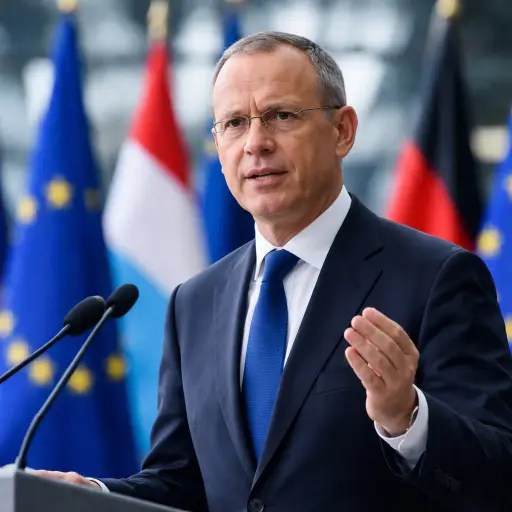
In remarks that quickly rippled through European capitals, Luxembourg’s Prime Minister Luc Frieden has issued a pointed call for the continent to stand more firmly on its own. Europe, he argued, must reduce its reliance on the United States and invest in the tools of power that allow it to protect its interests—economically, technologically, and militarily—when the world becomes more uncertain.
The appeal comes as European leaders weigh how to navigate a fast-changing strategic environment. The transatlantic bond remains central to European security, but the debate over “strategic autonomy” has moved from theory to urgency. From supply chains and energy to defense readiness and emerging technologies, policymakers are confronting a recurring question: what happens when Europe needs to act, but the external guarantees it has leaned on are delayed, distracted, or conditional?
Frieden described the current moment as a turning point—one that demands practical steps rather than rhetorical commitments. His message was not framed as a rupture with Washington, but as a push for balance: a Europe capable of carrying more of the burden, shaping outcomes rather than reacting to them, and partnering with the United States from a position of greater strength.
At the heart of Frieden’s argument is the view that Europe’s vulnerabilities have become easier to map—and harder to ignore. Recent shocks have exposed how quickly global disruptions can rattle critical industries and how dependence on distant suppliers can turn into political leverage. In Brussels and beyond, officials have increasingly spoken of “de-risking,” industrial resilience, and the need to keep certain capabilities within Europe’s own borders.
Luxembourg’s leader pointed to the economy as the first pillar of autonomy. In his view, the European project must be underpinned by an ability to finance innovation at scale, translate research into industrial capacity, and protect strategic sectors without sliding into outright protectionism. That means faster permitting for major projects, better coordination of state aid rules, and a deeper pool of private capital that can fund next-generation infrastructure—from clean energy and grids to advanced manufacturing and secure communications.
Few countries are more attuned to the capital question than Luxembourg, a global financial center that has long branded itself as a gateway for investment. Frieden highlighted the role that Europe’s financial architecture could play in accelerating its strategic ambitions. But he also implied a warning: without integrated markets and greater risk-taking, Europe may keep producing ideas that are commercialized elsewhere.
The security debate is more contentious, and Frieden did not shy away from it. While reaffirming Luxembourg’s commitment to NATO, he said Europe must strengthen its own defense capabilities and become less dependent on the United States for essential enablers—strategic airlift, intelligence and surveillance, air and missile defense, and the industrial depth required to sustain prolonged operations.
For many European governments, the question is no longer whether to spend more on defense but how to spend better. Frieden’s comments align with a growing push for joint procurement, standardization, and multinational industrial partnerships that reduce duplication. Europe’s defense market remains fragmented, critics say, producing too many small orders and too few scalable programs. That fragmentation, they argue, slows readiness and drives up costs at precisely the moment when capacity matters most.
Supporters of autonomy contend that Europe can strengthen NATO by strengthening itself. A more capable European pillar would ease pressure on the alliance and make deterrence more credible. Frieden framed his message in similar terms, suggesting that a partnership is healthiest when both sides can contribute meaningfully—especially in moments of crisis.
Still, the autonomy debate is far from settled. Some governments worry that the concept can be used to justify policies that weaken transatlantic ties or create competing structures. Others fear that “autonomy” becomes a catch-all label that promises everything while delivering little. Frieden’s intervention sought to anchor the idea in concrete areas—industrial policy, technology, and defense—where gaps are visible and remedies are measurable.
Technology has emerged as a particularly sharp edge of the conversation. Europe has world-class research and strong regulation, but it remains dependent on external players for many of the most powerful digital tools, including key chips, cloud infrastructure, and some advanced AI capabilities. Frieden argued that Europe must ensure it has secure options for critical technologies, including the ability to protect sensitive data and maintain continuity when geopolitical tensions disrupt global systems.
Energy resilience remains another driver. While Europe has made strides in diversifying supplies and expanding renewables, the broader lesson of recent years has been clear: energy dependence can become a security vulnerability. Frieden’s call implies that autonomy also means accelerating the build-out of resilient grids, storage, and cross-border interconnectors, alongside consistent rules that attract investment.
The debate also carries a moral dimension. Frieden emphasized that autonomy is not simply about hardware and budgets, but about protecting Europe’s democratic model and its ability to defend rules-based norms. For many European leaders, credibility abroad depends on coherence at home—on the capacity to enforce standards, defend institutions, and respond to coercion without hesitation.
Yet the obstacles are substantial. Europe’s member states vary widely in their threat perceptions, fiscal room, and political appetite for deeper integration. Large countries can sometimes move faster on national programs, while smaller states often prefer pooled solutions that spread risk. There is also tension between speed and consensus: the EU’s decision-making can be slow, but the strategic environment is not waiting.
Frieden’s remarks have drawn attention precisely because they come from a leader of a small country with an outsized role in the European project. Luxembourg has historically