Economist Andrey Gyurov tasked with steering the country toward fresh elections after protests unseat government, deepening a cycle of political uncertainty

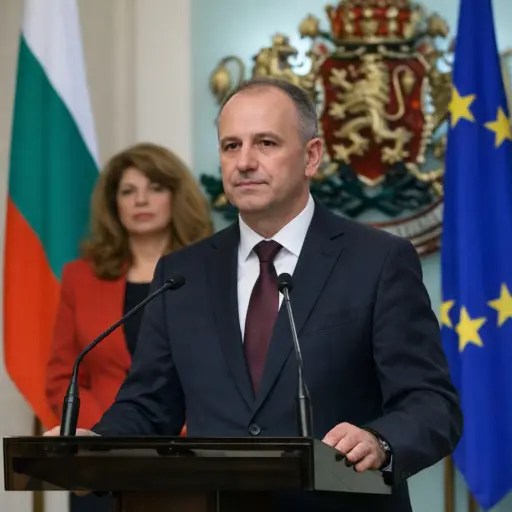
Bulgaria has once again turned to a caretaker administration after President Iliana Yotova appointed economist Andrey Gyurov as interim prime minister, following the collapse of the previous government amid sustained public protests and mounting political pressure.
Gyurov, currently deputy governor of the Bulgarian National Bank, assumes leadership with a narrowly defined but politically sensitive mandate: to organize free and fair national elections in the spring and ensure institutional stability during a period of renewed uncertainty.
The appointment marks the country’s eighth parliamentary election in five years, an extraordinary sequence that highlights the persistent fragmentation of Bulgaria’s political landscape and the repeated failure of parties to forge durable governing coalitions.
The most recent government fell after weeks of demonstrations in Sofia and other major cities, where thousands of citizens voiced anger over allegations of corruption, rising living costs, and what critics described as chronic political paralysis.
President Yotova framed her decision as a necessary constitutional step aimed at safeguarding democratic continuity, urging political leaders to approach the upcoming campaign with restraint and responsibility while appealing to voters not to disengage despite widespread election fatigue.
Gyurov is widely regarded as a technocrat with strong credentials in monetary policy and financial oversight, and his background in central banking is expected to reassure markets and European partners concerned about fiscal discipline and macroeconomic stability.
Caretaker governments in Bulgaria traditionally avoid major policy initiatives, focusing instead on administrative management and electoral logistics, yet the fragile economic environment and heightened public scrutiny mean that even routine decisions may carry significant political weight.
Analysts warn that the forthcoming vote could once again produce a splintered parliament, with established parties competing against newer anti-establishment movements that have capitalized on public frustration but struggled to convert momentum into sustainable governance.
In recent years, coalition talks have repeatedly broken down over disagreements on judicial reform, anti-corruption measures, and institutional restructuring, reinforcing a cycle in which short-lived administrations give way to interim cabinets and renewed campaigns.
The challenge for Gyurov will be to maintain neutrality while ensuring transparency in campaign financing, ballot security, and vote counting procedures, all under the watchful eye of a skeptical electorate and international observers.
European Union officials have consistently encouraged Bulgaria to strengthen judicial independence and address systemic corruption concerns, and the conduct of the upcoming elections will be seen as a critical test of the country’s democratic resilience.
For many citizens, the repeated returns to the ballot box evoke mixed feelings, combining hope for political renewal with frustration over what appears to be an entrenched stalemate among rival factions unable to bridge ideological divides.
Public conversations in the capital reflect a society at a crossroads, weighing demands for accountability and reform against doubts about whether another election will meaningfully alter the balance of power in parliament.
Despite the transitional nature of his role, Gyurov’s stewardship over the coming weeks may shape not only the credibility of the electoral process but also the broader tone of Bulgaria’s political discourse at a pivotal moment.
As the country moves toward yet another vote, the caretaker government’s immediate task is clear: preserve institutional stability, uphold democratic standards, and provide citizens with the opportunity to determine whether this latest reset can finally break the cycle of uncertainty.