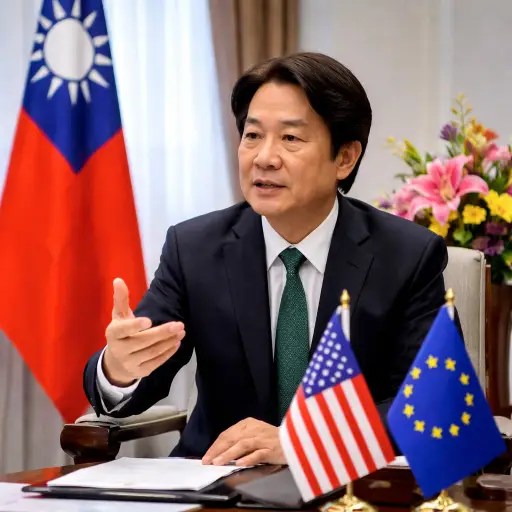
A Strategic Interview Signals Taiwan’s Push to Anchor Itself More Firmly in the Transatlantic Democratic Community

In a wide-ranging interview published this week by Agence France-Presse, Taiwan’s President Lai Ching-te set out an ambitious vision for strengthening relations with Europe and the United States, presenting the island as a resilient democracy determined to expand its global partnerships amid intensifying pressure from Beijing.
Speaking from the Presidential Office in Taipei, Lai described the current geopolitical climate as one defined by uncertainty and rapid technological change, arguing that Taiwan’s security and prosperity depend on embedding itself more deeply within a network of like-minded partners committed to stability and a rules-based international order.
He portrayed relations with Washington as steady and institutionalized, grounded in long-standing legislative frameworks and sustained bipartisan support, and emphasized that defense cooperation, arms procurement, and strategic coordination remain central pillars of the relationship.
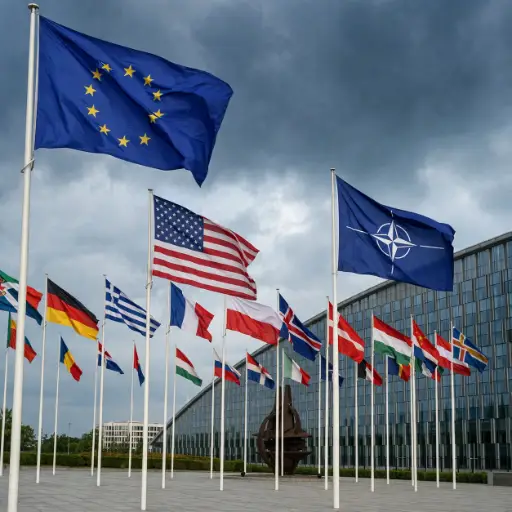
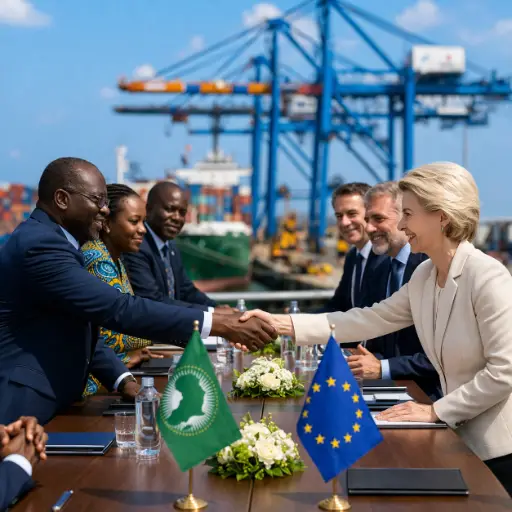
At the same time, Lai underlined that Europe has emerged as an increasingly significant partner for Taipei, noting growing parliamentary exchanges, trade dialogues, and expressions of concern across European capitals about peace and stability in the Taiwan Strait.
According to the president, European engagement is no longer symbolic but increasingly practical, with discussions focused on investment protections, supply chain security, advanced manufacturing, clean energy collaboration, and the avoidance of double taxation to facilitate smoother business flows.
The interview devoted particular attention to Taiwan’s pivotal role in the global semiconductor supply chain, a sector that has elevated the island’s strategic importance far beyond its size and made it indispensable to industries ranging from consumer electronics to automotive manufacturing and advanced defense systems.
Lai argued that while diversification of chip production is understandable in a world shaped by pandemic disruptions and geopolitical rivalry, Taiwan’s integrated ecosystem of research, design, and cutting-edge fabrication cannot be easily replicated elsewhere without significant cost and time.
He insisted that Taiwan does not regard its semiconductor leadership as a bargaining chip but as a shared responsibility, calling for collaborative ventures with American and European firms to reinforce supply chain resilience rather than fragment it through protectionist measures.
On national defense, Lai reaffirmed that deterrence begins at home, defending proposed increases in defense spending as a necessary response to frequent military activity around the island and as a signal that Taiwan is committed to its own security.
He maintained that credible self-defense capabilities strengthen rather than destabilize regional peace, arguing that preparedness reduces the risk of miscalculation and demonstrates that coercion would carry unacceptable costs.
Beijing swiftly criticized the remarks, accusing Lai of heightening tensions, but the president rejected that characterization, stating that safeguarding democratic institutions and expanding international partnerships are consistent with international norms and the sovereign will of Taiwan’s people.
He also dismissed suggestions that Taiwan could be used as leverage in broader negotiations between major powers, asserting that the island’s future must be determined by its citizens and not shaped by external pressure or geopolitical trade-offs.
For European leaders grappling with security challenges closer to home, Lai framed Taiwan’s situation as part of a broader global pattern in which democracies must coordinate more closely to defend open societies against coercion and economic intimidation.
In Washington, where debates over industrial policy and strategic competition continue, his message was one of continuity and reliability, stressing that Taiwan remains a predictable partner prepared to align its policies with shared strategic objectives.
The timing of the interview, as governments and markets assess the year ahead, underscores Taipei’s determination to convert political goodwill into structured, long-term agreements that bind economies together and reduce vulnerabilities.
Beyond defense and technology, Lai pointed to cooperation in public health, digital governance, and green transition initiatives as areas where Taiwan can contribute expertise while benefiting from deeper integration with transatlantic partners.
Analysts note that the president’s tone combined firmness with pragmatism, seeking to reassure allies of Taiwan’s steadiness while signaling to Beijing that international engagement will not be curtailed by pressure.
Whether these diplomatic efforts translate into formal accords and expanded security arrangements will depend on political will in Washington and European capitals, yet the interview makes clear that Taipei intends to broaden its strategic horizon well beyond the Indo-Pacific.
In positioning Taiwan as both a frontline democracy and a technological powerhouse, Lai has placed international partnership at the heart of his administration’s agenda, arguing that the island’s future lies not in isolation but in deeper integration with partners who share its values and interests.