Tyson Fury steps out of retirement for a spring showdown with Arslanbek Makhmudov, reigniting Europe’s heavyweight fever.

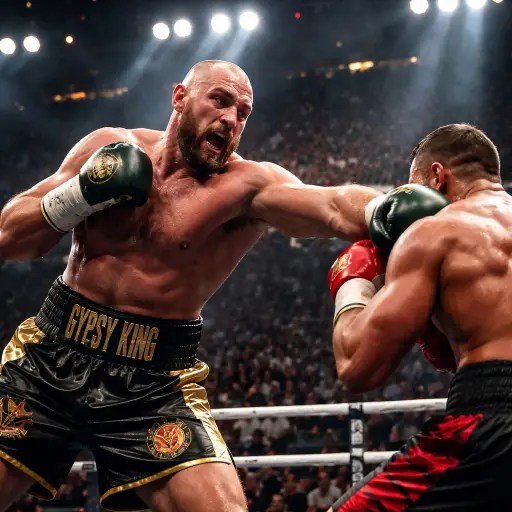
Europe’s sporting conversation has taken a sharp and unexpected turn this Valentine season as Tyson Fury announced he is coming out of retirement for a high-stakes heavyweight clash against Arslanbek Makhmudov, a decision that has reignited debate, anticipation and commercial energy across the continent’s fight scene.
The former champion, who had insisted his career was complete after a dramatic run at the summit of the division, revealed that he will return to the ring in April, setting up a confrontation that instantly reshapes the heavyweight landscape and restores a sense of unpredictability to boxing’s most storied weight class.
For months, Fury’s future had been the subject of speculation, with cryptic training footage and carefully timed public appearances fueling rumors that the self-styled Gypsy King was not entirely finished with the sport that made him a global attraction, yet few expected confirmation to arrive with such decisiveness.
The choice of opponent underscores the seriousness of the comeback, because Makhmudov is widely regarded as one of the division’s most physically imposing and dangerous contenders, a relentless puncher whose knockout reputation has been built on sustained pressure and raw force rather than theatrics.
In pairing his charisma and ring intelligence with Makhmudov’s direct aggression, promoters have crafted a contest that promises stylistic tension, with Fury likely to rely on movement, timing and psychological gamesmanship while the Russian challenger seeks to close distance and test durability.
The announcement has landed at a moment when Europe’s sports pages are typically dominated by football narratives, yet Fury’s return has cut through transfer gossip and title races alike, reminding audiences that boxing retains a singular capacity to command attention through the simple premise of two heavyweights confronting each other under bright lights.
Television networks have reportedly adjusted programming plans to accommodate what is already being framed as one of the defining bouts of the year, while ticket inquiries surged within hours of confirmation, evidence that Fury’s drawing power has endured despite his time away from active competition.
Within the heavyweight division, the ripple effects are immediate, because contenders who had been maneuvering for title opportunities must now reconsider their trajectories in light of a returning figure whose presence complicates rankings, negotiations and long-term planning.
Fury’s career has been defined as much by narrative as by results, encompassing dramatic victories, public struggles and improbable comebacks that elevated him beyond the confines of sport into the realm of cultural personality, and this latest chapter fits neatly into that pattern of reinvention.
Those close to his training camp suggest that the decision to return was driven less by financial incentive than by competitive restlessness, describing a fighter who missed the structure of preparation and the emotional crescendo of fight night more than he anticipated during retirement.
Heavyweight boxing, unlike many other elite pursuits, offers little margin for decline, and questions inevitably surround how a period of inactivity might affect timing, reflexes and resilience, especially against an opponent known for early pressure and concussive finishing ability.
Makhmudov, for his part, enters the bout with an opportunity that could redefine his standing in the sport, because victory over a figure of Fury’s stature would transform him from respected contender into central protagonist in a division that thrives on recognizable names and marketable rivalries.
The promotional campaign has already leaned into themes of legacy and renewal, casting Fury’s comeback as both a personal reckoning and a broader revival for heavyweight boxing in Europe, where historic arenas are reportedly competing to host a contest expected to deliver significant economic impact.
Hotel bookings, hospitality packages and ancillary events are being discussed with the kind of enthusiasm usually reserved for major football finals, reinforcing the idea that boxing, when anchored by a compelling figure, can still mobilize cities and captivate casual observers.
Analysts predict that the early rounds will prove decisive, as they often do in heavyweight encounters, with Fury aiming to establish rhythm and frustrate his opponent’s advances while Makhmudov attempts to impose physical authority before tactical adjustments can take hold.
There is also the intangible dimension that has long defined Fury’s appeal, namely his capacity to transform press conferences and weigh-ins into theatrical stages where psychological pressure is applied long before the opening bell sounds.
In a season associated with declarations of affection, Fury’s return can be interpreted as a renewed commitment to the craft that shaped his identity, a signal that the bond between fighter and ring is not easily severed even after public farewells and ceremonial goodbyes.
Across gyms in Britain and mainland Europe, trainers report heightened interest from newcomers inspired by the headlines, suggesting that the comeback is already exerting influence beyond pay-per-view projections and headline revenue.
For established champions and emerging prospects alike, the reappearance of a former king introduces both risk and opportunity, because high-profile victories become conceivable while setbacks carry amplified consequences under intensified scrutiny.
Should Fury deliver a commanding performance, discussions of further marquee matchups will accelerate, potentially ushering in a fresh cycle of heavyweight rivalries that extend the division’s current resurgence into the coming seasons.
Conversely, if the returning star falters, the result will prompt renewed debate about the timing of retirements in combat sports and the unforgiving nature of elite competition, where sentiment offers no protection against physical reality.
For now, anticipation outweighs caution, and the prevailing mood among fans is one of excitement rather than skepticism, as Europe prepares for a night that promises spectacle, tension and the enduring drama unique to heavyweight boxing.
In stepping back into the spotlight, Tyson Fury has once again altered the trajectory of his sport, proving that even in retirement his influence lingered, and that with a single announcement he could restore the heavyweight division to the forefront of the continental conversation.