Frustration after stalled global negotiations prompts a sharper, more pragmatic European strategy ahead of the next round of climate talks

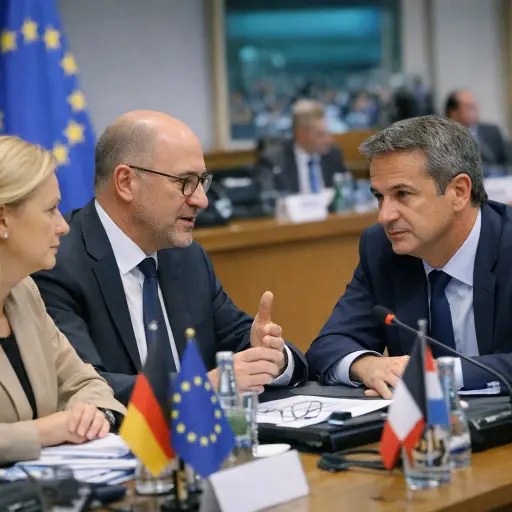
In the aftermath of difficult international climate negotiations, environment ministers from across the European Union are reassessing their diplomatic posture and calling for what several described as a less naive approach to global climate politics, signalling a shift toward a strategy grounded as much in geopolitical realism as in environmental ambition.
The recalibration follows mounting frustration after the latest UN climate summit, where European officials privately acknowledged that despite strong rhetoric and ambitious domestic policies, progress in securing tougher global commitments remained uneven and in some areas stalled altogether.
For years, the European Union has positioned itself as a standard bearer in climate governance, advancing sweeping emissions legislation, expanding renewable energy targets and tightening regulatory frameworks in the hope that leadership by example would encourage reciprocal action from other major economies.
Yet the most recent round of talks exposed widening fault lines between developed and emerging economies, with disputes over climate finance, technology transfers and accountability mechanisms underscoring the increasingly transactional nature of global negotiations.
Several ministers argued during internal consultations that the bloc must now pair its environmental ideals with sharper political instincts, ensuring that future negotiations reflect both the scientific urgency of climate change and the strategic realities shaping international relations.
Leadership cannot mean accepting diluted outcomes, one senior diplomat involved in the discussions said, adding that Europe must learn to negotiate with clearer red lines and a stronger awareness of economic leverage.
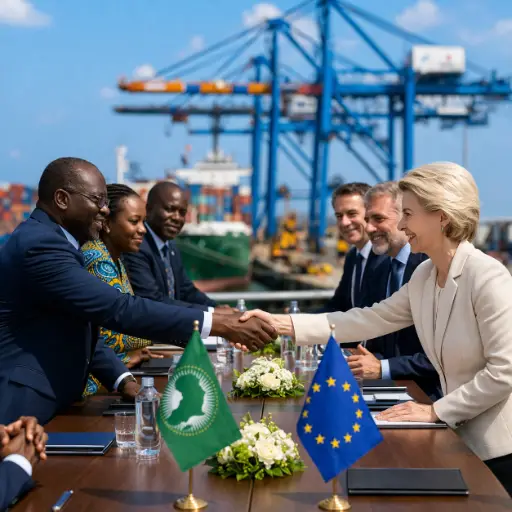
Central to the emerging strategy is the conviction that climate diplomacy must be integrated more closely with trade and industrial policy, particularly as European industries contend with stringent emissions standards that competitors elsewhere may not yet face.
The carbon border adjustment mechanism, initially framed primarily as an environmental safeguard, is increasingly viewed within ministerial circles as a geopolitical tool capable of encouraging partners to align more closely with European climate benchmarks.
Officials insist that the objective is not confrontation but credibility, arguing that mutual accountability is essential if global agreements are to deliver measurable emissions reductions rather than aspirational declarations.
The reassessment also reflects broader geopolitical turbulence, including supply chain disruptions, energy security concerns and intensifying competition over clean technology markets, all of which have complicated efforts to build consensus at multilateral forums.
Within the Union itself, debates have revealed varying national sensitivities, with some member states emphasising competitiveness and energy affordability while others press for uncompromising environmental standards, yet recent exchanges suggest a convergence around the need for greater strategic discipline abroad.
Analysts in Brussels describe the shift not as a retreat from ambition but as an evolution in diplomatic method, noting that persuasion alone may no longer suffice in a landscape where economic interests and political cycles frequently override long-term climate considerations.
Environment ministers are now preparing to enter future rounds of negotiations with clearer expectations regarding transparency, binding commitments and enforceable timelines, seeking to avoid the ambiguities that have plagued previous agreements.
There is also renewed focus on building coalitions among like-minded countries willing to commit to verifiable targets, while pursuing sector-specific accords on energy, transport and industry that could yield incremental but tangible gains.
Public opinion across Europe continues to support decisive climate action, yet policymakers are acutely aware that economic pressures and industrial competitiveness remain politically sensitive, reinforcing the need for a diplomacy that protects both environmental integrity and economic resilience.
In private conversations, ministers concede that the era of relatively straightforward consensus in global climate diplomacy has faded, replaced by negotiations that demand sharper tactics, clearer incentives and occasionally firmer conditions.
Still, European officials maintain that realism need not undermine ambition, arguing that a more pragmatic approach may ultimately strengthen the credibility of international agreements by ensuring that commitments are matched by enforceable action.
As preparations intensify for the next cycle of global talks, the European Union appears determined to demonstrate that climate leadership in the current geopolitical climate requires not only vision but also strategic calculation.
The coming months will reveal whether this less naive stance can translate into more durable partnerships and measurable progress, or whether the complexity of global politics will continue to test the limits of multilateral climate cooperation.