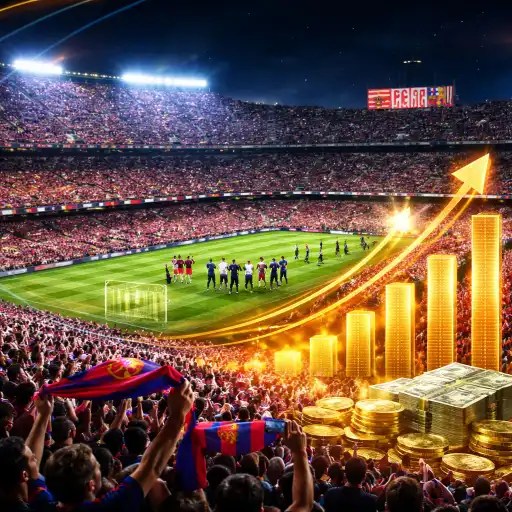
Commercial Strength and Global Reach Propel the Catalan Giant to Record Revenue Heights
In a season marked by financial turbulence across global sports, one European football club has emerged not just as a champion on the pitch but as a leader in commercial and economic might.
FC Barcelona’s ascent to the top of the revenue rankings among European champions demonstrates how elite football continues to be a commanding force in the global economic landscape, combining massive commercial deals, international tours and strategic brand expansion to drive earnings that have eclipsed the billion-dollar threshold.
According to industry reports analysing the 2024–25 financial season, Barcelona finished as the highest-revenue club among title-winning teams across Europe’s top leagues, generating figures that stand well ahead of their domestic and continental peers. Experts said the club’s balanced mix of matchday income, broadcast distribution and expanding commercial portfolios underpins its financial fortitude and global appeal.
Commercial partnerships and worldwide brand engagements have become central to Barcelona’s strategy. The club’s sponsorship ecosystem now spans high-profile global brands and regional partners alike, expanding its reach across multiple continents. This diversified approach has helped insulate it from some of the broader economic pressures facing football, such as fluctuating broadcast deals and post-pandemic spending shifts.
“Last season, the combined revenue of Europe’s most successful domestic league champions approached levels rarely seen outside the full Deloitte Money League,” said one financial analyst familiar with the data. “Barcelona’s commercial acceleration and matchday monetisation show just how these institutions have transformed into global entertainment brands.”
International tours, once a supplementary revenue stream, have become key fixtures on the club’s calendar. Pre-season tours now traverse Asia and North America, drawing tens of thousands of fans and lucrative sponsorship activations. These trips serve dual purposes: they both deepen engagement with global fanbases and secure commercial contracts that significantly bolster annual earnings.
The club’s ability to attract such opportunities owes much to its storied history and recent successes on the field — factors that enhance its value as a global ambassador for partners seeking visibility in diverse markets. Although financial comparisons vary depending on the methodology used, industry trackers generally agree that Barcelona’s operating revenue now comfortably outpaces other domestic champions across Europe’s top leagues.
This economic dominance among champions comes at a time when wider football finances are also setting records. Recent league-wide reports have shown combined revenues for top clubs climbing to over €12 billion, with commercial income overtaking broadcast deals as the largest revenue segment for many teams.
Barcelona’s financial performance underscores not only its historical stature but also the evolving nature of modern football finance. The club’s blend of strategic commercial growth, global brand outreach and on-field success signals a broader trend in which elite teams leverage their cultural and sporting prestige into sustainable economic engines.
While debate continues about which club leads overall — with rivals like Real Madrid still recording some of the highest revenues in world football — Barcelona’s distinction as the top-earning champion among Europe’s title winners as of early 2026 marks a significant milestone.
For now, the Catalan giants’ financial strength highlights how football’s elite continue to command attention far beyond matchday results — and how the beautiful game remains a global economic powerhouse that shapes business trends in sport, media and entertainment


 The Tower Post