Hungarian prime minister reframes sovereignty debate, declaring the European Union a greater danger than Russia while polls show his Fidesz party trailing the pro‑EU Tisza movement

Hungarian Prime Minister Viktor Orbán has sharply escalated his campaign rhetoric ahead of the parliamentary elections, declaring that the European Union — not Russia — represents the greatest threat to Hungary’s sovereignty, a claim that is reshaping the political debate as voters prepare to choose their next government.
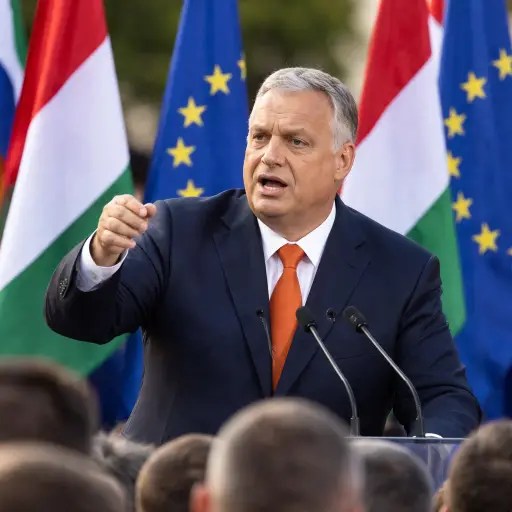
Speaking before supporters in the capital, Orbán described Brussels as an immediate danger to Hungary’s independence, arguing that EU institutions are attempting to erode national decision‑making through financial pressure and legal oversight, and framing the upcoming vote as a decisive moment in what he portrayed as a struggle for self‑determination.
For years, they told us the threat comes from the East, Orbán said at a rally that doubled as a campaign launch event. But today the real challenge to our freedom stands in Brussels, where bureaucrats who were not elected by Hungarians want to tell us how to live and how to govern our country.
The remarks mark one of the most direct confrontations yet between Budapest and EU institutions during Orbán’s long tenure, and they come at a politically sensitive moment as opposition polling suggests that his Fidesz party is trailing the pro‑European Tisza party, a relatively new force that has galvanized urban voters and younger Hungarians.
Orbán has built much of his political brand on defending national sovereignty against outside influence, particularly during disputes over migration policy, judicial reforms, and media regulation, but the latest campaign strategy places Brussels at the very center of the electoral contest in a way that eclipses previous tensions.
Analysts say the sharpened tone reflects mounting electoral pressure, as surveys conducted by independent research groups show Tisza narrowing and in some cases overtaking Fidesz in voter preference, especially among undecided voters concerned about economic stagnation and Hungary’s increasingly strained relations with Western partners.
By recasting the election as a referendum on sovereignty rather than on economic management or social policy, Orbán appears to be seeking to mobilize his core electorate, which has consistently responded to narratives of national identity under threat and to warnings about external interference in domestic affairs.
The European Union has withheld or delayed billions of euros in funding over concerns related to rule‑of‑law standards, judicial independence, and anti‑corruption safeguards, steps that the Hungarian government has condemned as politically motivated pressure designed to force policy changes from outside the country.
Orbán and his allies argue that such conditionality undermines democratic choice by linking financial support to compliance with what they describe as ideological expectations, while EU officials insist that the measures are tied to legal commitments that all member states accepted upon joining the bloc.
In recent speeches, the prime minister has woven these financial disputes into a broader cultural narrative, asserting that Brussels seeks to reshape Hungary’s institutions and values, and warning that yielding to EU demands would amount to surrendering control over the country’s future direction.
The Tisza party, by contrast, has campaigned on restoring what it calls constructive engagement with European partners, emphasizing that Hungary’s economic growth, infrastructure development, and labor mobility have been deeply intertwined with EU membership and that confrontation risks further isolation.
Hungary’s security is strengthened through cooperation, not weakened by it, Tisza leaders have said at campaign events across the country, contending that stability and prosperity depend on rebuilding trust with European institutions and unlocking suspended funds that could support public investment and social programs.
Business groups have expressed concern that escalating tensions with Brussels could deter foreign investment and complicate access to development financing, although many corporate leaders have avoided direct political statements, wary of becoming entangled in an increasingly polarized campaign.
Notably absent from Orbán’s framing of external threats is a strong emphasis on Russia, even as the war in neighboring Ukraine continues to shape European security policy and energy markets, a positioning that distinguishes Hungary from several other EU member states that have taken a more confrontational stance toward Moscow.
Orbán has consistently advocated what he calls a pragmatic foreign policy, arguing that Hungary must maintain economic and energy ties where necessary while avoiding deeper involvement in geopolitical conflicts, a stance critics say risks downplaying security concerns for the sake of domestic political messaging.
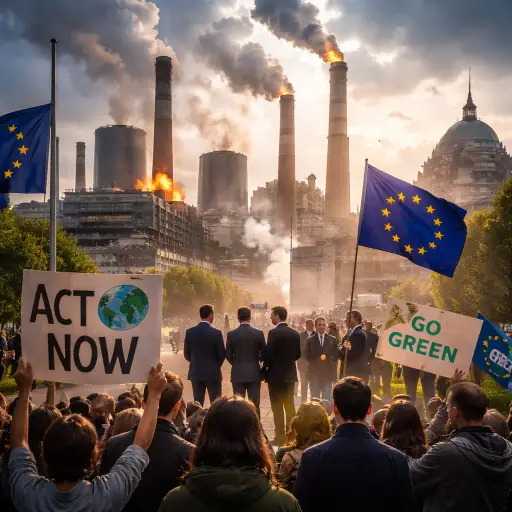
The divergence over how to interpret external risks has deepened divisions within Hungarian society, with large pro‑EU demonstrations in Budapest highlighting the benefits of integration, while Fidesz maintains strong support in rural regions where the sovereignty narrative resonates more strongly.
European officials are watching the campaign closely, aware that another Orbán mandate could prolong existing standoffs over governance standards and financial oversight, while a victory for Tisza would likely signal an attempt to reset relations and realign Hungary more firmly with mainstream EU policy positions.
Even opposition leaders caution that any recalibration would be complex and gradual, requiring negotiations with EU institutions and careful management of domestic expectations, particularly among voters who remain skeptical of deeper integration.
For Orbán, however, the message remains stark and unequivocal: the election will determine whether Hungary charts its own course or accepts what he characterizes as external direction from Brussels, a framing that elevates the stakes of the contest beyond routine partisan competition.
As the campaign intensifies, the debate over sovereignty, identity, and Hungary’s place in Europe has moved from the margins to the center of national discourse, leaving voters to weigh competing visions of the country’s future at a moment of heightened political uncertainty.
The outcome will shape not only the composition of the next government in Budapest but also the trajectory of Hungary’s relationship with the European Union, at a time when unity and cohesion remain pressing concerns across the continent.