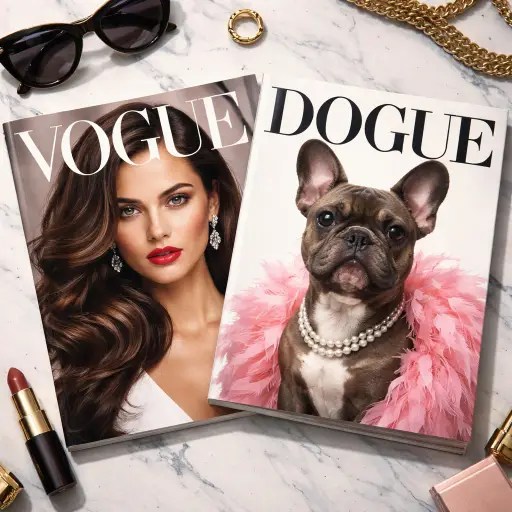
Condé Nast moves to defend its flagship title against a small independent magazine, raising questions about trademark boundaries, creative freedom, and the balance of power in fashion media.
Condé Nast has launched a lawsuit against the small independent publication DOGUE, accusing it of trademark infringement and unauthorized brand association in a dispute that is reverberating across the fashion media landscape. The legal complaint argues that the emerging magazine’s name and visual identity too closely resemble those of Vogue, the publishing giant’s flagship title and one of the most recognized fashion brands in the world.
Filed in a United States federal court, the case centers on claims that the similarity between the two names, separated by a single letter, creates a likelihood of consumer confusion and risks diluting the distinctiveness of the Vogue trademark. According to the complaint, Condé Nast is seeking injunctive relief to stop DOGUE from using the contested branding in connection with fashion publishing and merchandise, along with damages to be determined at trial.
DOGUE, founded by a small collective of editors and designers, has described itself as a playful and satirical exploration of fashion culture, blending high-concept photo spreads with canine-inspired visual motifs. The publication gained modest traction online through social media buzz and limited print runs, positioning itself as both homage and critique of the rarefied world long associated with traditional glossy magazines.
For Condé Nast, however, the issue extends beyond artistic intent and into the realm of brand stewardship, an increasingly critical priority in an era when legacy publishers are expanding into e-commerce, live events, and branded consumer goods. The company argues that allowing similar marks to circulate unchecked could weaken its ability to protect the exclusivity and commercial power of the Vogue name in the future.
Trademark specialists note that courts typically assess whether an ordinary consumer might reasonably believe there is an affiliation, endorsement, or sponsorship relationship between the two publications. While parody and commentary can receive protection under free speech principles, that defense may narrow when the allegedly infringing party engages in commercial merchandising such as apparel and accessories bearing the disputed mark.
DOGUE’s founders have indicated that they intend to contest the claims, maintaining that their project is clearly satirical and that its audience understands the distinction between their work and the global fashion authority they reference. In public statements, they frame the lawsuit as emblematic of the power imbalance between multinational media corporations and independent creative ventures operating on limited resources.
The dispute arrives at a moment of broader transformation in fashion publishing, where declining print revenues and the rise of influencer-driven platforms have forced traditional titles to rethink their strategies and defend their intellectual property with renewed vigor. At the same time, smaller magazines often rely on bold, provocative branding to cut through an oversaturated digital marketplace, increasing the risk of legal friction.
Industry observers suggest that a negotiated settlement remains possible, as many trademark cases conclude with agreements involving rebranding, disclaimers, or licensing arrangements that allow both parties to avoid a prolonged courtroom battle. Yet regardless of whether the case proceeds to trial or resolves behind closed doors, it has already ignited debate about how far creative reinterpretation can go before it collides with corporate enforcement.
At its core, the confrontation underscores the delicate balance between cultural commentary and commercial identity in fashion, where a name is not merely a label but a repository of history, influence, and economic value. As the proceedings unfold, publishers large and small are watching closely, aware that the outcome could help define the boundaries of parody, protection, and power in contemporary fashion media.




 The Tower Post