Péter Magyar positions the Tisza party as a pro-Western alternative, pledging anti-corruption reforms and closer EU alignment ahead of pivotal national elections

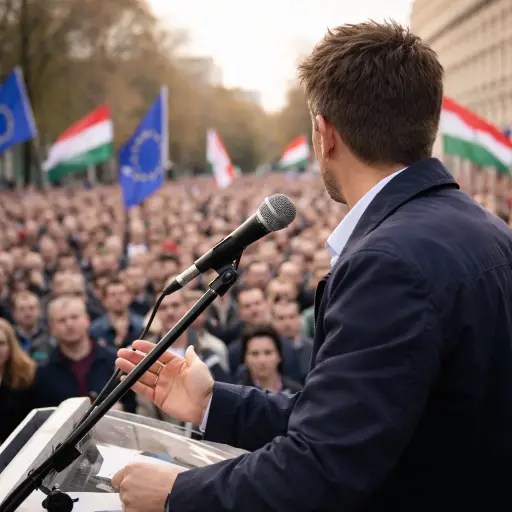
In a packed civic hall along the Danube under the muted light of late winter, Péter Magyar formally launched his national campaign, presenting himself as the pro-Western alternative to Prime Minister Viktor Orbán and declaring that Hungary stands at a decisive political crossroads.
Magyar, who leads the rapidly rising Tisza party, framed his movement as a campaign for national renewal, arguing that the country must restore democratic safeguards, rebuild strained alliances within the European Union, and address growing social and economic pressures that have unsettled parts of the electorate.
Once considered a political outsider, Magyar has quickly transformed into the central challenger to Orbán’s long-dominant Fidesz party, with recent opinion surveys placing Tisza ahead and signaling the possibility of the most competitive national election Hungary has faced in more than a decade.
“This election is about choosing Hungary’s direction for a generation,” Magyar told supporters, outlining a platform centered on transparency, rule of law, and institutional accountability while promising a governing style marked by dialogue rather than confrontation.
At the core of his program is a sweeping anti-corruption pledge that includes the establishment of an independent prosecutor’s office, stricter oversight of public procurement, and reinforced judicial independence, measures he argues are essential to restoring both domestic trust and international credibility.
Magyar contends that closer alignment with European Union standards would not only strengthen democratic governance but also unlock investment and stabilize economic growth, particularly at a time when access to certain European funds has been subject to scrutiny over rule-of-law concerns.
“We are Europeans not only by geography but by conviction,” he said, drawing a sharp contrast with Orbán’s combative stance toward Brussels and positioning Tisza as a movement committed to cooperation within the European framework.
Beyond institutional reform, the campaign emphasizes economic and social measures aimed at relieving cost-of-living pressures, including targeted tax support for small businesses, expanded assistance for families, and increased investment in education and healthcare infrastructure.
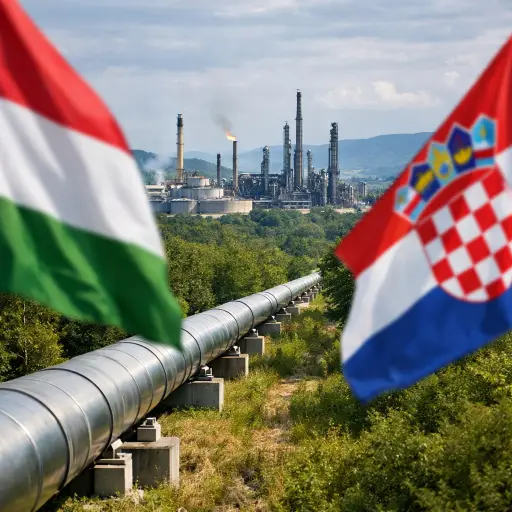
Magyar has also pledged to diversify Hungary’s energy strategy to reduce vulnerabilities while supporting a pragmatic green transition aligned with broader European commitments, presenting the approach as both economically sensible and strategically necessary.
Political analysts note that economic anxiety, particularly among urban and younger voters, has created an opening for opposition forces, even as Orbán maintains strong backing in rural regions and among conservative constituencies who credit him with stability and a firm defense of national sovereignty.
Orbán has built his campaign narrative around continuity and experience, arguing that his leadership safeguards Hungary’s independence amid external pressures, and his allies dismiss the Tisza surge as temporary momentum that will fade under electoral scrutiny.
Still, the narrowing margins in multiple polls underscore the volatility of the political landscape, with Tisza attempting to consolidate fragmented opposition groups into a unified national force capable of translating polling gains into votes.
Campaign volunteers have intensified grassroots outreach in cities and university towns, organizing town halls and neighborhood events that emphasize civic participation and voter mobilization, while social media has become a central battleground for shaping narratives.
For many Hungarians, the contest now unfolding represents more than a routine electoral cycle; it is a referendum on governance style, institutional integrity, and the country’s geopolitical orientation within Europe.
As supporters departed the launch event, a mood of cautious optimism mixed with realism about the scale of the challenge ahead, reflecting both the excitement surrounding Tisza’s rise and the entrenched strength of the governing party.
Whether Magyar’s insurgent campaign can convert momentum into electoral victory remains uncertain, but his emergence has already reshaped Hungary’s political conversation and set the stage for a pivotal national decision.