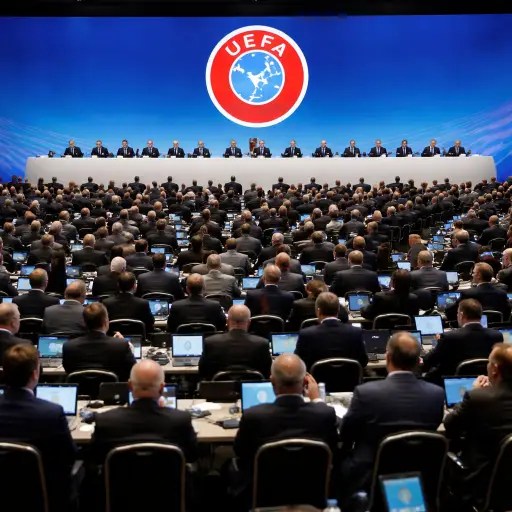
European football’s leaders endorse measures to reinforce transparency, financial stability, and long-term development across the continent
The latest UEFA Congress has concluded with a series of far-reaching decisions designed to reinforce governance standards and accelerate sustainable development throughout European football, marking a defining moment for the sport as it navigates complex financial, social, and competitive challenges in the modern era.
Gathered in a spirit of unity and cautious determination, representatives from across the continent convened to debate and ultimately approve reforms that UEFA’s official communications describe as essential to strengthening institutional transparency, safeguarding competitive balance, and embedding sustainability at the heart of football’s strategic vision.
At the center of discussions stood a renewed commitment to governance reform, with member associations endorsing updated compliance mechanisms aimed at enhancing accountability within clubs and national federations, reinforcing ethical oversight structures, and ensuring that decision-making processes remain transparent and resilient in the face of mounting commercial pressures.
UEFA leadership framed the reforms as a proactive evolution rather than a reaction to crisis, emphasizing that football’s growth over recent decades demands equally robust administrative frameworks capable of protecting the integrity of competitions while supporting innovation and investment across all levels of the game.
Financial sustainability emerged as a dominant theme throughout the Congress proceedings, with delegates supporting strengthened financial monitoring systems intended to promote responsible spending, encourage long-term planning, and prevent systemic risks that could undermine domestic leagues or continental tournaments.
The Congress also reaffirmed its dedication to solidarity mechanisms, underscoring the importance of redistributing revenues in ways that bolster grassroots initiatives, women’s football programs, youth academies, and infrastructure development in emerging football nations, thereby reinforcing the sport’s social and cultural foundations.
Environmental sustainability featured prominently on the agenda, reflecting UEFA’s acknowledgment that football must adapt to broader societal expectations regarding climate responsibility, stadium efficiency, travel impact reduction, and sustainable event management practices across international competitions.
Delegates highlighted collaborative frameworks that will enable national associations to share best practices on carbon reduction strategies, renewable energy adoption in stadium operations, and community engagement initiatives designed to position football as a catalyst for positive environmental change.
Another significant dimension of the Congress centered on safeguarding competitive integrity, with renewed emphasis placed on combating match manipulation, enhancing digital monitoring tools, and deepening cooperation with regulatory authorities to protect competitions from emerging technological threats.
In parallel, representatives discussed the evolving landscape of digital broadcasting and fan engagement, recognizing that innovation in media distribution and data analytics must be balanced by careful stewardship of supporter interests and the preservation of football’s unique communal atmosphere.
Several speakers underscored the importance of maintaining open dialogue between governing bodies, clubs, players, and supporters, noting that sustainable growth depends not only on regulatory measures but also on trust, transparency, and inclusive consultation across the football ecosystem.
Women’s football development received renewed institutional backing during the Congress, with commitments to expanded investment, structured competition pathways, and enhanced visibility initiatives intended to accelerate the sport’s upward trajectory and strengthen its long-term commercial viability.
Youth development strategies were likewise reinforced, as delegates reiterated the value of educational integration, coaching excellence programs, and cross-border collaboration designed to nurture talent while safeguarding the well-being of young athletes in increasingly competitive environments.
UEFA officials emphasized that governance reform and sustainable growth are inseparable objectives, arguing that transparent institutions are better equipped to deliver equitable competitions, secure commercial partnerships, and respond effectively to evolving societal expectations.
The Congress concluded with a strong symbolic message of unity, as member associations collectively endorsed a roadmap positioning European football as both a global leader in sporting excellence and a model for responsible management in international sport.
As delegates departed, the prevailing sentiment was one of cautious optimism, reflecting a shared recognition that while structural reforms alone cannot eliminate every risk, the decisions adopted provide a coherent framework for navigating the uncertainties of the years ahead.
In the aftermath of the Congress, attention now turns to implementation, with national federations tasked with translating policy commitments into operational realities that will ultimately determine whether the ambitions articulated in plenary sessions can deliver tangible and lasting transformation.
For European football, the outcomes of this Congress represent more than procedural adjustments; they signal an effort to recalibrate the sport’s governance architecture in alignment with modern expectations, reaffirming that sustainability, integrity, and solidarity remain fundamental pillars of its future.
The coming months will reveal how effectively these commitments are executed, but for now, the Congress stands as a clear statement that Europe’s football leadership is intent on shaping a resilient and forward-looking chapter in the game’s enduring story.



 The Tower Post