Diplomacy unfolds amid military strikes and political pressure on Kyiv from Washington and European scrutiny

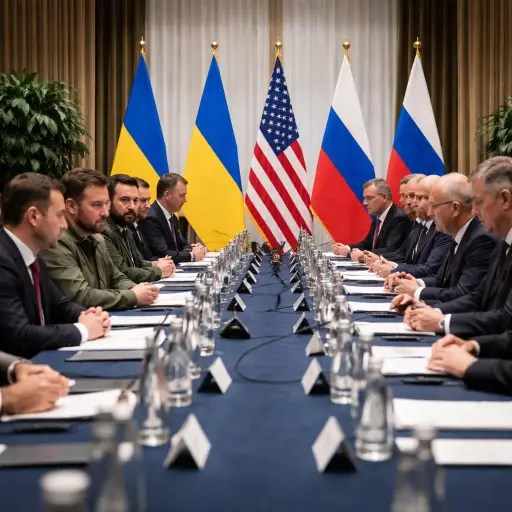
Negotiators from Ukraine and Russia convened under U.S. mediation in Geneva, marking a new phase of decades-long efforts to end the devastating war that has reshaped European geopolitics. The talks opened amid intense pressure from Washington on Kyiv to move quickly toward a negotiated settlement — a strategy that has drawn both domestic and international scrutiny, as well as skepticism about any meaningful breakthrough.
For two days, Ukrainian and Russian delegations met behind closed doors, with territorial disputes at the forefront of the agenda. The Kremlin delegation, led by senior advisers, insisted that unresolved control over parts of eastern Ukraine must be addressed — a demand Kyiv has firmly rejected. Ukrainian negotiators emphasized that security guarantees, humanitarian concerns, and broader questions of sovereignty will also shape the talks.
Pressure from Washington
U.S. President Donald Trump has publicly urged Kyiv to “come to the table fast,” framing the Geneva talks as a pivotal moment that could define his administration’s legacy on Europe’s longest-running conflict. Trump characterized the negotiations as “big talks” while traveling, reiterating his push for a swift diplomatic resolution.
The United States has taken a central role in convening these negotiations, signaling to both Russia and Ukraine that Washington expects concessions. However, this stance has strained relations between Kyiv and its Western backers — particularly in Europe, where leaders are closely watching the Geneva process and cautioning against a deal that might prematurely freeze the conflict on unfavorable terms for Ukraine.
Military Escalations Shadow Talks
Just hours before delegates met in Switzerland, Russia launched a widespread aerial assault on Ukrainian infrastructure, including strikes that severely damaged major components of the national power grid, forcing large population centers into blackouts during winter conditions. Officials reported dozens of drones and missiles launched in coordinated strikes, deepening fears that Moscow seeks leverage on the battlefield even as it sits at the negotiating table.
Kyiv condemned the assaults as calculated acts intended to weaken civilian resilience and apply pressure ahead of the diplomatic talks. Ukrainian President Volodymyr Zelenskiy called for increased sanctions and military support from Western allies, stating that peace must be underpinned by justice and security guarantees rather than concessions extracted under duress.
European and Global Reactions
European capitals have expressed guarded interest in the Geneva negotiations but stress that any resolution requires more than a rapid bilateral deal. Several EU nations have urged that peace not be brokered at Ukraine’s expense, given the conflict’s impact on regional security and stability. European leaders remain wary that concessions could embolden further aggression and destabilize alliances.
Analysts note that while Geneva represents a renewed attempt to find political solutions, expectations of a major breakthrough remain low. Previous talks, including rounds held in Abu Dhabi earlier in the year, produced limited progress and highlighted deep divergences over territorial control and future security arrangements.
Outlook: Diplomatic Deadlock or New Opening?
With the war now nearing its fourth anniversary, the Geneva talks carry symbolic weight. For Ukraine, the negotiations must safeguard sovereignty, security, and territorial integrity; for Russia, the talks are another arena in which to press maximalist demands. For the United States, these discussions are a test of diplomatic influence and strategic patience — with political implications at home and abroad.
As delegations adjourned, officials characterized the talks as constructive but cautioned that real progress may require additional rounds, broader international engagement, and a shift in battlefield dynamics. For many observers, the outcome of Geneva may not be a definitive peace deal, but rather a signal of how far apart the parties still stand — politically, militarily, and diplomatically.