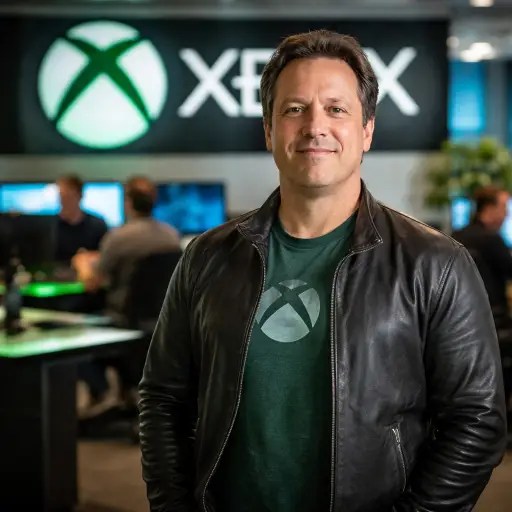
Veteran executive steps aside as the tech giant reshapes its gaming division for a new strategic chapter.
Microsoft’s gaming business is entering a defining transition as Phil Spencer, the longtime head of Xbox and one of the most influential figures in interactive entertainment, prepares to retire, triggering a sweeping leadership reshuffle across the company’s global gaming operations.
The move marks a pivotal moment not only for Xbox but for Microsoft’s broader consumer ambitions, as the technology giant recalibrates its strategy amid intensifying competition, evolving player expectations and the accelerating convergence of gaming, cloud computing and artificial intelligence.
Spencer’s departure concludes a career spanning decades at Microsoft, where he rose through publishing and product leadership roles before taking control of the Xbox division and later Microsoft Gaming, becoming the steady public face of a brand that experienced both turbulence and resurgence under his leadership.
During his tenure, Xbox evolved from a hardware-centric console competitor into a far-reaching ecosystem encompassing PCs, cloud streaming, subscription services and an expanding global studio network, positioning Microsoft as a central architect of gaming’s transition toward service-based and cross-platform models.
The expansion of Xbox Game Pass into a flagship subscription platform, alongside landmark acquisitions that brought major development studios and globally recognized franchises into Microsoft’s portfolio, reflected Spencer’s long-term strategy of pairing content scale with infrastructure strength.
Yet the leadership transition unfolds at a complex juncture for the gaming industry, where hardware cycles are lengthening, development budgets are escalating and publishers are adjusting to more selective consumer spending after years of extraordinary digital growth.
Microsoft executives have characterized the reshuffle as a forward-looking evolution designed to align the gaming division more closely with the company’s broader investments in cloud services and advanced AI systems, technologies increasingly viewed as foundational to the future of interactive entertainment.
The incoming leadership team is expected to deepen integration between Xbox’s content operations and Microsoft’s platform capabilities, reinforcing ambitions to deliver more personalized, data-driven and device-agnostic experiences across a global user base.
Inside the company, the transition is being framed both as recognition of Spencer’s legacy and as a strategic recalibration aimed at preparing Xbox for a competitive landscape that now includes not only traditional console rivals but also mobile ecosystems, subscription media platforms and AI-powered digital experiences.
Industry analysts say the emphasis on technological expertise at the executive level signals confidence that the next growth frontier in gaming will depend as much on intelligent infrastructure and scalable cloud architecture as on headline blockbuster releases.
For developers within Microsoft’s extensive studio portfolio, the reshuffle introduces fresh uncertainty about investment priorities, production pacing and creative autonomy, particularly as the company balances innovation ambitions with investor expectations for operational discipline.
Players, meanwhile, are closely watching for assurances that first-party releases, hardware development and subscription offerings will continue uninterrupted, even as Microsoft signals a broader technological pivot intended to future-proof the Xbox brand.
Spencer has indicated he will remain in an advisory capacity during the transition period, expressing gratitude to colleagues, partners and the global gaming community while voicing confidence that the next leadership chapter will build upon the foundations established over the past decade.
Reaction across the industry has been swift and varied, with many executives crediting Spencer for restoring confidence in Xbox during challenging periods and expanding its global footprint, while others view the moment as an inflection point that could redefine Microsoft’s long-term identity in gaming.
Investors are expected to evaluate how effectively the new leadership can leverage Microsoft’s vast cloud and AI infrastructure to unlock additional revenue streams, deepen player engagement and maintain competitive differentiation in an increasingly platform-agnostic marketplace.
The leadership change carries symbolic weight at a time when gaming stands at the crossroads of entertainment, social connectivity and intelligent systems, making executive vision and strategic execution more consequential than ever before.
As Microsoft’s gaming division pivots under new stewardship, the company faces the dual challenge of honoring a legacy built on expansion and community trust while embracing a technological transformation that could reshape how games are created, distributed and experienced worldwide.
Whether the post-Spencer era ultimately proves evolutionary or revolutionary will depend on strategic clarity and disciplined execution, but the retirement of one of gaming’s most prominent leaders undeniably closes a significant chapter and opens another for Microsoft and the broader tech industry.



 The Tower Post