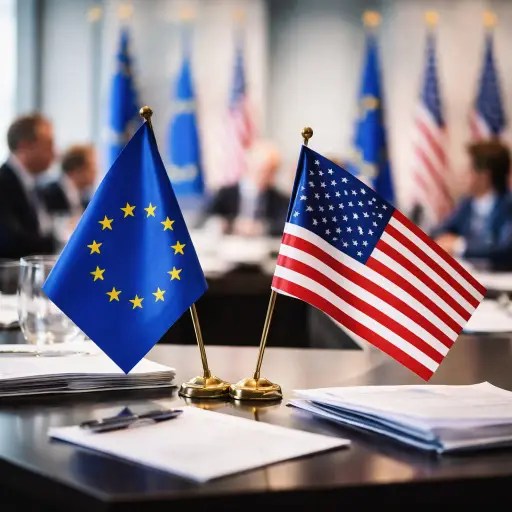
Lawmakers warn tariff volatility and legal uncertainty could delay ratification amid broader competitiveness concerns
The European Parliament is weighing whether to suspend ratification of a landmark trans-Atlantic trade agreement as mounting tariff volatility and political uncertainty cast doubt over the stability of the global trading system.
In pointed interventions during plenary discussions this week, several senior lawmakers indicated that the European Union may need to pause the approval process for the agreement, arguing that the current international trade climate lacks the predictability required for long-term commitments.
While no formal motion has yet been tabled, parliamentary group coordinators confirmed that discussions are intensifying behind closed doors, reflecting growing unease across party lines that the trans-Atlantic framework once seen as a stabilizing anchor between Brussels and Washington could be undermined by abrupt tariff shifts and inconsistent enforcement practices.
Members of Parliament repeatedly referred to what one centrist lawmaker described as tariff chaos, a phrase that has increasingly entered Brussels political vocabulary as trade measures have been introduced, suspended, reintroduced and challenged in rapid succession, creating what industry representatives describe as a climate of legal whiplash.
Although the draft agreement was negotiated to reduce duties, harmonize standards and strengthen dispute resolution mechanisms, critics now argue that the broader trade environment has changed faster than the treaty architecture can accommodate, raising concerns that ratification under current conditions may bind the EU to commitments difficult to defend or adapt.
Supporters of the agreement warn that delaying ratification could itself damage European competitiveness, stressing that the deal is designed to streamline regulatory cooperation, facilitate digital trade flows and expand market access for European exporters across sectors ranging from advanced manufacturing to agri-food production.
Business groups caution that uncertainty alone can depress investment and weaken supply chains, arguing that companies need clear signals that the trans-Atlantic corridor remains open and rules-based if they are to commit capital in a fragile global environment marked by strategic competition and industrial policy disputes.
Skeptics counter that competitiveness depends as much on legislative stability as on market access, warning that if tariff regimes continue to shift unpredictably even a ratified agreement may not shield firms from sudden cost escalations or retaliatory measures that could erode profit margins and disrupt long-term planning.
At the heart of the debate lies a question of legal certainty, as several lawmakers emphasize that international agreements must rest on a predictable enforcement framework, without which the European Parliament risks endorsing a structure whose practical value could erode over time.
Some members have proposed inserting additional safeguard clauses or requesting interpretative clarifications before proceeding, while others favor a temporary suspension of ratification proceedings pending clearer assurances from trans-Atlantic counterparts regarding tariff discipline and dispute settlement commitments.
Institutional credibility also looms large in the debate, as parliamentarians remain mindful that once ratified trade agreements are difficult to amend, and a pause would signal that the EU is determined to safeguard its regulatory autonomy and economic resilience in an increasingly fragmented global marketplace.
The agreement was initially heralded as a symbol of renewed cooperation between Brussels and Washington following supply chain disruptions and heightened geopolitical tensions, aiming not only to lower barriers but also to establish common standards in emerging sectors such as green technologies and digital governance.
However the broader geopolitical environment has grown more fragmented as tariff adjustments tied to domestic industrial policy debates on both sides of the Atlantic complicate what was intended to be a streamlined path to ratification, forcing policymakers to reassess both timing and strategy.
Despite tensions diplomatic channels remain active and European Commission officials insist that dialogue with United States counterparts continues at multiple levels, cautioning against conflating short-term policy disputes with the long-term strategic value of the partnership.
The ratification debate is unfolding against a backdrop of heightened scrutiny over the EU economic model, with concerns about industrial competitiveness, energy costs and regulatory burden sharpening political divisions within Parliament and adding urgency to calls for clearer legal footing.
For some lawmakers pausing ratification is a defensive move aimed at preserving leverage and ensuring stability before committing to binding obligations, while others warn that hesitation risks sending a negative signal to global partners at a time when Europe seeks to reinforce its position in international supply chains.
Observers note that even the hint of suspension carries weight, as markets and diplomatic partners closely watch whether Parliament will formalize its reservations or seek compromise language that allows the process to continue without sacrificing institutional authority.
Procedurally Parliament retains the authority to delay its consent vote, and such a step would not terminate the agreement but would effectively freeze its entry into force until political conditions improve or additional assurances are secured from negotiating partners.
As debate intensifies the message from Brussels is one of caution rather than rejection, underscoring a broader conviction that openness to trade must be matched by predictability and legal coherence if Europe is to navigate a volatile global economy without undermining its own competitiveness.
In the end the coming period may determine whether the trans-Atlantic pact proceeds as planned or enters a holding pattern, with lawmakers signaling that strength in partnership depends not only on ambition but on durable rules capable of withstanding shifting political and economic winds.



 The Tower Post