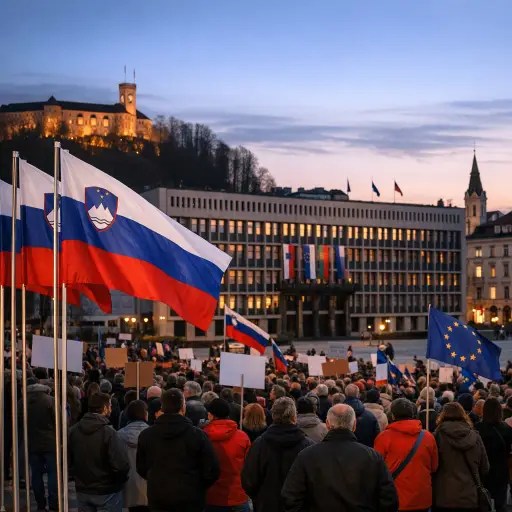
With the vote planned for early spring, parties accelerate campaigns focused on the economy, justice reform and Slovenia’s future within the European Union.
Slovenia has formally scheduled its next parliamentary election for early spring, setting in motion a campaign that is expected to shape the country’s domestic and European trajectory for years to come. The announcement, made in the final stretch of winter, provides long-awaited clarity to political parties, investors and citizens who have been anticipating confirmation of the national vote.
The decision marks a significant institutional milestone in the Central European nation’s political calendar, transforming months of informal positioning into an official race for parliamentary seats. With the timetable now fixed, coalition leaders and opposition figures alike are moving swiftly to sharpen their messages and consolidate support across a diverse electorate.
The campaign begins against a backdrop of economic adjustment and social debate. Although Slovenia has demonstrated relative resilience within the euro area, households continue to navigate higher living costs and persistent concerns about purchasing power. Economic stewardship is therefore emerging as the defining issue of the race, with competing visions for fiscal policy, taxation and public investment expected to dominate the airwaves.
Government representatives are likely to emphasize stability, targeted relief measures and continued alignment with European recovery and green transition frameworks. Opposition parties, meanwhile, are framing the election as an opportunity to recalibrate policy toward broader middle-class relief, administrative simplification and renewed economic dynamism. Business associations have urged predictability and structural reform, while labor groups are pressing for stronger wage protections and social guarantees.
Beyond macroeconomic concerns, questions of justice and institutional credibility are poised to feature prominently. Judicial efficiency, transparency safeguards and anti-corruption mechanisms have resurfaced as focal points in public discourse, reflecting broader European conversations about rule-of-law standards. Several political actors are proposing modernization initiatives designed to accelerate court procedures and strengthen oversight mechanisms.
Analysts note that institutional trust will be a decisive factor in voter mobilization, particularly among younger Slovenians who have expressed frustration with partisan gridlock. The clarity provided by the formal election schedule is expected to encourage broader civic engagement by underscoring procedural transparency and democratic continuity.
The European dimension of the contest adds another layer of significance. Slovenia has traditionally positioned itself as a pragmatic and consensus-oriented member of the European Union, balancing fiscal responsibility with social investment priorities. A shift in parliamentary composition could influence the country’s posture on migration coordination, energy diversification and fiscal governance debates within Brussels.
Diplomatic observers suggest that European partners are following developments closely, mindful that domestic mandates often shape coalition-building patterns in the Council of the European Union. While Slovenia’s foreign policy orientation is unlikely to undergo dramatic realignment, tonal adjustments in negotiation strategies could accompany any change in government configuration.
As the campaign infrastructure accelerates, political headquarters in Ljubljana and regional centers are transitioning from policy drafting to direct voter outreach. Digital platforms, grassroots organizing and televised debates are expected to intensify in the coming weeks, offering citizens clearer contrasts between party platforms.
The formal setting of the election date ultimately underscores the resilience of Slovenia’s democratic framework. By establishing a clear and predictable timeline, authorities have opened the door to a period of public deliberation that will culminate in the selection of a renewed parliamentary mandate.
In the final days of February, with campaign materials beginning to appear in city squares and rural municipalities alike, the focus now shifts to voters themselves. They will weigh competing visions for economic management, judicial reform and Slovenia’s evolving role within Europe, shaping not only the composition of the next parliament but also the broader direction of the republic in a changing continental landscape.


 The Tower Post