Tensions Surge in Brussels as Budapest Blocks Sanctions and Financial Aid to Kyiv

European leaders confronted one of the most serious internal disputes since the start of the war in Ukraine as Hungary blocked key measures intended to reinforce Kyiv’s financial stability and intensify sanctions pressure on Moscow.
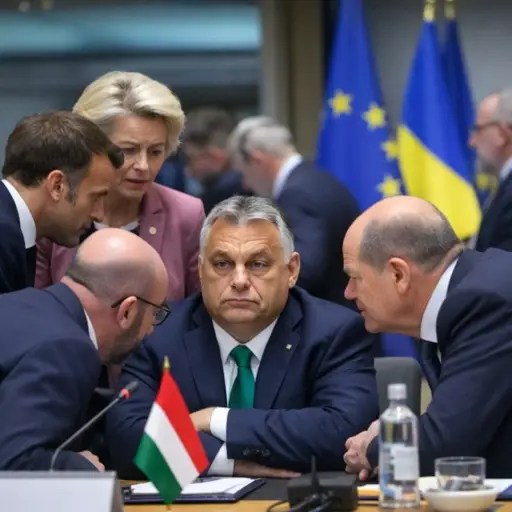
Diplomats described the atmosphere at the latest summit as unusually tense, with several heads of government accusing Budapest of deliberately obstructing initiatives that had broad backing across the bloc.
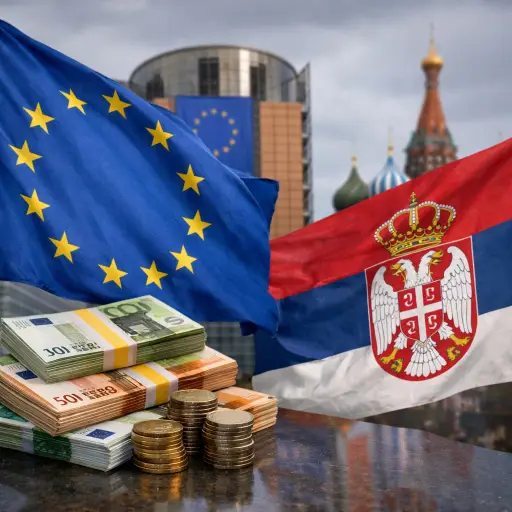
At issue were a new package of targeted sanctions and a substantial long-term loan facility designed to provide predictable macro-financial assistance to Ukraine as it continues to grapple with sustained military and economic strain.
Under European Union rules, major foreign policy decisions require unanimity, a structure that grants each member state effective veto power and enables a single capital to delay collective action.
Prime Minister Viktor Orbán has repeatedly voiced skepticism about expanding sanctions and deepening joint borrowing, arguing that such measures risk harming European economies while failing to produce decisive results on the battlefield.
Hungarian officials insist their position is grounded in national interest and fiscal prudence, emphasizing the need for stricter oversight mechanisms and clearer accountability in the distribution of funds to Kyiv.
However, several EU leaders contend that the repeated use of blocking tactics undermines the Union’s credibility and sends a troubling signal at a time when strategic unity is widely seen as essential.
European Commission President Ursula von der Leyen stressed that sustained support for Ukraine remains a core strategic commitment, warning that hesitation within the bloc could weaken Europe’s geopolitical standing.
German Chancellor Friederic Merz highlighted the importance of reliability, noting that financial predictability is critical for Ukraine’s capacity to maintain public services and defense operations under extraordinary pressure.
French President Emmanuel Macron echoed calls for cohesion, arguing that Europe must demonstrate collective resolve if it seeks to assert itself as a credible security actor in a rapidly shifting global landscape.
Behind closed doors, negotiators explored alternative pathways, including the possibility of structured compromises or phased disbursements that might address Hungarian concerns without diluting the overall scale of assistance.
Such procedural workarounds remain politically delicate, as they risk deepening institutional divisions and raising broader questions about the effectiveness of unanimity in times of crisis.
The dispute also intersects with longer-running tensions between Budapest and Brussels over rule-of-law standards and access to EU funds, further complicating the diplomatic calculus.
Analysts suggest that the standoff reflects a deeper debate about the Union’s future direction, particularly regarding the balance between national sovereignty and collective strategic responsibility.
While public opinion in much of Europe continues to favor sustained backing for Ukraine, economic pressures and domestic political dynamics have created space for dissenting narratives that challenge open-ended commitments.
Critics argue that even temporary delays in approving sanctions or financial aid can have tangible strategic consequences, potentially emboldening adversaries and eroding perceptions of European unity.
Hungary maintains that it is not opposing Ukraine’s sovereignty but seeking recalibration, contending that sanctions should be regularly reassessed and financial mechanisms carefully structured.
For many of its partners, however, the timing and repetition of Budapest’s objections risk projecting fragmentation at a moment when coherence is viewed as a decisive asset.
As discussions resume, diplomats express cautious hope that a compromise can be reached, yet acknowledge that the episode has exposed underlying vulnerabilities in the Union’s decision-making framework.
The coming weeks will test whether Europe can reconcile divergent national calculations with the imperative of unified action in support of a country whose future remains closely tied to the continent’s own security trajectory.