Ukrainian Paralympic Team Plans Opening Ceremony Boycott Over Russia and Belarus Participation
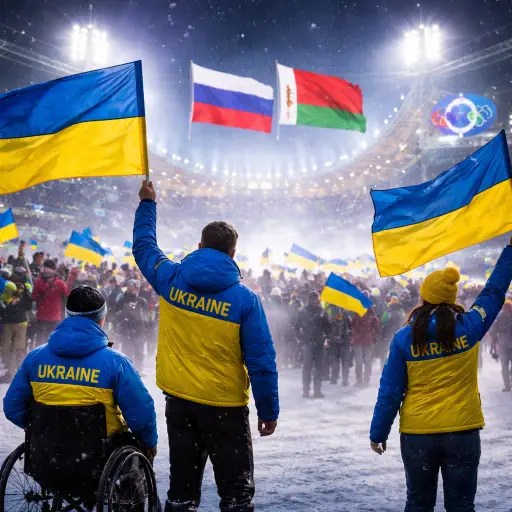
As the Winter Paralympic Games prepare to open in the final days of February, the Ukrainian delegation has announced it will boycott the opening ceremony in protest against the decision to allow Russian and Belarusian athletes to compete under their national flags, a move that underscores how profoundly war continues to shape the landscape of international sport.
Team officials confirmed that Ukrainian athletes will still compete in all scheduled events but will not take part in the traditional parade of nations, describing the absence as a deliberate and symbolic gesture aimed at international sporting authorities rather than a withdrawal from competition itself.
The controversy follows the decision by global sports administrators to reinstate Russia and Belarus with full national representation, a step critics argue projects a sense of normalcy that clashes with the ongoing conflict and its human toll, while supporters insist that athletes should not be punished for geopolitical actions beyond their control.
For many members of Ukraine’s Paralympic team, the issue is not abstract, as several athletes train in facilities damaged during the war, others have been displaced from their homes, and some have lost friends, relatives, or fellow competitors, making the sight of opposing national flags in a celebratory stadium setting deeply painful.
“We cannot march as if nothing has happened,” one athlete said in a private conversation, reflecting a sentiment that has circulated within the delegation for weeks as the Games approached and internal discussions intensified.
International Paralympic officials have defended their stance by reiterating a commitment to political neutrality and inclusion, emphasizing that the Paralympic movement was founded on principles of unity, resilience, and the belief that sport can bridge divides even in moments of profound global tension.
Yet the concept of neutrality has become increasingly contested, particularly in contexts where armed conflict remains unresolved, and Ukrainian representatives argue that silence in such circumstances risks being interpreted not as impartiality but as indifference.
Analysts say the boycott places organizers in a sensitive position on the eve of a ceremony designed to project harmony and shared purpose, as the absence of one delegation from the parade could become one of the defining images broadcast worldwide when the Games begin.
Within Ukraine, reaction to the announcement has been swift and largely supportive, with sports officials, civic leaders, and fans praising the athletes for what they describe as a principled stand that balances participation with protest.
At the same time, there is recognition of the emotional cost, because for many Paralympians the opening ceremony represents a once in a lifetime milestone, the culmination of years of rehabilitation, training, and sacrifice that make the walk into a packed stadium one of the most powerful moments of their careers.
Coaches insist that preparation for competition has not been disrupted by the decision, noting that training camps continued under challenging conditions and that athletes remain focused on events ranging from alpine skiing to biathlon and para ice hockey.
Several competitors have spoken about the complexity of their position, explaining that they feel a dual responsibility to represent their country on the field of play while also acknowledging the broader national trauma that frames their participation.
Some athletes from other nations have expressed quiet solidarity, acknowledging the suffering endured by Ukrainian competitors, while others have cautioned against actions that might deepen divisions within the Paralympic community at a time when unity is already under strain.
Diplomatic observers are watching closely because major sporting events have long functioned as stages for symbolic gestures, and the Ukrainian delegation’s planned absence from the ceremony may resonate far beyond the stadium lights and televised spectacle.
The decision also highlights a broader debate that has shadowed global competitions in recent years, namely whether sport can truly remain insulated from politics in an interconnected world where international crises unfold in real time before global audiences.
For Ukraine’s team, the boycott is framed not as an attempt to politicize the Games but as a refusal to normalize a situation they believe remains morally unresolved, a stance they argue is consistent with the values of dignity and human rights often invoked by sporting institutions.
As the torch is prepared and final rehearsals conclude, attention is likely to focus not only on athletic performance but also on the silent space where one delegation would ordinarily stand, a visual reminder that the conflict shaping Europe’s security landscape continues to reverberate in unexpected arenas.
When competition begins, Ukrainian athletes will take to the snow and ice determined to contend for medals, aware that their absence from the ceremony will be interpreted in different ways around the world, yet unified in the belief that their quiet protest carries a message they feel compelled to deliver.
In choosing not to march, they seek to reconcile athletic ambition with ethical conviction, asserting that participation in sport does not require the suspension of conscience, and that even within a celebration of resilience and human achievement, silence can speak with unmistakable force.

 The Tower Post