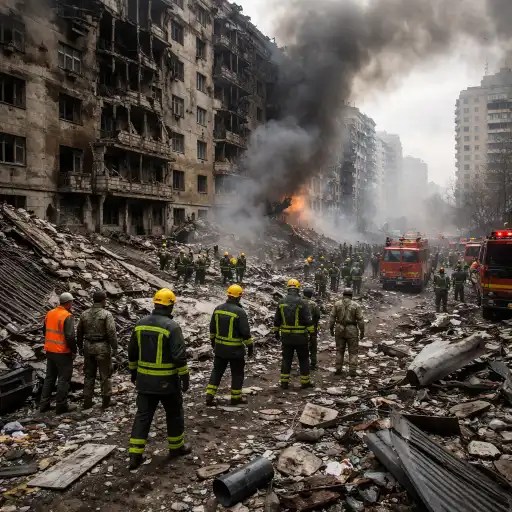
Widespread civilian injuries and damaged infrastructure shake cities from Kyiv to Zaporizhzhia as Russia unleashes hundreds of drones and missiles
Russia’s campaign of aerial strikes intensified again this week, overwhelming Ukrainian air defenses and inflicting civilian casualties and infrastructure damage across multiple regions, according to Ukrainian authorities and international reporting. The offensive, marked by a staggering barrage of drones and missiles, targeted energy facilities, rail links, and residential areas — deep into the heart of cities from Kyiv to Kharkiv and Zaporizhzhia.
In one of the largest combined drone and missile operations of the war so far, Russian forces launched hundreds of unmanned aerial vehicles alongside dozens of missiles, including long-range and ballistic types. Ukrainian officials reported that Russian forces fired 420 drones and 39 missiles during a prolonged overnight assault, seeking to cripple the country’s power grid and transportation networks. Despite a massive Ukrainian air defense effort that intercepted the majority of the onslaught, several strikes penetrated defenses, wounding dozens of civilians, including children, and leaving a trail of destruction in their wake.
Emergency responders in major cities reported broken windows, collapsed roofs, and shattered infrastructure. In Kharkiv, a bustling northeastern metropolis, at least 14 people were wounded when missiles and drones struck residential districts. Among them was a young child, underscoring the indiscriminate nature of the bombardment that also damaged schools, apartment buildings, and local businesses. In Zaporizhzhia, where drone strikes tore through apartment blocks and industrial facilities, at least 10 civilians were treated for injuries, local officials confirmed.
The capital city — long a frequent target — suffered widespread debris fall from intercepted drones, damaging buildings in three districts and sending residents searching for shelter as air raid sirens blared throughout the night. Even regions farther west, once considered relatively secure, reported power outages and hit infrastructure as energy substations and gas facilities were damaged by the bombardment.
Rail infrastructure also featured prominently in the attack, with strikes reported across frontline regions in the east and southeast. Ukraine’s vital railway network — crucial for civilian movement and military logistics — experienced disruptions and damage, compounding the hardships already faced by millions displaced by years of conflict.
The assault coincided with diplomatic efforts underway in Geneva, where Ukrainian and U.S. officials met to discuss post-war reconstruction and paths toward a long-term peace settlement. Despite these talks, Moscow’s bombardment showcased a stark disconnect between diplomatic negotiations and battlefield realities. Ukrainian President Volodymyr Zelenskyy has repeatedly denounced the assaults as attempts to undermine civilian morale and force concessions, while Kyiv pushes for increased Western military support and investment in energy and air defense systems.
International reaction has been swift. Western governments condemned the attacks, with some renewing calls for enhanced sanctions on Moscow and accelerated delivery of air defense systems to Kyiv. Analysts warn that as Russia continues to rely heavily on drones and missiles, Ukraine’s infrastructure and its people will remain under persistent threat, even as diplomatic talks inch forward.
For Ukrainians on the ground, the human toll is profound. Hospitals treating the wounded were stretched thin, and repair crews worked through rolling blackouts to restore electricity and rail services. In neighborhoods shattered by explosions, residents swept up glass and rubble, determined to rebuild even as fears of the next wave of strikes linger.



 The Tower Post