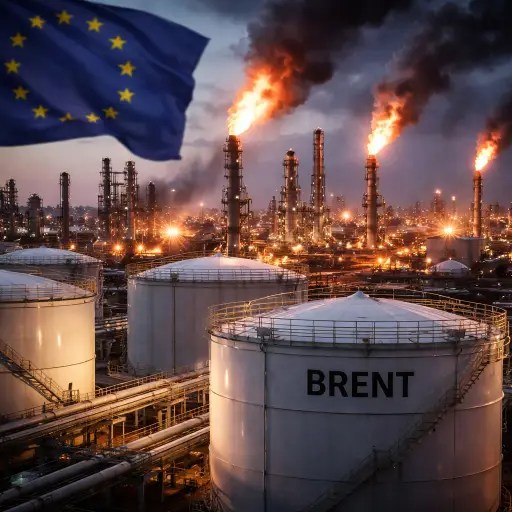
Oil and gas markets jump as missile exchanges fuel supply fears and revive inflation pressure across the continent
European energy markets reeled at the start of the week as escalating missile exchanges in the Gulf injected fresh uncertainty into global supply chains and triggered an abrupt repricing of geopolitical risk across oil and gas benchmarks.
Brent crude surged through key technical resistance levels during early trading, with traders citing mounting concern that vital shipping corridors and export terminals could be exposed to prolonged instability, even in the absence of confirmed physical disruption.
The rally was driven as much by anticipation as by concrete damage, as insurers reassessed maritime risk, tanker operators evaluated alternative routes, and refiners sought to secure additional cargoes in a market highly sensitive to headline developments.
In Amsterdam, natural gas futures swung sharply in volatile trade, reflecting Europe’s continued exposure to global liquefied natural gas flows and the speed with which sentiment can shift when transit security is called into question.
Despite diversification efforts and expanded LNG import capacity over recent years, Europe’s gas pricing structure remains tightly connected to global shipping dynamics, meaning even limited threats to Gulf exports can ripple quickly through regional balances.
Energy analysts noted that freight premiums and insurance surcharges alone can lift delivered costs significantly, amplifying price spikes as utilities and industrial buyers rush to hedge against further escalation.
Italy and Germany, both heavily reliant on imported energy, are bracing for renewed inflationary pressure as higher wholesale gas prices feed into electricity contracts and fuel costs across manufacturing and transport sectors.
In Rome, policymakers are closely monitoring power markets amid concern that household bills could edge higher again, while in Berlin industrial leaders warn that another surge in input costs risks eroding competitiveness in energy-intensive sectors.
Financial markets responded in tandem, with energy producers gaining ground on expectations of improved margins, while airline and logistics shares retreated under the weight of rising fuel price assumptions.
Bond investors weighed the implications for monetary policy, mindful that a sustained increase in energy benchmarks could complicate efforts to stabilize consumer prices after a period of tentative moderation.
European Union energy officials convened consultations to assess contingency options, including the potential deployment of strategic reserves and coordinated purchasing mechanisms designed to cushion short-term supply shocks.
Market participants described trading conditions as headline-driven and highly reactive, with algorithmic strategies magnifying intraday swings as each development in the Gulf was rapidly incorporated into pricing models.
Some analysts argue that Europe enters this episode better prepared than in previous crises thanks to fuller storage levels and diversified suppliers, yet they caution that resilience does not equate to immunity in an interconnected energy system.
Until diplomatic signals point clearly toward de-escalation, volatility is expected to remain elevated, leaving governments, businesses, and households once again confronting the fragile link between geopolitical tension and economic stability.


 The Tower Post