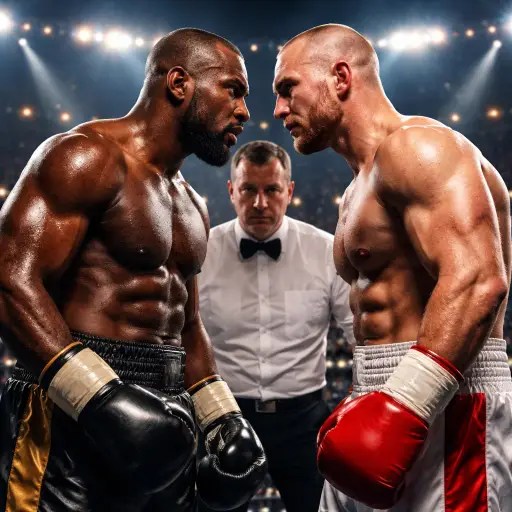
Europe’s Long-Awaited Title Clash Falls Apart Amid Revenue Disputes, Accusations, and Fan Fury
As March opens and the European boxing calendar was poised to ignite, negotiations for what had been billed as the biggest heavyweight title clash of the year have collapsed once again, leaving promoters pointing fingers, fighters trading accusations, and thousands of fans wondering how a blockbuster night unraveled at the final hurdle.
For months, anticipation had been building around a proposed showdown between two of the continent’s most prominent heavyweight champions, men who carry regional belts, loyal followings, and knockout power capable of filling the largest indoor arenas across London, Berlin, Paris, and Madrid.
Behind the scenes, sources close to the discussions say the breakdown came down to revenue splits, specifically how pay-per-view income, live gate receipts, international broadcast rights, and sponsorship packages would be divided between the two camps.
Promoters representing one side described the opposing team’s financial expectations as commercially unrealistic, insisting that their offer reflected current market realities and the actual drawing power of both fighters combined.
The rival camp swiftly rejected that characterization, arguing that their fighter is the primary attraction and therefore entitled to what they called market-reflective compensation based on recent ticket sales, television ratings, and sponsorship leverage.
In essence, the familiar boxing question resurfaced with renewed intensity: who is the true A-side.
Negotiators reportedly debated not only headline percentages but also rematch clauses, control over branding during fight week events, allocation of premium hospitality revenue, and even the distribution of streaming subscriptions outside Europe.
As discussions dragged on, optimism began to fade, and insiders describe a gradual hardening of positions rather than meaningful compromise.
Public statements soon followed, and the tone left little room for reconciliation, with one promotional executive declaring that the door remains open if the other side returns to reality.
Within hours, the opposing camp responded by suggesting that financial excuses were masking competitive hesitation, an accusation that was quickly amplified by supporters online.
The fighters themselves then entered the fray through interviews and social media posts, each implying that the other was ducking the fight while simultaneously claiming readiness to sign under fair terms.
For fans, the optics have been bruising and deeply frustrating, especially for those who had already begun planning travel, accommodation, and premium ticket purchases for what was expected to be a defining European fight night.
Online forums have filled with anger directed at promoters, sanctioning bodies, and occasionally the fighters themselves, as supporters question how modern boxing continues to struggle with delivering the matchups it markets so aggressively.
The collapse comes at a delicate moment for European heavyweight boxing, which has been enjoying renewed commercial strength, sold-out venues, and growing global streaming audiences.
The proposed clash had been framed as more than just another defense or voluntary title bout; it was positioned as a generational crossroads featuring contrasting styles, personalities, and regional pride.
Industry analysts note that unlike centralized sports leagues, boxing relies on bespoke agreements for each major event, meaning every detail must be negotiated from scratch, creating endless opportunities for stalemate.
When both camps believe they hold leverage, compromise becomes elusive, and alternative options begin to look more attractive than mutual concession.
Each fighter now has potential fallback paths, including mandatory defenses or lucrative cross-continental opportunities that may not carry the same historic resonance but promise immediate financial security.
That reality reduces urgency and increases brinkmanship, a dynamic that has defined countless high-profile collapses in the heavyweight division over the past decades.
Sponsors and broadcasters are also watching closely, as repeated negotiation failures can weaken investor confidence even when athlete quality remains high.
Marketing consultants involved in combat sports branding emphasize that stability sells, and uncertainty around marquee events complicates long-term partnership strategies.
For the fighters, the stakes extend beyond immediate paydays, because heavyweight legacies are built on signature nights that resonate long after titles change hands.
When two elite contenders circle each other without stepping into the ring, the absence becomes part of their story, often overshadowing victories against lesser opposition.
Despite the public acrimony, insiders insist that talks are not permanently dead and that cooling-off periods have historically revived negotiations once financial expectations recalibrate.
Pressure from fans, broadcasters, and even rival promoters can reshape leverage calculations, particularly when public demand proves sustained rather than fleeting.
In gyms across Europe, both heavyweights continue to train, projecting confidence and insisting that they want the fight, even as contractual documents remain unsigned.
For now, however, the ring that was meant to host a continental coronation remains unassembled, and what was shaping up to be the defining European boxing event of the season sits in limbo.
As early March momentum gives way to uncertainty, the division stands at a crossroads between renewed ambition and another chapter in boxing’s long history of near-miss super fights.
Whether cooler heads prevail or pride hardens positions further will determine if this rivalry is settled under bright lights or consigned to the frustrating archive of bouts that never materialized.
For fans who believed this would be the night European heavyweight supremacy was finally clarified, the latest collapse feels less like a business dispute and more like a squandered promise.

 The Tower Post