From Armenia to Moldova and beyond, a new generation of writers reshapes the continent’s narrative landscape
As Europe enters the early days of March, the literary spotlight turns toward a new generation of storytellers as the EU Prize for Literature unveils its 2026 shortlist, celebrating emerging authors from Armenia, Moldova and twelve other countries in a vibrant display of cultural breadth and narrative ambition across the continent.
The annual prize, designed to highlight rising fiction writers from across Europe, has evolved into a powerful platform for discovery, offering not only prestige but also tangible support for translation and cross-border circulation, ensuring that stories written in smaller linguistic communities can reach readers far beyond their national boundaries.
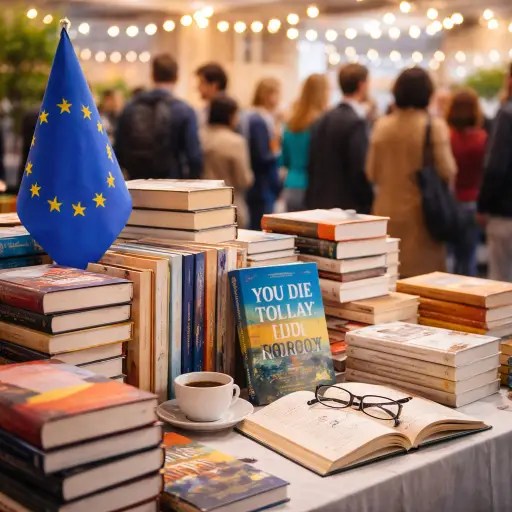
This year’s shortlist is marked by emotional intensity and thematic boldness, with titles that linger in the mind, including the evocative novel “You Die Today, I Die Tomorrow,” whose stark phrasing captures a shared vulnerability that resonates in a Europe grappling with geopolitical tension, social fragmentation and rapid change.
Far from a uniform chorus, however, the selected works reveal a striking diversity of tone and style, ranging from intimate family sagas and rural coming-of-age tales to formally experimental narratives that blur the boundaries between prose and poetry, realism and allegory, memory and invention.
The Armenian nominee delves into post-conflict identity through the quiet unraveling of a multigenerational household, where silences speak as loudly as dialogue and personal memory becomes inseparable from national history, while Moldova’s shortlisted author sets a story against a rural landscape charged with symbolism as young protagonists confront the pull between emigration and belonging.
Elsewhere on the list, writers from across Southern, Northern and Central Europe explore themes of climate anxiety, digital alienation, economic precarity and the search for intimacy in an era shaped by technological acceleration, demonstrating how contemporary fiction has become a laboratory for examining the pressures that define modern European life.
Members of the literary jury have praised the shortlist for its stylistic courage, noting fragmented structures, shifting perspectives and hybrid forms that challenge conventional storytelling, including novels constructed as unsent voice messages, reconstructed archives or layered testimonies that question the reliability of official histories.
The discussion surrounding “You Die Today, I Die Tomorrow” has been particularly animated among critics, many of whom interpret the novel not as an expression of despair but as a meditation on interdependence, suggesting that in a polarized age the fate of one community is deeply entwined with that of another.
Officials involved in the prize have emphasized its broader cultural mission, arguing that by elevating writers from smaller or less internationally visible markets alongside those from established publishing centers, the initiative strengthens Europe’s literary ecosystem and reaffirms diversity as a defining asset rather than a peripheral feature.
For Armenia and Moldova, the nominations carry symbolic resonance, positioning both countries firmly within the evolving map of European letters and sending a signal to younger writers that their experiences, languages and perspectives are integral to the continent’s shared cultural narrative.
Booksellers and festival organizers report growing curiosity about the shortlisted authors, anticipating increased demand for translations and public readings as readers seek fresh perspectives that reflect both local specificity and wider European concerns, a reminder that literature continues to serve as a bridge across borders.
Many of the nominated writers belong to a generation shaped by economic upheaval, digital transformation and renewed geopolitical strain, and their fiction often resists easy categorization, embracing ambiguity and complexity as honest responses to a rapidly shifting social landscape.
The shortlist also reflects a gradual but visible broadening of representation within European literature, with a notable presence of women and authors from historically underrepresented regions, contributing to a more inclusive and multifaceted portrait of contemporary storytelling.
As anticipation builds toward the announcement of the laureates, the prevailing mood is one of collective celebration rather than rivalry, with the focus squarely on the vitality of new voices that interrogate, unsettle and inspire in equal measure.
In a moment when public discourse can feel fractured, the EU Prize for Literature offers a reminder that narrative remains a powerful connective force, capable of articulating shared fears and hopes from the Caucasus to the Atlantic and of affirming that Europe’s enduring strength lies in the plurality of its voices.

 The Tower Post