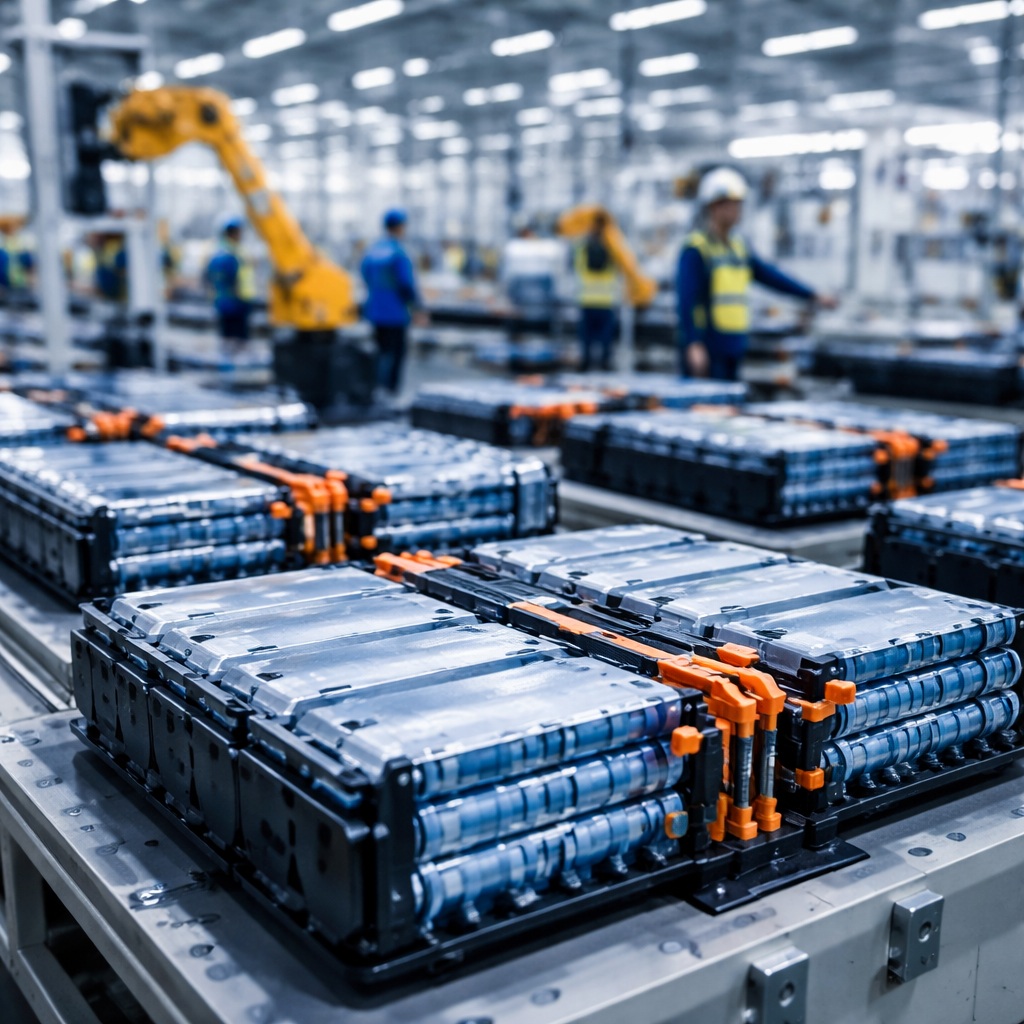
Campaigners argue that scaling up EU battery production could sharply narrow cost differences with Chinese rivals and reshape the continent’s electric vehicle market.
Momentum is building across the European Union as policymakers, manufacturers and advocacy groups rally behind an ambitious industrial push aimed at driving down the cost of batteries made on the continent.
The initiative, now at the center of Brussels’ competitiveness agenda, seeks to expand domestic production capacity rapidly enough to shrink the long-standing price gap between European-made batteries and those produced in China.
A coalition of campaign organizations this week intensified calls for coordinated action, arguing that scale is the decisive factor preventing European producers from matching Asian rivals on price.
They contend that the cost difference is not rooted in technological inferiority but in production volume, supply chain integration and years of sustained industrial policy support that enabled Chinese manufacturers to dominate global markets.
European officials increasingly echo that assessment, framing the current moment as a turning point in the bloc’s strategy to secure strategic autonomy in critical clean technologies.
Batteries account for a substantial share of electric vehicle costs, and even modest reductions in cell prices can have a measurable impact on final showroom prices, making affordability a central concern for automakers and consumers alike.
Industry executives note that European battery projects have often struggled with higher energy prices, fragmented permitting processes and uneven access to raw materials, factors that have constrained the pace of expansion.
Under the renewed plan, EU institutions are working to streamline state aid approvals, accelerate factory permitting and deepen partnerships for sourcing lithium, nickel and other essential inputs within Europe and through trusted trade partners.
Campaign groups argue that once giga factories operate closer to full capacity, fixed investment costs will be spread over larger output volumes, pushing marginal production costs downward and narrowing the differential with imported cells.
They also point to reduced logistics expenses, shorter supply chains and lower exposure to global shipping volatility as additional cost advantages that could emerge from localized production.
The debate unfolds against a backdrop of intensifying global competition, as Chinese electric vehicle brands expand their footprint in European markets and U.S. manufacturers benefit from generous domestic subsidies.
European carmakers have repeatedly warned that without competitively priced local batteries, they risk losing both market share and industrial capacity, potentially hollowing out one of the continent’s flagship industries.
Supporters of the EU strategy emphasize that sustainability standards may ultimately become an economic asset rather than a burden, as stricter environmental requirements gain prominence in procurement decisions and consumer awareness.
New rules requiring transparency on carbon footprint and lifecycle performance are designed to ensure that batteries produced in Europe meet rigorous environmental benchmarks, potentially differentiating them in a crowded market.
Yet campaigners stress that environmental leadership alone will not secure competitiveness if price gaps remain too wide, underscoring the urgency of scaling production volumes quickly.
Energy policy is deeply intertwined with the battery push, as manufacturers seek stable and affordable electricity supplies to power energy-intensive processes such as cell formation and materials refining.
Officials argue that ongoing electricity market reforms and expanded renewable generation capacity could gradually ease cost pressures on heavy industry, including battery producers.
Investors, however, are watching closely for signs of durable policy commitment, as giga factory projects require significant upfront capital and long planning horizons before profitability can be achieved.
Several joint ventures between automakers and battery firms are already underway across multiple member states, reflecting a growing willingness within the private sector to share risk and pool expertise.
Campaign groups maintain that decisive coordination at the EU level can prevent duplication of efforts and foster a truly integrated internal market for battery production and recycling.
They caution that delays in construction, local opposition to mining projects or bottlenecks in skilled labor could slow the rollout, potentially allowing competitors abroad to extend their lead.
Nevertheless, political momentum appears stronger than in previous years, with competitiveness, industrial resilience and clean technology leadership now prominent themes in policy debates across the bloc.
Analysts say that if Europe succeeds in building a dense ecosystem of suppliers, recyclers and technology developers around large-scale battery plants, network effects could further reinforce cost reductions over time.
For consumers, the implications are significant, as lower battery costs could translate into more affordable electric vehicles and accelerate the shift away from combustion engines.
That transition remains central to Europe’s climate ambitions, and policymakers increasingly view industrial strategy as inseparable from environmental policy in achieving those goals.
The coming months will reveal whether regulatory adjustments and financial incentives can translate into tangible increases in production output across the continent.
For campaigners, the message is unequivocal: Europe must act decisively to avoid locking in long-term dependence on imported cells at a moment when global supply chains remain vulnerable to geopolitical tensions.
They argue that with sufficient scale, predictable policy and coordinated investment, European battery producers can close much of the price gap that has defined the market for years.
In this view, the challenge is not technological capacity but the speed and cohesion of execution, as competitors continue to expand aggressively.
Whether the latest push marks a structural shift in Europe’s industrial landscape will depend on how quickly factories move from blueprint to full production lines humming at scale.
For now, the signal from Brussels and industry is clear: the continent intends to compete not only on standards and sustainability but also on price, seeking to anchor the next phase of electric mobility firmly within its own borders.


 The Tower Post