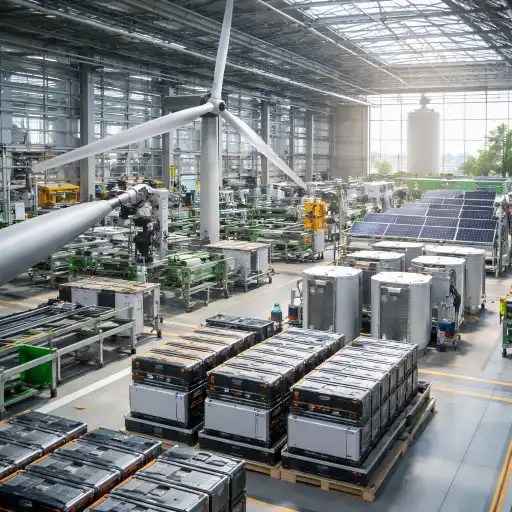
EU approval of sweeping state aid plan marks a decisive step in the Clean Industrial Deal, positioning France at the heart of Europe’s race to scale batteries, heat pumps and wind technologies.
Brussels has given the green light to a sweeping €1.1 billion French state aid scheme designed to expand clean technology manufacturing across the country, marking a pivotal moment in Europe’s industrial transformation as policymakers intensify efforts to anchor strategic industries within the bloc.
The decision, unveiled at the beginning of March, is more than a financial injection into select sectors; it represents a calculated shift in European industrial policy aimed at ensuring that the continent does not merely legislate climate ambition but also builds the hardware required to achieve it.
The scheme will channel public support into the domestic production of batteries, heat pumps, wind components and other strategic cleantech equipment, reinforcing supply chains that European officials increasingly describe as vulnerable in a world of geopolitical tension and fierce industrial competition.
At the center of the initiative lies the European Commission’s evolving Clean Industrial Deal, a framework designed to match Europe’s environmental targets with manufacturing capacity, innovation funding and faster state aid approvals in sectors deemed critical to the energy transition.
For years, Europe has led on climate regulation while relying heavily on imported components for its green technologies, a mismatch that policymakers now view as both an economic risk and a strategic weakness in the race for global technological leadership.
Under the newly approved French program, companies investing in new factories, expanding existing production lines or developing advanced manufacturing processes will be eligible for targeted support, provided projects align with EU competition rules and long term decarbonization goals.
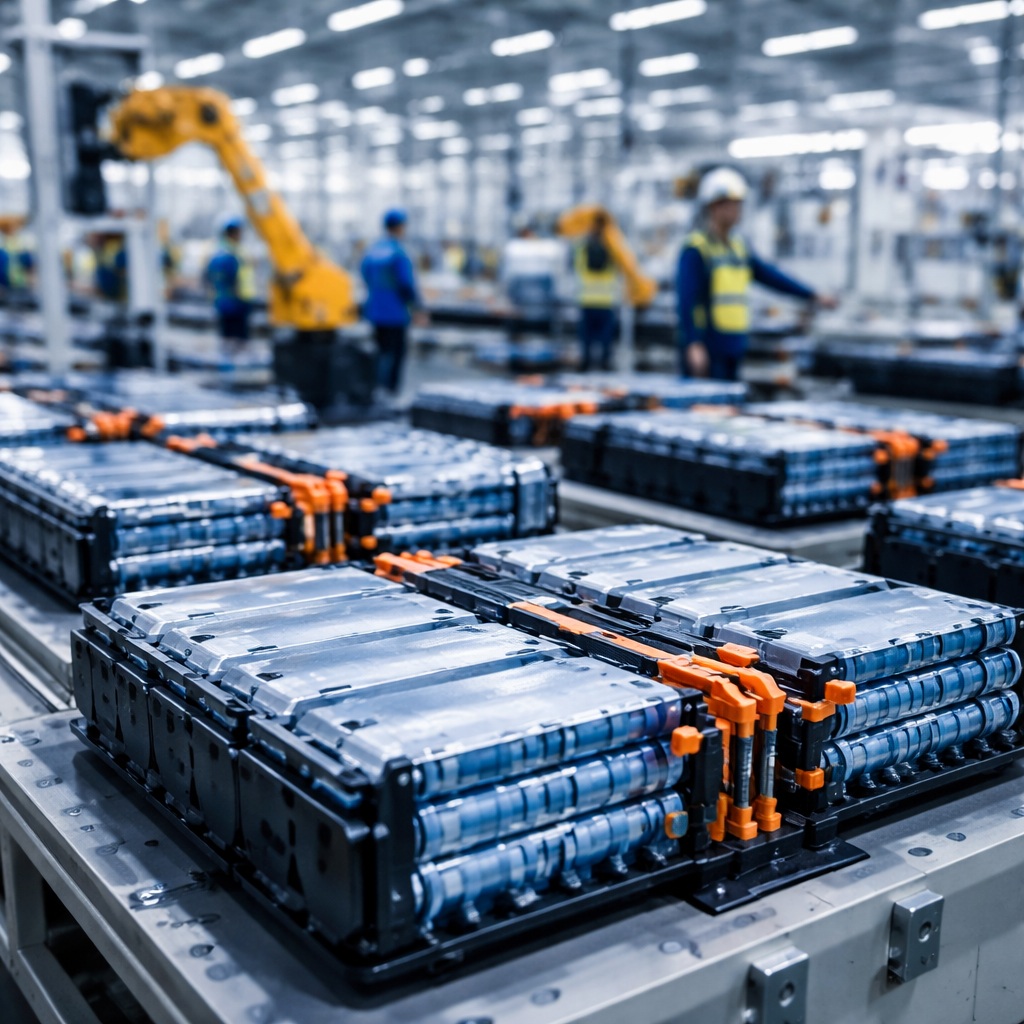
Battery production stands out as a primary focus, reflecting surging demand from electric vehicle manufacturers and grid storage operators as electrification accelerates across transport and energy systems.
Although Europe has made progress in building giga factories in recent years, industry analysts acknowledge that the continent still trails Asian competitors in scale, cost efficiency and supply chain integration, leaving room for more assertive industrial policy.
French authorities aim to use the state aid framework to strengthen every layer of the battery value chain, from cell assembly to advanced components, thereby reducing dependence on external suppliers while creating high value industrial employment.
Heat pumps represent another pillar of the strategy, as electrified heating systems are increasingly viewed as essential to cutting emissions from buildings, one of the largest sources of carbon output within the European Union.
Demand for heat pumps has grown rapidly, yet production capacity has struggled to keep pace with installation targets, prompting concerns that supply constraints could slow the bloc’s broader decarbonization trajectory.
By incentivizing manufacturers to scale up operations in France, policymakers hope to shorten supply chains, stabilize pricing and foster a domestic ecosystem capable of supporting long term climate objectives.
Wind technology, once a flagship European success story, also features prominently in the scheme as turbine manufacturers face mounting pressure from global competitors operating with lower costs and substantial public backing.
Reinforcing domestic production of turbines and components is intended not only to preserve industrial know how but also to safeguard Europe’s energy security at a time when resilience has become a defining policy theme.
The broader Clean Industrial Deal reflects lessons drawn from recent international policy shifts, particularly expansive subsidy programs elsewhere that have reshaped the global investment landscape and intensified competition for clean manufacturing projects.
Rather than replicate those models outright, Brussels is attempting to craft a distinctly European response that balances targeted state support with safeguards to maintain a level playing field inside the single market.
Officials emphasize that public funding alone will not transform Europe into a cleantech powerhouse and that the French package is structured to crowd in private capital by reducing regulatory uncertainty and improving project bankability.
Financial institutions and industrial groups have reacted cautiously positively in early March, viewing the Commission’s approval as a signal that Europe is prepared to move more decisively in defense of its strategic industries.
Yet significant challenges remain, including the availability of skilled labor, the stability of raw material supplies and the need to maintain competitive energy costs for manufacturers operating within Europe.
Critics warn that uneven state aid across member states could fragment the internal market, though the Commission insists that its oversight mechanisms are designed to prevent distortions while enabling flexibility in priority sectors.
The success of France’s €1.1 billion initiative will ultimately depend on execution speed, investor confidence and the ability of projects to move from approval to production without bureaucratic delay.
If effectively implemented, the scheme could anchor France at the center of Europe’s emerging cleantech manufacturing base and demonstrate that climate ambition and industrial strategy can reinforce rather than contradict each other.
As the Clean Industrial Deal gathers momentum, the message from Brussels and Paris is unmistakable: Europe’s green transition is no longer solely about setting targets but about building factories, scaling technologies and competing globally in the industries that will define the coming decades.


 The Tower Post