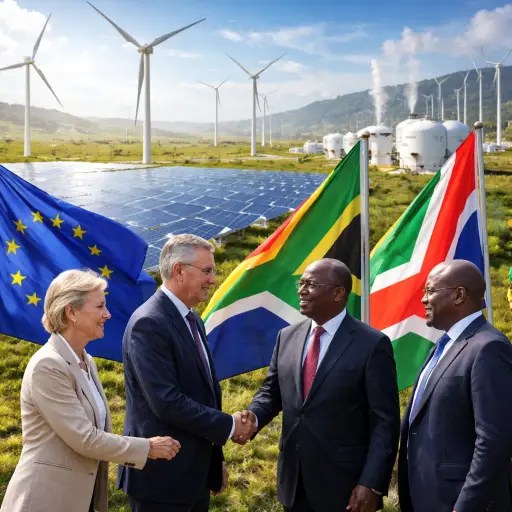
Green investment talks signal Europe’s push to expand climate alliances and reshape global trade links
The European Union and South Africa have opened a new phase of diplomatic engagement focused on clean industry, green infrastructure, and climate‑aligned trade, launching a dialogue that officials say could reshape economic cooperation between Europe and one of Africa’s most industrialized economies. The initiative reflects a broader European strategy to deepen relationships beyond traditional Western partners while accelerating the global shift toward low‑carbon production systems, an effort that policymakers increasingly view as essential not only for climate goals but also for economic resilience and supply chain stability.
The discussions center on how public and private investment can support the modernization of South Africa’s energy system while strengthening trade channels for environmentally sustainable technologies and materials. European officials have framed the dialogue as part of a wider transformation of global trade patterns, where climate considerations increasingly influence investment decisions, industrial policy, and market access rules. South Africa, which faces significant energy transition challenges but also possesses abundant renewable resources and industrial capacity, has emerged as a critical partner in this evolving landscape.
For European policymakers the partnership represents a strategic opportunity to link climate diplomacy with industrial competitiveness, ensuring that emerging clean‑technology supply chains include reliable partners outside Europe’s immediate neighborhood. The initiative comes amid growing recognition within EU institutions that the energy transition will require extensive cooperation with countries rich in minerals, manufacturing capability, and renewable potential. South Africa’s position as a regional economic hub gives the dialogue added significance for broader engagement with the African continent.
Officials involved in the talks describe the effort as an attempt to build a framework that supports investment in renewable power generation, hydrogen development, clean transport corridors, and sustainable industrial processes. These sectors are increasingly seen as pillars of future trade relationships, particularly as carbon border policies and environmental standards reshape how goods move across global markets. European representatives emphasize that cooperation could help both sides adapt to new regulatory realities while expanding economic opportunity.
South African policymakers have welcomed the dialogue as a chance to attract long‑term investment that supports economic modernization without sacrificing development priorities. The country’s transition away from coal‑dependent energy systems remains one of the most complex climate challenges among emerging economies, and international partnerships are widely viewed as essential to ensuring that the shift occurs in a way that protects jobs, strengthens infrastructure, and stabilizes electricity supply.
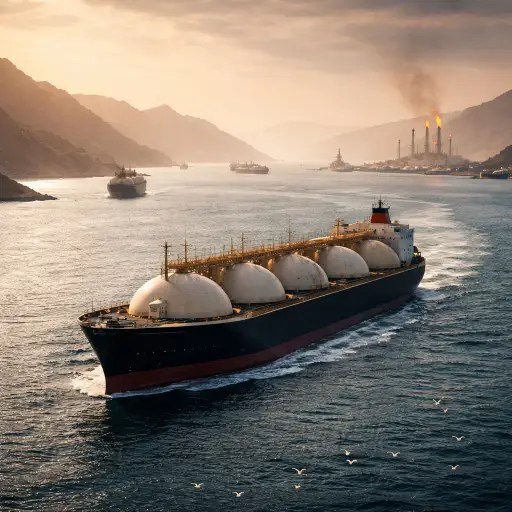
Energy cooperation is expected to feature prominently in the discussions, particularly around renewable generation projects, grid upgrades, and green hydrogen production. South Africa’s coastal regions and abundant solar and wind resources have positioned the country as a potential exporter of hydrogen‑based fuels in a decarbonizing global economy. European energy companies and financial institutions have shown growing interest in these opportunities, seeing them as part of a future energy trade network that complements domestic renewable expansion.
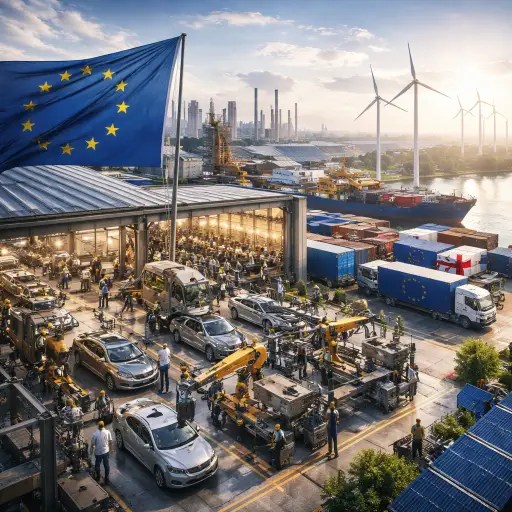
The dialogue also touches on industrial policy and the future of manufacturing in a carbon‑constrained world. European leaders are increasingly focused on ensuring that the transition to clean production does not simply shift emissions from one region to another. By supporting cleaner industrial processes abroad while maintaining trade partnerships, the EU hopes to create a more balanced system in which environmental standards and economic development advance together rather than compete.
Trade analysts say the partnership reflects a broader shift in Europe’s external economic strategy, where climate objectives, supply chain security, and geopolitical considerations intersect. In recent years the EU has sought to build deeper relationships with countries that can contribute to sustainable resource supply and manufacturing capacity while sharing an interest in stable and transparent trade rules. South Africa’s sophisticated financial sector and established industrial base make it a natural candidate for such cooperation.
Beyond economics, the initiative carries symbolic weight as well. European officials frequently describe the dialogue as part of a new model of international partnership that emphasizes mutual benefit rather than traditional aid dynamics. By framing the relationship around shared industrial transformation and climate innovation, both sides aim to present the cooperation as a forward‑looking alliance designed for a changing global economy.
Observers note that Africa’s role in the energy transition is becoming increasingly central as demand grows for critical minerals, renewable resources, and emerging clean fuels. South Africa’s experience in balancing industrial development with climate commitments could offer lessons for other countries navigating similar transitions. For Europe, engaging constructively with these dynamics is seen as vital to maintaining influence in global economic governance.
While the dialogue remains in its early stages, officials on both sides express cautious optimism about the potential for concrete projects and financing initiatives to emerge. Early discussions have reportedly focused on identifying priority sectors where cooperation could deliver visible progress while laying the groundwork for deeper trade integration in clean technologies and sustainable infrastructure.
The launch of the clean‑trade dialogue illustrates how climate policy is rapidly becoming a central pillar of international economic relations. As governments search for ways to align environmental ambition with industrial growth, partnerships like the one now developing between the European Union and South Africa may increasingly define the contours of global trade in the decades ahead.
 The Tower Post