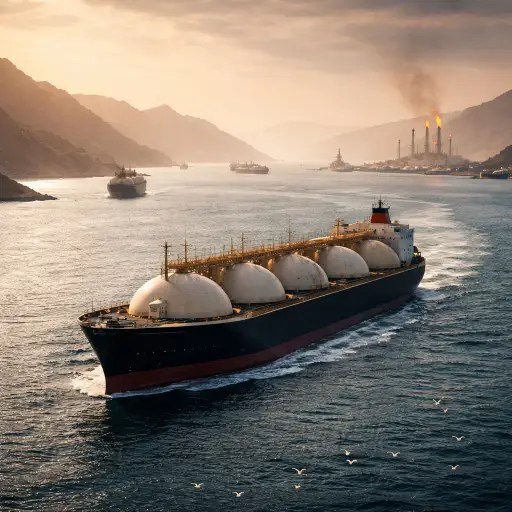
Energy traders weigh the risk of supply disruption as Middle East tensions place a critical maritime corridor under scrutiny
European natural gas prices climbed sharply in early trading as markets reacted to mounting concern over the security of shipping routes in the Strait of Hormuz, a narrow maritime passage that remains one of the world’s most important conduits for energy supplies. Traders across European energy exchanges responded swiftly to the possibility that escalating tensions in the Middle East could threaten the steady flow of liquefied natural gas cargoes destined for the continent, triggering renewed volatility in a market that had only recently stabilized after several turbulent years.
Benchmark gas futures recorded strong gains as participants reassessed geopolitical risk premiums tied to the region. While no immediate disruption to shipments has been confirmed, the mere prospect that tanker movements could become unsafe was enough to jolt sentiment. Analysts noted that energy markets are particularly sensitive to developments around strategic chokepoints, and the Strait of Hormuz remains one of the most closely watched locations due to the sheer volume of oil and liquefied natural gas transported through it each day.
For Europe, the renewed anxiety carries particular significance because liquefied natural gas imports have become a central pillar of the continent’s energy security strategy. Since the reconfiguration of global gas flows earlier in the decade, European utilities have relied heavily on LNG shipments from producers in the Gulf region. Any perception that those shipments could face delays, higher insurance costs, or potential rerouting immediately feeds into price expectations across European trading hubs.
Energy traders described the latest market reaction as a precautionary repricing rather than a response to an actual interruption of supply. Nevertheless, trading desks across London, Amsterdam and other key financial centers reported heightened activity as portfolio managers and utilities moved to hedge potential exposure. The sudden jump in prices reflects the market’s attempt to anticipate risk rather than react to confirmed shortages, a dynamic that has become increasingly common in the geopolitically sensitive energy sector.
Shipping companies and insurers are also monitoring the situation closely, as the safety of vessels navigating the strait is a decisive factor in determining freight costs and delivery schedules. If security concerns were to intensify, tanker operators could face higher insurance premiums or may even reconsider routes, developments that would inevitably ripple through global energy markets. Even modest disruptions in such a concentrated corridor can produce outsized reactions in commodity prices.
Market participants say the situation underscores how deeply intertwined European energy security has become with geopolitical developments far beyond the continent’s borders. Although Europe has expanded storage capacity and diversified supply contracts in recent years, its dependence on maritime LNG trade means that events in distant regions can still exert significant influence on domestic energy costs. The Strait of Hormuz represents precisely the kind of strategic vulnerability that policymakers and traders alike have long been aware of.
Several European governments are now paying closer attention to diplomatic signals emerging from the region. Officials involved in energy planning have emphasized that contingency strategies remain in place should shipping risks escalate. Those strategies include drawing on stored gas reserves, increasing imports from alternative suppliers, and coordinating with international partners to maintain stable supply chains during periods of heightened tension.
Energy analysts caution that the psychological dimension of commodity trading can amplify price swings even when physical flows remain intact. Markets frequently react not only to confirmed events but also to perceived probabilities. As a result, rumors, political statements, or naval incidents in proximity to critical shipping lanes can have immediate financial consequences long before any tanker changes course.
European utilities are particularly sensitive to such developments because gas remains an essential component of the region’s electricity generation and industrial activity. Price spikes can quickly translate into higher costs for power producers, manufacturers and ultimately consumers. Governments therefore monitor gas benchmarks carefully, especially during periods when inventories and forward contracts play a decisive role in shaping expectations for the months ahead.
Financial institutions involved in energy trading have also intensified their monitoring of diplomatic developments. Analysts at several major banks noted that volatility in gas derivatives has increased as traders adjust risk models to reflect the evolving geopolitical environment. In such circumstances, even modest changes in perceived shipping risk can shift the balance between supply forecasts and market sentiment.
The Strait of Hormuz occupies a unique place in the architecture of global energy trade. The narrow waterway links the Persian Gulf to international shipping lanes and serves as a passage for a substantial share of the world’s seaborne hydrocarbons. Because of its geographic constraints, alternative routes are limited, making the corridor particularly sensitive to security developments and political tensions.
Energy economists point out that the European gas market has become more globally interconnected than at any point in its history. Liquefied natural gas allows cargoes to be redirected across continents depending on price signals and logistical considerations. While this flexibility enhances resilience, it also means that regional geopolitical events can transmit shocks rapidly through the entire system.
Traders said the latest price movement illustrates the delicate balance between supply security and geopolitical uncertainty. Even when cargoes continue to move normally, the possibility that a strategic chokepoint could become unsafe forces market participants to reassess risk. Insurance costs, charter rates and hedging strategies can all change quickly when the security of a maritime corridor is questioned.
Despite the surge in prices, some analysts urged caution against assuming that a sustained supply crisis is imminent. They note that international diplomacy often works quietly to prevent escalation in areas vital to global trade. Naval patrols, diplomatic engagement and international coordination have historically played a role in ensuring that shipping lanes remain open even during periods of heightened political tension.
For European policymakers, however, the latest developments serve as a reminder that energy security remains a dynamic challenge. Investments in renewable energy, storage infrastructure and diversified supply chains are all part of long term strategies designed to reduce vulnerability to external shocks. Yet as long as Europe relies on imported fuels delivered by sea, distant geopolitical flashpoints will continue to influence its energy markets.
Energy traders across the continent are therefore maintaining close watch on statements from regional governments, international organizations and maritime security agencies. Market sentiment could shift quickly depending on whether diplomatic efforts ease tensions or whether incidents at sea raise new concerns. Until greater clarity emerges, the risk premium associated with shipping through the Strait of Hormuz is likely to remain embedded in European gas prices.

 The Tower Post