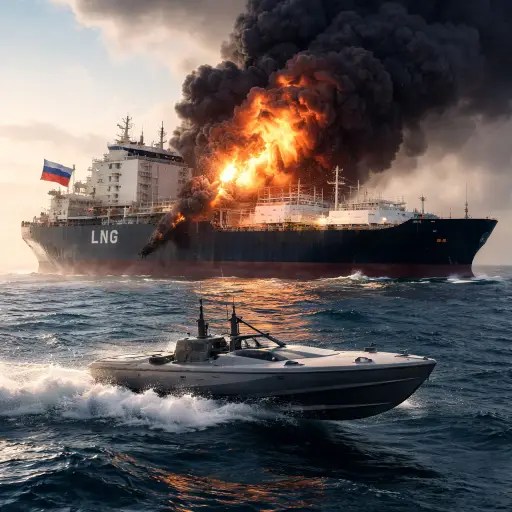
Drone attack sets Russian gas tanker ablaze near Malta, signaling a widening maritime front in the Ukraine war
Smoke rising over the central Mediterranean has become the latest symbol of how the war linked to Russia’s invasion of Ukraine is spreading far beyond the traditional front lines, after a Russian liquefied natural gas tanker caught fire following what officials and maritime analysts say was a drone strike carried out hundreds of kilometers from the main theater of fighting.
According to maritime security sources and ship tracking data, the vessel was operating in international waters not far from Malta when a series of explosions were reported along its starboard side, shortly before flames and thick black smoke were seen rising from the deck where insulated LNG containment equipment and auxiliary systems are located.
Early assessments circulating among European security officials suggest that the attack was carried out using Ukrainian naval drones, remotely operated craft that have increasingly been deployed against Russian vessels in the Black Sea but have rarely been reported this far west in the Mediterranean basin.
While the extent of the damage remains unclear, emergency signals from nearby shipping traffic and satellite imagery indicate that the fire burned intensely for a prolonged period before gradually subsiding, raising concerns about both environmental risks and the safety of the tanker’s crew as maritime authorities monitored the situation from nearby coastal states.
Officials familiar with regional naval patrols said the incident appears to represent a dramatic expansion of Ukraine’s evolving maritime tactics, which have focused heavily on asymmetric technology such as explosive drones designed to strike high‑value naval or logistical targets without requiring conventional warships.
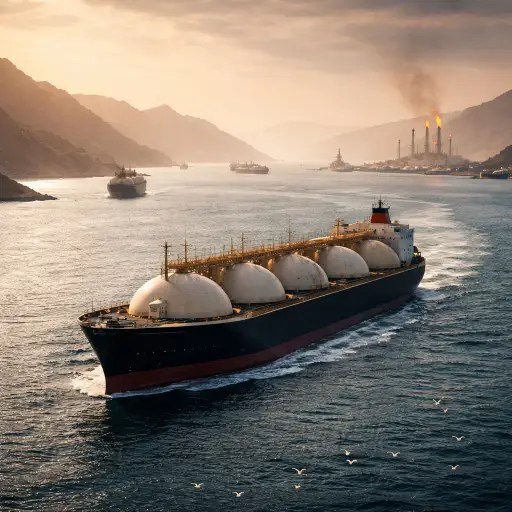
The tanker itself was believed to be part of Russia’s broader LNG transport network that continues to move natural gas shipments through international waters despite sanctions and financial restrictions imposed by Western governments since the beginning of the full‑scale invasion.
Energy analysts say that while Russian pipeline gas exports to Europe have sharply declined, liquefied natural gas shipments transported by sea remain a critical component of Moscow’s energy revenues, making LNG carriers potentially attractive symbolic targets for Ukraine as the conflict enters a new strategic phase.
For European maritime authorities, the attack raises uncomfortable questions about the vulnerability of commercial shipping routes that cross the Mediterranean every day, including tankers, container vessels, and passenger ferries that connect North Africa, Southern Europe, and the Middle East.
Security experts note that the geography of the Mediterranean presents a very different operational environment from the Black Sea, where Ukraine’s drone campaign previously forced Russian naval units to retreat from key positions and reshaped the balance of maritime power around occupied Crimea.
Expanding such tactics into wider European waters would signal that the technological tools developed during the war are no longer confined to regional battle zones but can potentially threaten vessels linked to the conflict across far broader distances.
Several European naval officials privately acknowledged that the incident may accelerate discussions within NATO and EU security structures about improving maritime surveillance, particularly the detection of small autonomous craft that can travel long distances while remaining difficult to identify on traditional radar systems.
For residents and tourists along Malta’s coastline, the distant plume of smoke served as a stark visual reminder that a war being fought hundreds of kilometers away can still cast visible shadows across Europe’s busiest sea lanes, underscoring how modern conflict increasingly moves through interconnected economic and maritime networks.


 The Tower Post