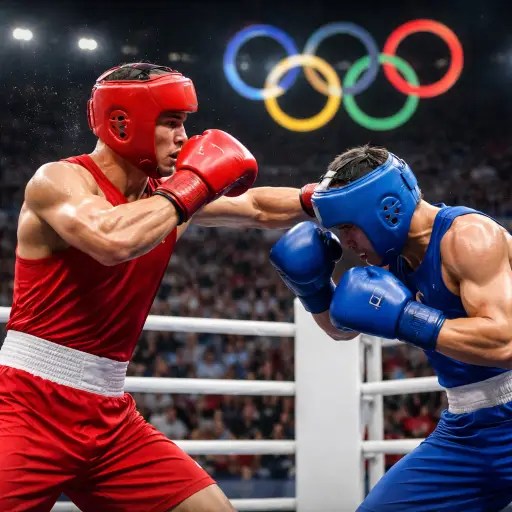
European leaders intensify lobbying efforts while governance disputes threaten the sport’s place in the Olympic movement
In early March, the future of Olympic boxing remains clouded by political disputes, governance battles, and urgent calls for reform that could determine whether the sport survives in the program of the Summer Games scheduled to take place in Los Angeles. Officials across the Olympic movement acknowledge that boxing, one of the oldest Olympic competitions and a gateway for athletes from disadvantaged backgrounds, stands at a crossroads. Without credible governance changes and renewed confidence in its international administration, the sport risks losing the Olympic stage that has defined generations of champions.
Across Europe, national boxing federations have intensified diplomatic efforts to persuade Olympic authorities that the sport deserves another chance. Leaders from several major federations argue that boxing remains deeply rooted in Olympic history and continues to produce compelling competition that resonates with global audiences. In recent weeks, these federations have coordinated lobbying campaigns and policy proposals aimed at demonstrating that reforms are possible, transparent oversight can be achieved, and athletes should not be punished for failures attributed to administrators.
The debate stems from years of governance turmoil that have shaken trust between Olympic officials and the sport’s international leadership. Investigations and internal reviews have previously highlighted problems ranging from opaque decision making to allegations of corruption in judging and tournament administration. Such controversies have prompted the International Olympic Committee to take an increasingly cautious stance toward boxing’s future, insisting that meaningful reforms must occur before the sport can be fully reintegrated into the Olympic framework.
European officials say they recognize the seriousness of those concerns and insist that structural reform is the only path forward. Federation representatives argue that the solution lies in a modern governance model with strict financial transparency, independent oversight of judging systems, and stronger athlete representation in decision making. According to several officials involved in ongoing discussions, proposals are being circulated that would reshape the global administration of boxing and align it more closely with Olympic governance standards.
Athletes and coaches across the continent have watched the situation with a mixture of anxiety and determination. For many fighters, the Olympic tournament represents the pinnacle of amateur boxing and often serves as the gateway to professional careers. The uncertainty surrounding the sport’s Olympic status has therefore created a tense atmosphere in training centers and national programs, where young athletes continue preparing for a competition that, at least for now, remains uncertain.
Supporters of boxing within the Olympic movement argue that removing the sport would create a significant void. Boxing has long been one of the most watched Olympic combat events, combining raw athleticism with stories of personal resilience that resonate with audiences worldwide. Advocates say the sport’s accessibility, particularly in communities with limited resources, makes it uniquely valuable within the Olympic ecosystem and that eliminating it would deprive countless athletes of a global platform.
Critics, however, maintain that preserving boxing in the Games cannot come at the expense of integrity and governance standards. Olympic officials have repeatedly emphasized that credibility, fairness, and transparency are non‑negotiable principles for any sport seeking a place in the Games. The message delivered to boxing authorities has therefore been direct: structural reform must be implemented convincingly and independently verified before confidence can be restored.
Behind closed doors, negotiations continue between Olympic representatives and leaders seeking to establish a credible pathway forward. Several European federations have offered to play a central role in constructing a new administrative framework designed to meet Olympic expectations. While the exact structure remains under discussion, the concept revolves around rebuilding the sport’s international governance in a way that separates competitive operations from political influence.
Observers note that the coming period could prove decisive. If boxing officials succeed in presenting a unified and transparent reform plan, Olympic leaders may be willing to reconsider the sport’s long‑term place in the Games. Failure to do so, however, could accelerate discussions about removing boxing from future Olympic programs entirely, a prospect that would mark one of the most dramatic shifts in modern Olympic history.
For now, European federations continue to advocate for patience and reform rather than exclusion. Their message to Olympic decision makers is that boxing can evolve, rebuild trust, and preserve the competitive spirit that has defined the sport for more than a century of Olympic participation. Whether that argument ultimately prevails will depend on the credibility of reforms now being debated, and on whether Olympic authorities believe the sport can finally turn the page on years of controversy.


 The Tower Post