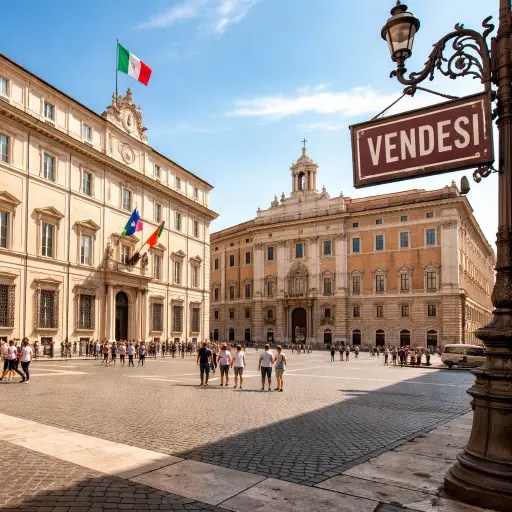
Italy weighs turning historic state buildings into economic assets as debt pressures revive debate over heritage and commercialization
Italy is once again confronting the difficult balance between preserving its cultural heritage and managing one of the largest public debt burdens in Europe, as the government explores a plan to sell or lease historic state properties that have long served administrative or ceremonial roles but now sit partially unused across the country.
Officials in Rome say the proposal is not about privatizing monuments but about reactivating dormant public assets, arguing that hundreds of palaces, former ministries, and institutional residences owned by the state generate little economic value while requiring significant maintenance budgets that strain already tight public finances.
Under the concept being examined, selected historic buildings could be leased to private operators or international investors who would convert them into hotels, conference centers, corporate headquarters, or cultural venues, while the state retains ownership or oversight to ensure architectural preservation.
Government advisers estimate that even a limited program could unlock billions of euros over time, particularly if properties in cities such as Rome, Florence, Venice, and Turin were carefully restored and adapted for high‑end hospitality or professional services without altering their historic character.
Supporters of the idea argue that many state-owned buildings were constructed for bureaucratic systems that no longer exist and now house only a fraction of the offices they once did, leaving large wings empty while taxpayers continue to pay for heating, security, and restoration work.
Economic analysts say Italy possesses one of the largest portfolios of public heritage real estate in Europe, including palazzi, former military compounds, and institutional villas, many of which occupy prime urban locations that could attract global investors if regulatory conditions allowed long‑term commercial use.
Advocates within the government frame the proposal as a pragmatic compromise between preservation and economic necessity, suggesting that controlled partnerships with private operators could finance restoration projects that the state itself cannot currently afford.
Critics, however, warn that the plan risks turning cultural landmarks into luxury commercial properties, arguing that historic palaces embody national identity and civic memory and should remain spaces accessible to citizens rather than exclusive destinations for tourists or multinational companies.
Heritage groups and architectural historians have expressed concern that once buildings are integrated into commercial markets, economic incentives could gradually overshadow conservation principles, potentially leading to alterations that erode the authenticity of historic interiors and urban landscapes.
Opposition lawmakers have also questioned whether selling or leasing iconic public properties could create long‑term losses for the state, noting that short‑term fiscal relief might come at the expense of public ownership over assets whose symbolic and cultural value cannot easily be measured.
Public opinion remains divided, reflecting a broader tension in Italy’s economic debate between protecting a vast cultural inheritance and addressing structural financial pressures that continue to shape policy choices across successive governments.
As discussions continue inside ministries and parliamentary committees, the proposal has already sparked a deeper national conversation about how a country defined by its past can responsibly use that past as a resource for the future without allowing economic urgency to redefine the meaning of its historic spaces.




 The Tower Post