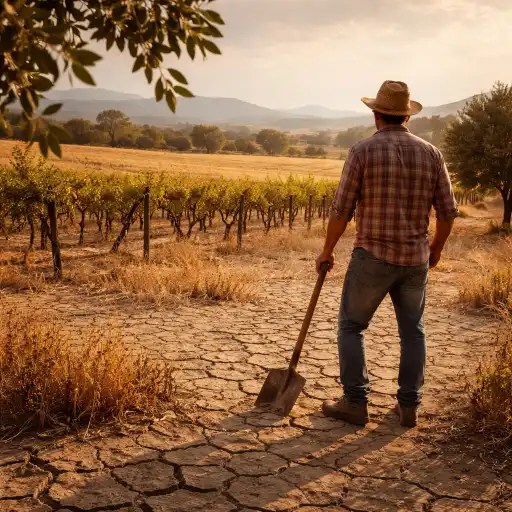
Low winter water reserves raise fears for olive oil, wine, and grain harvests across southern Europe
Farmers across southern Europe are entering the early weeks of spring with a growing sense of alarm as unusually dry winter conditions leave reservoirs depleted and soils parched, raising fears that another punishing drought season could unfold across key agricultural regions.
From Spain and Portugal to Italy and parts of southern France, rural communities are reporting water levels that remain stubbornly low despite the months traditionally associated with replenishing rainfall, prompting growers to warn that the coming growing season may begin under severe strain.
In many farming districts the winter rains that normally recharge aquifers, rivers, and irrigation basins never fully arrived, leaving landscapes that should be green and saturated instead showing signs of dryness more typical of late summer.
Growers say the situation is especially worrying because water reserves were already weakened by previous years of intense heat and prolonged dry spells, meaning the latest deficit comes on top of fragile reserves rather than a fully recovered system.
Olive producers across the Mediterranean basin say their groves are entering a sensitive stage of the agricultural cycle without the moisture levels that typically support healthy flowering and fruit development, a warning sign that could translate into tighter olive oil supplies later in the year.
Wine producers are expressing similar concerns as vineyards depend heavily on balanced winter precipitation to sustain vines through the warmer months, and early dryness can alter the development of grapes and reduce the overall yield of future harvests.
Grain farmers are also watching the skies with anxiety as cereals such as wheat and barley rely on steady soil moisture during the early stages of growth, and prolonged dryness at this point in the season can stunt plants before they have a chance to fully establish.
In several agricultural regions irrigation authorities have begun urging caution with water use, advising farmers to prepare for potential restrictions if reservoir levels fail to improve during the remainder of the spring.
Farm cooperatives say that planning a growing season has become increasingly uncertain as weather patterns shift, with farmers forced to make critical planting and irrigation decisions without knowing whether sufficient water will be available later in the year.
Many growers describe a sense that the seasonal rhythm they once relied upon has become less predictable, with winters bringing fewer sustained rain events and more intermittent dry periods that fail to adequately replenish natural water systems.
Hydrologists monitoring river basins across southern Europe say the current conditions reflect a broader pattern in which warmer temperatures and altered atmospheric circulation are reducing the reliability of winter precipitation in parts of the Mediterranean region.
While occasional storms can still bring heavy rainfall, experts note that these bursts often arrive too suddenly to fully recharge groundwater, with much of the water running quickly into rivers and the sea rather than soaking slowly into depleted soils.
As a result the agricultural sector is increasingly dependent on stored water in reservoirs and underground aquifers, both of which require consistent seasonal rainfall to remain stable.
In Spain’s olive heartland farmers say some reservoirs that normally stand comfortably high after winter are still far below their expected levels, leaving irrigation districts calculating how long their supplies might last if dry conditions persist.
In parts of Italy, agricultural groups warn that reduced snow accumulation in mountain ranges could further limit the meltwater that typically feeds rivers and irrigation systems during the warmer months.
French wine regions in the south are also watching reservoir levels closely, with growers noting that vineyards can tolerate moderate dryness but struggle when prolonged water stress combines with extreme summer heat.
Across these regions farmers say the possibility of another drought year is not just an environmental concern but an economic one that could ripple through global food markets.
Olive oil, wine, and grain produced in southern Europe are central to international supply chains, meaning reduced harvests can quickly influence prices far beyond the Mediterranean countryside.
Food analysts say that when multiple crops face simultaneous climate pressure the result can be tighter inventories and increased volatility in agricultural markets.
Rural communities are therefore urging governments and water authorities to accelerate long discussed investments in water management infrastructure, including improved irrigation efficiency, reservoir upgrades, and technologies that help farmers use water more precisely.
Some regions have already begun experimenting with drought resistant crop varieties and alternative farming practices designed to maintain yields under harsher climate conditions.
However farmers stress that adaptation alone cannot fully offset the risks posed by increasingly erratic rainfall patterns, particularly when several dry years arrive in close succession.
Many producers say they are preparing contingency plans ranging from reduced planting areas to delayed irrigation schedules in an attempt to stretch limited water supplies as far as possible.
At the same time agricultural organizations are calling for stronger cooperation between European countries on drought monitoring and water resource planning, arguing that climate pressures are affecting the entire Mediterranean agricultural belt.
Early warnings from meteorological agencies suggest that the coming months will be crucial in determining whether current dryness deepens into a full scale drought or is eased by late seasonal rainfall.
For now farmers continue scanning weather forecasts and cloudless skies with equal intensity, aware that the success of their harvests may depend on rain that has so far remained frustratingly scarce.
Across olive groves, vineyards, and grain fields the message from the countryside is increasingly clear: the season ahead could test the resilience of European agriculture once again if the rains fail to return.




 The Tower Post