Oil price shock and Middle East war fears revive stagflation concerns across European markets
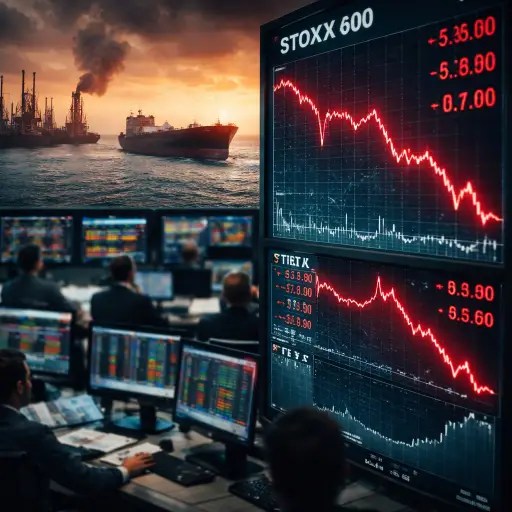
European stock markets are heading toward their worst weekly performance in nearly a year as a surge in oil prices and escalating tensions in the Middle East trigger a broad selloff across the continent’s financial markets, forcing investors to reassess the fragile balance between slowing economic growth and persistent inflation pressures.
The pan European STOXX 600 index has declined steadily throughout the week as traders react to the sudden jump in energy prices and the growing risk that geopolitical tensions could disrupt supply chains and global trade flows, sending shares in airlines, transport companies, manufacturers and consumer focused businesses sharply lower.
Oil prices have surged dramatically as markets respond to fears that conflict in the Middle East could threaten key production areas or shipping routes vital to global energy supplies, and the rapid increase in crude costs has quickly become the dominant factor shaping investor sentiment across European trading desks.
The sharp move in energy markets has pushed benchmark crude prices up by nearly sixteen percent in a matter of days, a rise large enough to trigger concerns that inflation across Europe could accelerate again after months in which policymakers believed price pressures were gradually easing.
For investors the sudden spike in oil has revived uncomfortable memories of earlier energy shocks that squeezed household budgets and corporate margins across the region, and analysts warn that even a short period of elevated energy costs can ripple through transportation, manufacturing and retail sectors.
The renewed pressure on prices is also complicating the outlook for central banks that have been trying to guide inflation back toward their targets without pushing fragile economies into recession, and traders are now questioning whether monetary policy may need to remain restrictive for longer than previously expected.
Equity markets across the continent have responded with a wave of defensive positioning as investors rotate away from sectors seen as vulnerable to rising costs and weaker consumer demand, while energy companies have emerged as one of the few areas benefiting from the surge in crude prices.
Airline and travel stocks have been particularly hard hit because fuel costs represent a major share of their operating expenses, while industrial companies are facing renewed pressure from higher input prices that could squeeze profit margins if businesses struggle to pass those costs on to customers.
Financial markets are increasingly discussing the possibility that Europe could face a period of stagflation, a difficult economic environment characterized by weak growth combined with stubborn inflation, a combination that historically has posed serious challenges for policymakers and investors alike.
Bond markets have reflected the same uncertainty as government yields fluctuate sharply while traders attempt to gauge whether the new energy shock will alter the trajectory of monetary policy, with some investors fearing that hopes for easier financial conditions could be pushed further into the future.
Portfolio managers say the speed of the recent market decline illustrates how sensitive global investors remain to geopolitical shocks after several turbulent years that have included pandemic disruptions, energy crises and repeated episodes of financial volatility.
As the week draws to a close traders across Europe are watching developments in the Middle East and movements in oil markets with intense focus, aware that the direction of both could determine whether the current selloff proves to be a temporary reaction to geopolitical fears or the beginning of a more prolonged period of market instability.


 The Tower Post