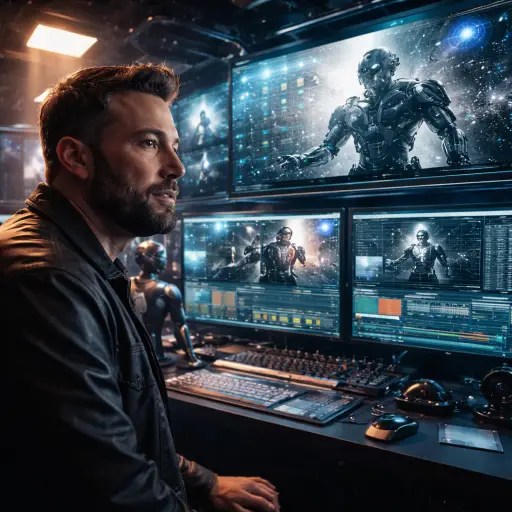
Streaming giant moves deeper into automated filmmaking as Hollywood races to integrate artificial intelligence into production
Netflix has expanded its technological ambitions in Hollywood with the acquisition of an artificial intelligence filmmaking company originally founded by actor and filmmaker Ben Affleck, highlighting the accelerating effort by major studios and streaming platforms to integrate advanced machine learning tools into the movie and television production pipeline.
The deal signals a growing belief across the entertainment industry that artificial intelligence will become a central component of modern filmmaking, capable of automating complex technical tasks that traditionally required large teams of editors, visual effects artists, and post production specialists working over extended periods of time.
People familiar with the technology say the acquired company developed software designed to assist filmmakers during editing and visual effects preparation by analyzing raw footage, identifying usable takes, organizing scenes, and assembling preliminary cuts that editors can later refine creatively.
The system uses machine learning models trained on thousands of hours of film structure and editing patterns, allowing the software to recognize cinematic elements such as pacing, camera transitions, shot composition, and narrative flow while suggesting possible scene arrangements.
Developers involved in the project designed the technology to function as an intelligent assistant rather than a replacement for human editors, focusing on eliminating repetitive tasks that often slow down the earliest stages of post production.
One of the platform’s primary capabilities involves automatically organizing daily footage generated during filming, grouping similar shots, identifying camera angles, and flagging the strongest performances from multiple takes recorded during a scene.
Editors using the system can begin working with rough scene assemblies generated by the software, allowing them to concentrate on creative storytelling decisions instead of spending hours manually sorting and assembling raw material.
The company attracted attention in Hollywood partly because of Ben Affleck’s involvement in its founding, which helped bridge the gap between technology developers and filmmakers seeking tools designed specifically for cinematic production.
According to industry observers, the collaboration between engineers and filmmakers during the development process helped ensure that the software understood creative priorities such as emotional pacing, lighting continuity, and visual storytelling.
Netflix has not publicly disclosed the financial terms of the acquisition, but analysts say the move fits into a broader strategy by the streaming company to build a more integrated technological infrastructure for producing and managing global entertainment content.
The streaming giant already operates one of the largest digital production pipelines in the entertainment industry, coordinating hundreds of projects across multiple countries, languages, and time zones each year.
Integrating AI powered editing and visual effects preparation tools could significantly accelerate collaboration between production teams working in different parts of the world by automatically organizing footage and preparing scenes before detailed editing begins.
The technology is also capable of generating preliminary visual effects composites and environmental placeholders that visual effects artists can later enhance with detailed work during the final stages of post production.
Supporters of AI assisted filmmaking argue that such tools can dramatically improve efficiency without undermining the creative role of directors, editors, and artists who remain responsible for shaping the final version of a film.
However the expansion of artificial intelligence in the entertainment industry has also sparked debate among creative professionals concerned about how automation could influence employment across technical crafts such as editing and visual effects.
Labor groups and industry organizations have increasingly emphasized the need for clear guidelines governing how artificial intelligence systems are used within production environments.
Despite those concerns the momentum behind AI driven production tools continues to grow as studios search for ways to manage rising production costs while meeting global demand for high quality streaming content.
Modern television series and large scale streaming films often require cinematic levels of visual complexity, pushing production companies to adopt technologies capable of accelerating workflows without sacrificing visual quality.
Analysts say the integration of artificial intelligence into filmmaking may ultimately mirror the transformation that occurred when digital editing software replaced traditional film cutting rooms decades ago.
In that earlier technological shift editors gained faster and more flexible tools while remaining at the center of the creative decision making process.
Netflix executives are believed to view AI filmmaking tools as the next step in that evolution, enabling production pipelines where footage can be analyzed and organized almost immediately after being captured on set.
Such systems could eventually allow directors and producers to review rough scene assemblies shortly after filming, offering faster feedback during production and reducing delays during post production.
The acquisition also illustrates how streaming companies are increasingly positioning themselves as technology developers as well as content distributors.
By investing in production software and artificial intelligence tools, companies like Netflix hope to gain greater control over the technological infrastructure that shapes how movies and series are made.
As Hollywood continues to adapt to rapid technological change the role of artificial intelligence in filmmaking is expected to expand, combining advanced computational systems with the creative expertise of filmmakers.
For audiences the results may appear seamless on screen, but behind the scenes the tools used to create modern cinema are evolving quickly as artificial intelligence becomes part of the everyday production process.




 The Tower Post