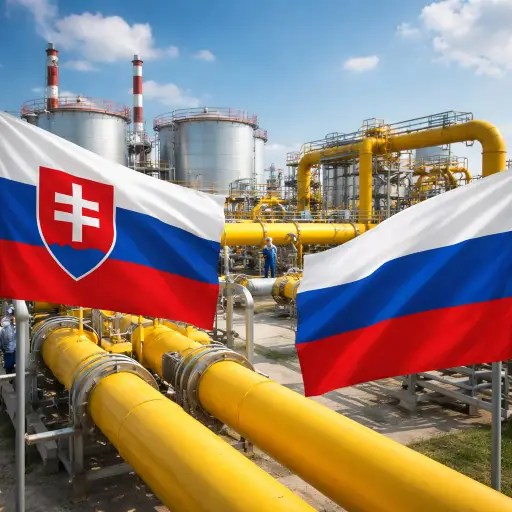
Negotiations with Gazprom underline growing tensions inside the European Union over energy security, supply stability, and the final phase of the bloc’s effort to sever dependence on Russian fuel.
Slovakia is seeking to secure additional deliveries of Russian natural gas in the remaining window before the European Union’s upcoming ban on Russian pipeline gas imports begins, a move that reflects deepening tensions among member states over how quickly the bloc can fully disengage from its former primary energy supplier. The country’s main energy company has confirmed it is in negotiations with Russia’s state‑controlled exporter Gazprom in an effort to increase shipments while contracts and legal pathways still allow additional flows to enter the Slovak system.
Officials in Bratislava say the effort is driven by pragmatic concerns about energy security and price stability rather than a political shift toward Moscow, emphasizing that the country remains committed to the EU’s broader strategy of reducing reliance on Russian fossil fuels. At the same time, the talks highlight the difficult balancing act faced by several Central European states whose industrial sectors and heating systems were historically built around long‑term Russian gas supplies that cannot be replaced overnight.
The negotiations come as the European Union prepares to enter the final phase of its long‑planned restrictions on Russian gas, part of a wider sanctions framework introduced after the deterioration of relations with Moscow and the outbreak of war in Ukraine. Since the start of the conflict, European governments have steadily cut purchases of Russian energy, replacing large volumes with liquefied natural gas shipments from the United States, Norway, Qatar, and other suppliers.
Despite the rapid diversification, some countries remain more exposed than others because of geography, infrastructure, and legacy supply contracts. Slovakia, a landlocked country with strong industrial demand for gas, has spent the past several years expanding connections with neighboring states and developing alternative supply routes, yet energy officials say the transition remains incomplete and could expose households and factories to volatility if additional reserves are not secured.
Energy analysts say the Slovak approach illustrates a broader debate unfolding across the European Union about the pace and cost of the energy transition away from Russian fuel. While many governments insist the bloc must maintain a united front and end purchases as quickly as possible, others argue that a gradual reduction paired with strategic stockpiling is necessary to prevent sudden price spikes or supply disruptions.
Gazprom, which once dominated Europe’s pipeline gas market, has seen its exports to the region collapse in recent years as sanctions and political tensions intensified. However, a limited amount of gas continues to reach parts of Central Europe through remaining contractual channels and transit routes, making negotiations such as the current Slovak talks technically possible even as the political climate surrounding them remains highly sensitive.
Within Slovakia, the issue has sparked debate among political leaders, economists, and environmental groups. Supporters of securing extra gas argue that building larger reserves before the ban takes effect would give the country a financial cushion and help stabilize domestic energy prices during the next heating seasons. Critics counter that purchasing additional Russian fuel so close to the end of the EU import era risks undermining the bloc’s collective message and could delay investment in renewable energy and alternative supply infrastructure.
European officials have not publicly opposed Slovakia’s negotiations but have reiterated that the union’s strategic goal remains the permanent elimination of Russian gas from its energy mix. Brussels has emphasized that member states are expected to comply fully once the ban is implemented and has encouraged governments to accelerate renewable energy projects, energy efficiency programs, and regional gas interconnections to ensure long‑term resilience.
For Slovakia’s industrial sector, which includes steel production, chemical manufacturing, and automotive supply chains, the availability and cost of natural gas remain critical economic factors. Business leaders have warned that sudden shortages or steep price increases could affect competitiveness and employment, particularly in regions where heavy industry forms the backbone of local economies.
At the same time, the push for additional short‑term supply underscores how dramatically Europe’s energy landscape has shifted. Only a few years ago Russian pipelines delivered the majority of the continent’s imported gas, shaping infrastructure decisions and energy policy for decades. Today the same pipelines symbolize a dependency that European governments are determined to end, even as they navigate the complicated final steps of that transition.
As negotiations continue, the outcome will be closely watched across the European Union as a test of how member states manage the closing chapter of Russian pipeline gas in Europe. Whether Slovakia ultimately secures extra volumes or not, the discussions reveal how energy security, economic stability, and geopolitical strategy remain deeply intertwined in the continent’s evolving energy policy.

 The Tower Post