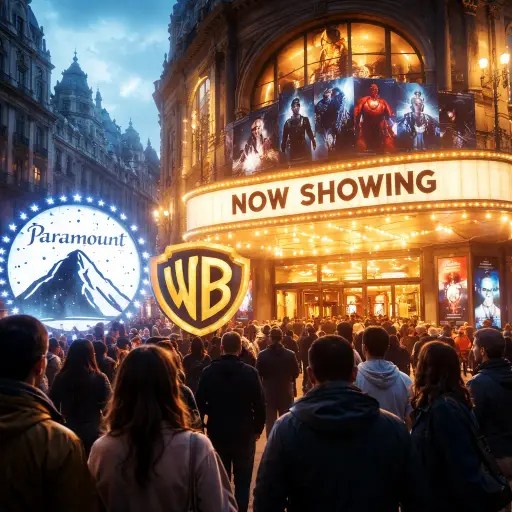
A colossal studio merger threatens to reshape Europe’s cinema landscape and ignite a battle over the future of film diversity
Shockwaves are spreading across Europe’s film industry as a proposed $110 billion merger between Paramount and Warner Bros. Discovery triggers intense debate among cinema owners, filmmakers, and regulators. The deal, one of the largest in entertainment history, would unite two of Hollywood’s most influential studios under a single corporate structure. Industry observers say the scale of the merger could dramatically shift the balance of power in global film distribution, raising urgent questions about how European theaters, independent producers, and audiences might be affected.
The proposed takeover has emerged at a moment when the film business is already undergoing profound transformation. Streaming competition, rising production costs, and shifting viewing habits have pushed studios to seek greater scale and deeper libraries of intellectual property. By combining their film studios, streaming platforms, and global distribution networks, Paramount and Warner Bros. Discovery aim to create a media powerhouse capable of dominating theatrical releases as well as digital platforms across multiple continents.
European cinema groups, however, worry that such consolidation could further tilt the market toward blockbuster franchises while squeezing out smaller productions. Independent distributors argue that theaters already struggle to balance Hollywood tentpoles with locally produced films. If the merged company prioritizes global franchise brands, critics fear screens across Europe could become increasingly saturated with sequels, cinematic universes, and established intellectual property at the expense of new voices and experimental storytelling.
Film organizations across several European countries have begun quietly lobbying regulators, warning that the merger may deepen Hollywood’s dominance over theatrical pipelines. Their concerns center on distribution leverage, which determines which films secure prime release windows and how long they remain on screens. With two major studios under one umbrella, the merged entity could command enormous negotiating power when arranging release schedules with cinema chains across the continent.
The European Union has long maintained policies designed to protect cultural diversity in media, including quotas that ensure European productions receive meaningful screen time. Yet the magnitude of this potential merger has raised questions about whether existing safeguards are strong enough. Some policymakers argue that regulators may need to examine not only traditional antitrust concerns but also broader cultural impacts that could shape the future of storytelling within Europe’s borders.
At the heart of the debate lies the evolving economics of theatrical filmmaking. Hollywood’s biggest studios increasingly rely on mega-budget productions that require global audiences to recoup their investments. Franchises built around superheroes, fantasy worlds, and recognizable characters dominate marketing campaigns and ticket sales. While these films generate significant revenue for cinemas, critics argue that their growing dominance narrows the range of films able to secure wide theatrical releases.
For European filmmakers working outside the blockbuster system, the stakes are particularly high. Independent directors and producers often depend on partnerships with smaller distributors and art house cinemas to reach audiences. If the merged studio commands a larger share of theatrical slots, industry advocates warn that independent films could struggle to find screen space during key release periods, especially in major metropolitan markets.
Cinema operators themselves face a complex dilemma. On one hand, major studio releases drive ticket sales and concession revenue, helping theaters remain profitable in an era of intense competition from streaming services. On the other hand, many cinema owners acknowledge that diverse programming plays a crucial role in sustaining long term audience engagement. A theatrical ecosystem dominated solely by franchise spectacles could eventually reduce the variety that attracts different demographics to the big screen.
Regulators across Europe are now expected to scrutinize the deal carefully before granting approval for the merged company to operate fully within the region. Antitrust authorities may demand concessions that could include commitments on distribution access, licensing arrangements, or limits on exclusive theatrical windows. Some analysts believe regulators could also require guarantees that independent films retain meaningful access to cinema screens controlled by major chains.
Meanwhile, executives involved in the proposed merger argue that consolidation is necessary to compete in an increasingly globalized media environment. They point to the rise of powerful technology companies entering the entertainment business and investing billions in streaming platforms and original productions. From their perspective, combining resources allows legacy studios to survive the rapidly evolving economics of film distribution and maintain the capacity to produce ambitious large scale projects.
Industry analysts note that Europe represents a crucial battleground in the broader struggle for global audience attention. The region hosts some of the world’s most vibrant film cultures as well as lucrative box office markets. Any structural change in Hollywood’s studio system inevitably reverberates through European production networks, distribution partnerships, and festival circuits that serve as launching pads for international cinema.
As the review process unfolds, the merger has become a symbol of a deeper crossroads for the film industry. The outcome could influence how power is distributed between global studios and local creators, and how audiences discover stories on cinema screens in the years ahead. Whether regulators impose strict conditions or allow the deal to proceed largely intact, the debate has already forced Europe’s film community to confront fundamental questions about diversity, competition, and the future of theatrical storytelling.



 The Tower Post