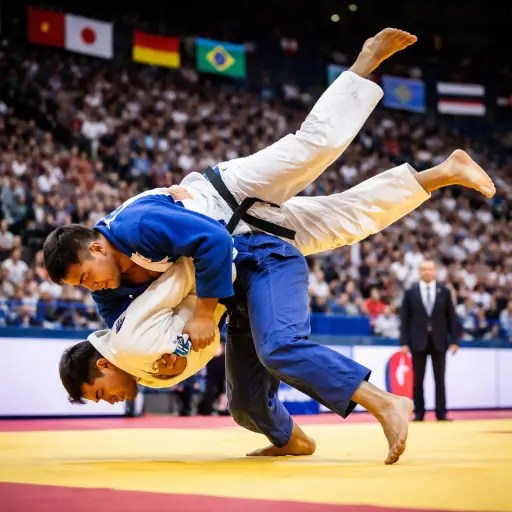
International judo circuit returns to Upper Austria as athletes from Europe and Asia chase crucial Olympic ranking points and launch a packed year for combat sports across the continent.
The international judo circuit returns to Upper Austria as the Judo Grand Prix in Linz brings together elite competitors from across Europe and Asia, marking one of the early focal points of the global season and drawing attention from federations, coaches, and fans eager to see how the Olympic qualification race is beginning to take shape.
Inside the packed competition arena, the distinctive rhythm of judo quickly fills the hall as athletes step onto the tatami with the controlled intensity that defines the sport, bowing respectfully before engaging in explosive exchanges that can end a match in seconds yet often require years of preparation to master.
For many of the fighters arriving in Linz, the tournament represents far more than another stop on the international calendar, as valuable world ranking points are on offer and every victory can influence positioning in the qualification pathway that determines who ultimately reaches the Olympic stage.
The event has attracted a particularly strong contingent from European and Asian teams, two regions that traditionally dominate the sport and continue to produce a deep pool of talent capable of turning any bracket into a test of endurance, tactics, and psychological resilience.
Delegations from established judo nations arrived in Upper Austria with experienced medal contenders as well as emerging athletes seeking breakthrough performances that could reshape their international standing and open doors to larger competitions later in the season.
The Linz tournament is also notable for the range of weight categories represented, allowing spectators to witness the full spectrum of judo techniques from the speed and agility seen in the lighter divisions to the powerful gripping battles that characterize the heavier classes.
Coaches observing from the sidelines are paying close attention not only to wins and losses but also to the strategic details that define modern judo, including grip control, transition speed, and the ability to capitalize instantly when an opponent’s balance is compromised.
In many bouts the margin between victory and defeat is extremely narrow, with matches often decided by a single well-timed throw, a decisive hold-down, or a tactical penalty that shifts the momentum during a tense exchange between evenly matched competitors.
The presence of several highly ranked fighters has elevated expectations for the event, turning early rounds into headline contests as athletes who might normally meet in later stages of a tournament encounter each other sooner due to the depth of the field.
For younger competitors, sharing the tatami with internationally recognized names provides both a challenge and an opportunity, as a strong performance against a seasoned opponent can instantly attract attention from analysts and national selectors.
Organizers in Linz have emphasized the city’s growing role as a host for major sporting events, highlighting the region’s facilities and logistical capacity to welcome athletes, officials, and spectators from multiple continents.
Local volunteers and judo clubs have played a visible role in supporting the event, reflecting the sport’s strong grassroots presence in Austria and the enthusiasm of communities that see international competitions as an inspiration for young practitioners.
Beyond the immediate competition results, the tournament is being closely monitored by national federations evaluating their athletes’ readiness for the demanding international schedule that lies ahead across Europe and beyond.
The broader calendar for combat sports this year is particularly dense, with numerous tournaments and championships expected to draw large international participation as athletes seek ranking points and competitive experience.
In this environment, the Linz Grand Prix serves as both a measuring stick and a momentum builder, offering competitors a chance to test their preparation while setting the tone for upcoming appearances on the world stage.
Observers note that early-season tournaments often reveal emerging tactical trends, as athletes experiment with adjustments to gripping strategies and transition techniques that can influence how the sport evolves over the course of the year.
The intensity inside the arena is balanced by the discipline and respect that remain central to judo culture, with athletes acknowledging each other before and after each bout in a ritual that underscores the sport’s martial arts heritage.
Spectators in attendance have responded enthusiastically to dramatic throws and last-second reversals, moments that capture the essence of judo’s blend of technique, timing, and controlled aggression.
As the competition unfolds, attention continues to focus on how performances in Linz may influence the shifting hierarchy of the world rankings and shape the narratives leading into future international tournaments.
For many participants the message is clear: success here can ignite a season of opportunity, while setbacks provide lessons that may ultimately strengthen an athlete’s path toward the highest level of the sport.




 The Tower Post