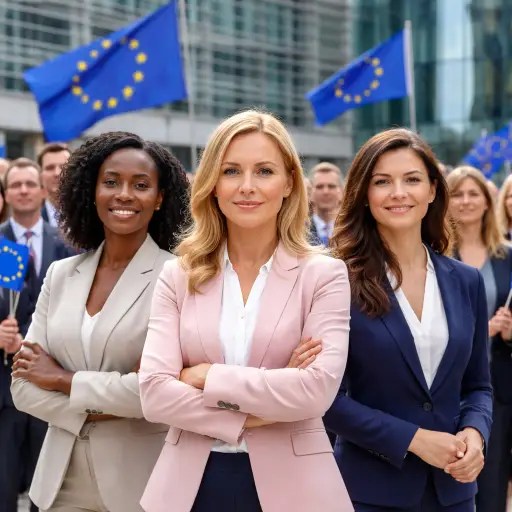
European Commission sets ambitious agenda to embed equality across work, society and leadership ahead of International Women’s Day
The European Commission has presented a broad new gender equality strategy intended to guide European Union policy through the remainder of the decade, unveiling the initiative as institutions across the bloc prepare to mark International Women’s Day. The proposal outlines a comprehensive framework designed to strengthen workplace equality, expand social protections and increase the presence of women in leadership roles across both public and private sectors.
Commission officials described the strategy as a shift from isolated initiatives toward a more integrated approach in which equality considerations influence nearly every major policy area. According to senior policymakers, the goal is to ensure that gender equality becomes a structural element of governance across the European Union rather than a stand-alone objective addressed through limited programs.
The new agenda builds on earlier EU equality frameworks but places stronger emphasis on economic independence and long-term security. Policymakers say the strategy seeks to close persistent gaps in employment participation, income and pension outcomes between women and men. By reinforcing legal protections while encouraging structural reforms, the Commission hopes to accelerate progress that has moved slowly in recent years.
Workplace equality forms a central pillar of the initiative. The Commission plans to promote stronger pay transparency measures, reinforce enforcement of existing equal pay legislation and support member states in addressing gender imbalances across sectors. Particular attention is directed toward industries where women remain underrepresented, including technology, engineering and certain high-growth digital fields.
Officials also highlighted the importance of fair working conditions and family support systems in achieving genuine equality. Policies proposed within the framework encourage member states to expand childcare availability, improve parental leave systems and strengthen protections for workers balancing caregiving responsibilities. The Commission argues that reducing structural barriers within the labor market is essential for long-term economic resilience across the EU.
Another major component of the strategy focuses on leadership and decision-making. The Commission is calling for renewed efforts to increase female representation in corporate boards, political institutions and senior management roles. While several European countries have already adopted quotas or targets, the new framework encourages broader adoption of mechanisms that ensure women are represented where strategic decisions are made.
Social protection policies also feature prominently in the strategy. The Commission intends to work with national governments to address the gender pension gap and improve income security for women later in life. Officials note that interrupted careers and part-time employment patterns continue to shape retirement outcomes for millions of European women, making long-term policy adjustments necessary.
The initiative additionally emphasizes safety and dignity as fundamental aspects of equality. The Commission reiterated its commitment to combating gender-based violence and harassment, both offline and in digital environments. Policymakers say stronger coordination among member states and EU institutions will be essential to ensure consistent protections and effective enforcement across borders.
Digital transformation represents another focus area within the strategy. As Europe accelerates investment in artificial intelligence, data infrastructure and emerging technologies, the Commission wants to ensure women are not left behind in the next wave of economic change. Programs supporting skills development, entrepreneurship and access to digital careers are expected to form an important part of the implementation phase.
Advocates across civil society have broadly welcomed the initiative while emphasizing that implementation will determine its ultimate impact. Equality organizations have long argued that policy commitments must be paired with adequate funding, measurable targets and sustained political will in order to produce meaningful results across the EU’s diverse economies.
European business groups have also signaled cautious support, noting that many companies increasingly view gender equality as an economic advantage rather than a regulatory obligation. Research cited by the Commission suggests that organizations with diverse leadership teams often demonstrate stronger innovation capacity and improved long-term performance.
Commission leaders stressed that the strategy is not limited to government action alone but requires collaboration across society. Employers, educational institutions, local authorities and civil society organizations are expected to play significant roles in translating the framework into concrete outcomes that shape everyday opportunities.
Ultimately the Commission frames the new strategy as part of a broader vision for the European project itself. By embedding equality into social policy, economic planning and institutional leadership, EU officials say the initiative seeks to ensure that fairness becomes a defining feature of European life in the years ahead.
As institutions across Europe mark International Women’s Day, the unveiling of the strategy signals an effort to convert symbolic recognition into sustained policy action. Whether the ambitious framework delivers tangible progress will depend on how effectively the European Union and its member states transform the principles of equality into measurable change across workplaces, communities and leadership structures.

 The Tower Post