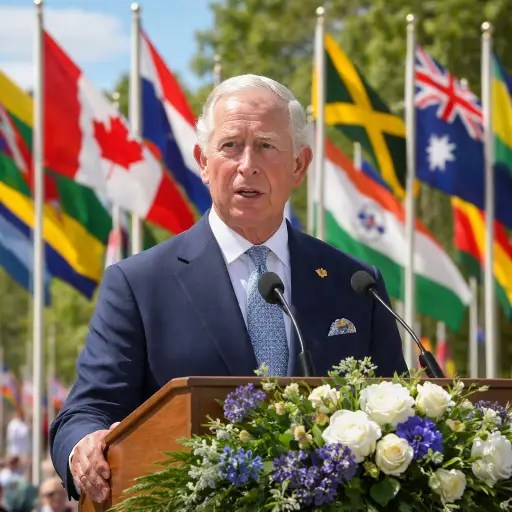
Ahead of Commonwealth Day the monarch urges solidarity amid global wars climate pressure and geopolitical tension
As Commonwealth nations prepare for their annual moment of reflection and cooperation King Charles has issued a message urging renewed unity across the diverse association of countries connected by shared history diplomacy and cultural ties warning that the world is entering a period of growing uncertainty that demands stronger international cooperation.
The statement comes as global tensions continue to reshape the geopolitical landscape with wars ongoing in several regions economic pressures affecting many governments and diplomatic relationships increasingly tested by competing strategic interests.
In his message the British monarch described the Commonwealth as a unique international network capable of encouraging dialogue between nations of different sizes political systems and cultural traditions while promoting collaboration on issues that affect millions of people.
Charles emphasized that cooperation across borders remains essential during times of instability arguing that communication and mutual respect are among the most effective tools available for preventing conflict and maintaining long term global stability.
The King noted that armed conflicts around the world continue to create humanitarian crises forcing families to flee their homes disrupting economies and placing additional strain on international aid organizations and diplomatic institutions.
He said the Commonwealth has the ability to bring together governments and civil societies in ways that encourage practical solutions particularly when nations choose cooperation instead of confrontation.
Climate change formed another major focus of the monarch’s remarks reflecting a subject that has long been associated with his public advocacy and environmental work.
Many Commonwealth countries face immediate environmental threats including rising sea levels destructive storms drought and ecosystem loss challenges that disproportionately affect smaller and developing states.
Charles suggested that collective action within the Commonwealth could strengthen global responses to climate change by supporting renewable energy initiatives environmental protection policies and sustainable economic development.
The monarch also highlighted the importance of economic cooperation noting that trade education and technological exchange among member nations could play a significant role in strengthening resilience during periods of global disruption.
Although the Commonwealth is not a formal economic alliance its shared institutions legal traditions and diplomatic connections have historically helped encourage investment cooperation and academic partnerships.
The King’s message also arrives at a time when the British monarchy faces evolving expectations within several Commonwealth countries where debates about constitutional ties to the Crown have intensified in recent years.
Some nations have already transitioned to republican systems while others continue to examine the role of the monarchy within their political structures prompting broader discussions about the future of the association.
Observers say Charles has taken a pragmatic approach acknowledging that each country has the sovereign right to determine its own constitutional path while emphasizing that cooperation within the Commonwealth can continue regardless of political arrangements.
This perspective reflects a broader effort to present the Commonwealth primarily as a voluntary partnership focused on development education cultural exchange and environmental cooperation rather than as a structure defined by historical legacy.
The King’s appeal also carries symbolic significance as he continues to shape the early years of his reign following the long leadership of Queen Elizabeth II whose decades of engagement helped reinforce the Commonwealth’s role in international diplomacy.
During her reign the late monarch visited numerous member states and promoted the association as a platform where diverse nations could work together despite differences in geography culture and political systems.
Diplomats note that the Commonwealth has gradually evolved into a modern network aimed at encouraging democratic governance sustainable development and dialogue among independent states.
Yet the organization still faces questions about its relevance in a rapidly changing world where regional alliances and shifting geopolitical priorities increasingly shape international cooperation.
Some analysts believe the Commonwealth can offer flexible diplomatic channels that complement larger global institutions particularly when formal negotiations stall or political tensions limit broader cooperation.
Public responses to the King’s call for unity have generally welcomed the emphasis on solidarity though many leaders stress that meaningful cooperation will depend on concrete initiatives and sustained political commitment.
Youth engagement has become an important theme within Commonwealth discussions because a large proportion of the association’s population is under the age of thirty creating both opportunities and responsibilities for future leadership.
Educational exchanges cultural partnerships and collaborative research programs continue to strengthen ties between societies across the Commonwealth helping to build relationships that extend beyond official diplomacy.
As events and ceremonies approach across member nations the King’s message serves as a reminder that the strength of the Commonwealth ultimately depends on the willingness of its members to work together in confronting shared global challenges.
In emphasizing unity during a time of uncertainty Charles has sought to reinforce the idea that cooperation among nations remains one of the most powerful tools for addressing the political environmental and humanitarian issues shaping the modern world.

 The Tower Post