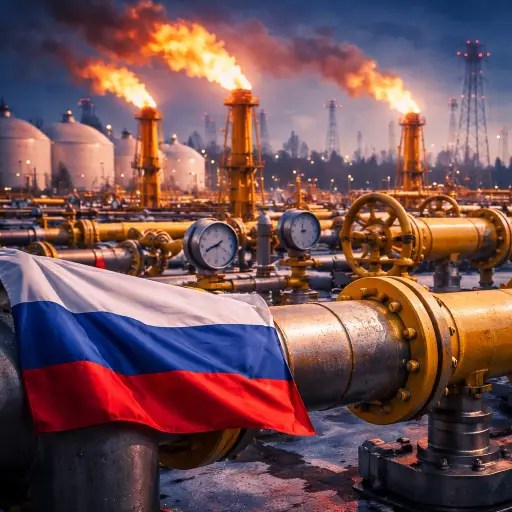
Warning of potential gas supply cuts rattles traders and raises fears of higher energy prices across the continent
European energy markets are again facing uncertainty after Russia signaled it could halt natural gas supplies to several European destinations if geopolitical tensions continue to escalate. The warning, delivered through official statements and state-linked media commentary, has revived concerns about the continent’s lingering vulnerability to supply disruptions even after years of diversification efforts following earlier crises.
Traders across major European energy hubs reacted quickly, pushing natural gas futures higher and increasing volatility in electricity markets. The possibility that flows could be interrupted, even temporarily, has prompted market participants to reassess risk, particularly as Europe continues to rely on imported fuel to stabilize power generation and heating demand.
Russia has historically used its vast energy exports as a strategic tool in its relations with neighboring regions and European economies. The latest warning suggests Moscow remains willing to deploy energy leverage as part of a broader geopolitical strategy, reminding policymakers that energy security remains closely intertwined with foreign policy and security considerations.
Energy analysts say the immediate threat may be partly rhetorical, designed to signal Moscow’s dissatisfaction with European policies and sanctions. However, the memory of previous supply disruptions means even the suggestion of a halt carries real weight in commodity markets, where expectations can drive price swings as much as actual physical shortages.
European governments have spent recent years attempting to reduce dependence on Russian gas by expanding liquefied natural gas imports, increasing renewable capacity, and building new interconnections between national grids. These efforts have improved resilience, but officials acknowledge that the system still faces vulnerabilities during periods of tight global supply.
Natural gas remains a key fuel for electricity generation and industrial production across many parts of Europe. If Russian exports were significantly reduced or stopped, utilities and manufacturers could face higher costs, forcing companies to adjust operations and potentially passing price increases on to consumers.
The warning has also drawn attention to the complex infrastructure network that connects Russian gas fields to European markets. Pipelines crossing Eastern Europe and the Baltic region have long served as major conduits for fuel deliveries, and any disruption along those routes could have cascading effects throughout the regional energy system.
Financial markets are closely monitoring the situation, with investors watching both diplomatic developments and physical flow data. Energy companies, utilities, and large industrial consumers are adjusting hedging strategies as they prepare for potential price spikes or sudden shifts in supply patterns.
The European Commission has reiterated that the bloc is better prepared than in previous years to manage supply shocks. Officials point to expanded gas storage levels, diversified import sources, and emergency coordination mechanisms designed to ensure that member states can support each other in the event of shortages.
Despite these preparations, analysts caution that a complete halt of Russian gas flows would still tighten markets significantly. Global demand for liquefied natural gas remains strong, meaning Europe would face intense competition from Asian buyers if it attempted to replace large volumes of pipeline gas in a short period of time.
The geopolitical dimension of the dispute adds another layer of complexity. Diplomatic tensions between Russia and Western governments have intensified across multiple fronts, and energy has increasingly become part of the strategic messaging exchanged between capitals.
For households and businesses across Europe, the stakes are practical as well as political. Higher gas prices typically translate into increased electricity costs and more expensive heating bills, amplifying inflationary pressures that governments have struggled to contain in recent years.
Energy experts note that the current situation illustrates how global energy systems remain vulnerable to geopolitical shocks even as countries pursue long term transitions toward cleaner energy sources. The shift toward renewables may reduce dependence on fossil fuels over time, but the transition period still requires stable supplies of conventional energy.
As markets absorb the latest signals from Moscow, attention is turning to whether diplomatic channels can ease tensions or whether the standoff will deepen. For now, the mere possibility of a supply cutoff is enough to keep traders on edge and policymakers focused on the fragile balance that underpins Europe’s energy security.

 The Tower Post