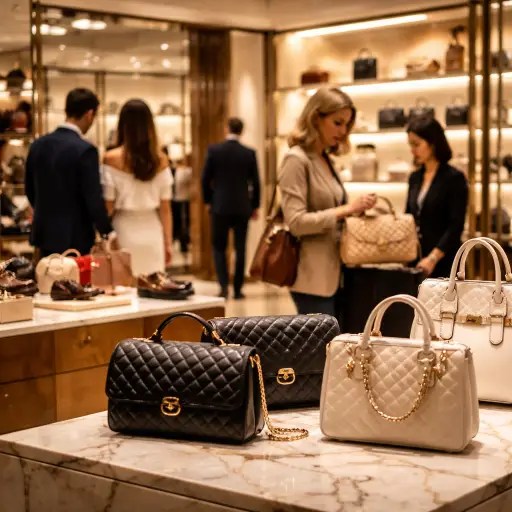
Wealthy shoppers grow more selective as inflation and economic uncertainty ripple through the global luxury market
The world’s largest luxury fashion houses are signaling a shift in the mood of high‑end consumers, warning that even affluent shoppers are beginning to slow their spending as economic uncertainty lingers across major global markets. Executives across the European luxury sector say the change is subtle but unmistakable, appearing first in flagship boutiques and now spreading across online channels and travel retail.
Luxury brands spent the past several years riding a wave of remarkable growth driven by wealthy consumers eager to indulge in fashion, jewelry, and premium accessories after pandemic disruptions. That momentum is now showing signs of fatigue as inflation, market volatility, and geopolitical tensions encourage a more cautious approach among customers who were once considered nearly immune to economic pressure.
In Paris, Milan, and London, executives from leading luxury groups say foot traffic remains steady but purchasing patterns are shifting. Shoppers are browsing longer, comparing collections more carefully, and increasingly delaying large purchases such as leather goods, watches, and high‑end jewelry. Industry analysts say the behavior suggests that wealthy consumers are not abandoning luxury entirely, but are becoming far more selective.
A major source of concern for European fashion houses is the cooling demand from Chinese consumers, long considered the engine of global luxury growth. After years of rapid expansion fueled by rising wealth and international travel, spending from Chinese buyers appears to be moderating as the country navigates uneven economic recovery and persistent concerns about property markets and household confidence.
Luxury executives also point to softer demand from the United States, another pillar of the global luxury ecosystem. American consumers with high incomes continue to shop, but many are adjusting their budgets as elevated borrowing costs and fluctuating investment markets reshape perceptions of financial security. Retailers say customers who once purchased multiple items per visit are increasingly leaving stores with just one carefully chosen piece.
Some luxury brands are noticing a growing interest in timeless designs rather than seasonal statements. Classic handbags, discreet jewelry, and understated tailoring are attracting renewed attention as consumers seek pieces that hold long‑term value rather than trend‑driven purchases. The shift reflects a broader change in attitude among affluent shoppers who appear to be prioritizing durability and longevity over conspicuous consumption.
Analysts say the slowdown does not necessarily signal a collapse of the luxury industry, but it does mark a turning point after years of unusually strong demand. The luxury sector benefited from an extraordinary period in which wealthy consumers accumulated savings and redirected spending from travel and entertainment toward high‑end goods. As global lifestyles normalize, that exceptional demand is gradually fading.
Brands that expanded aggressively during the boom years are now confronting the possibility of a more restrained market. Several companies have begun quietly reviewing expansion plans, slowing store openings, and adjusting inventory strategies in response to softer sales momentum. Some groups are also placing greater emphasis on exclusive experiences, private events, and personalized services designed to maintain loyalty among top clients.
Luxury executives emphasize that aspirational shoppers remain an important part of the industry, but this group is particularly sensitive to economic shifts. Rising living costs across many countries have squeezed middle‑income consumers who occasionally purchase luxury items as milestones or status symbols. As a result, brands that rely heavily on entry‑level products may feel the slowdown more sharply than those focused on ultra‑wealthy clientele.
The broader luxury ecosystem, including watchmakers, jewelry houses, and high‑end department stores, is also watching the shift closely. Suppliers, designers, and artisans depend on consistent demand from the sector, meaning even a modest slowdown can ripple through production networks that stretch from European workshops to global retail hubs.
Despite the caution, industry leaders insist the long‑term outlook for luxury remains positive. Global wealth continues to grow in many regions, and new generations of affluent consumers are emerging in markets across Asia, the Middle East, and parts of Africa. Luxury brands believe these demographics will eventually support renewed growth once economic confidence stabilizes.
Still, executives acknowledge that the coming period could represent the first meaningful slowdown the luxury sector has faced in years. After an era defined by rapid expansion and record profits, the industry may now be entering a more complex phase in which success depends not only on prestige and craftsmanship but also on adaptability to changing consumer psychology.



 The Tower Post