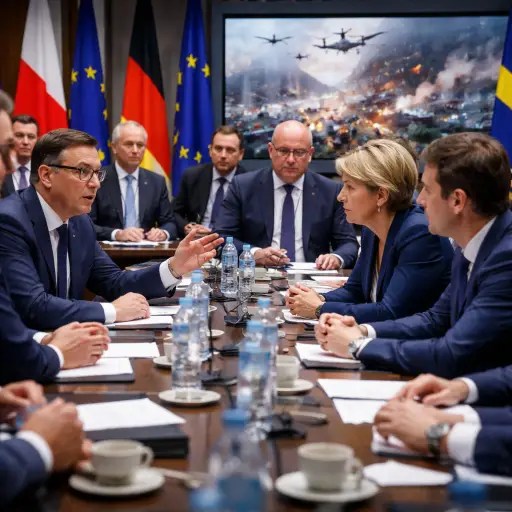
The expanding conflict involving Iran is exposing deep divisions within Europe over security strategy, diplomacy, and the continent’s relationship with the United States. As tensions escalate in the Middle East, governments across the European Union are debating whether the moment calls for closer coordination with Washington or a more independent European diplomatic approach.
The debate reflects long-standing differences about Europe’s global role. Some governments argue that the growing instability surrounding Iran demonstrates the importance of reinforcing transatlantic security ties and presenting a unified Western response. Others believe Europe must maintain diplomatic flexibility and avoid becoming locked into an escalating confrontation that could limit opportunities for negotiation and de-escalation.
Several European countries, particularly in Central and Eastern Europe, emphasize the importance of strong security cooperation with the United States. Leaders in these countries frequently point to their reliance on NATO and longstanding American defense commitments, arguing that moments of geopolitical crisis require clear deterrence and coordinated action among allies.
In contrast, a number of Western European governments have urged caution. Officials in these countries warn that automatically aligning with Washington’s strategy could reduce Europe’s ability to act as a mediator and potentially deepen the conflict. They argue that the European Union should preserve space for diplomacy, humanitarian engagement, and political dialogue that might otherwise be overshadowed by military considerations.
Within European institutions, the discussion has revived a familiar question: whether the European Union should primarily function as a diplomatic power capable of mediating global crises or as a security actor operating firmly within the broader Western alliance framework. The Iran conflict has intensified this debate, forcing policymakers to weigh the benefits of strategic autonomy against the advantages of alliance unity.
Supporters of stronger alignment with Washington argue that Europe’s credibility depends on demonstrating solidarity with its closest security partner during periods of geopolitical tension. In their view, hesitation or visible divisions among European governments could weaken deterrence and signal fragmentation at a time when global rivalries are intensifying.
Others, however, fear that an overly security-focused response could leave Europe reacting to decisions largely shaped outside the continent. They argue that the European Union must retain the ability to define its own diplomatic priorities, particularly in regions where European economic ties, migration concerns, and humanitarian responsibilities are deeply interconnected.
The widening conflict involving Iran has therefore become more than a regional crisis; it is increasingly seen as a test of Europe’s political identity. Officials in Brussels and national capitals are debating how the EU can reconcile the realities of military alliances with the aspiration to act as an independent geopolitical actor on the global stage.
Economic and energy concerns are also shaping the discussion. European policymakers are aware that disruptions connected to the conflict could affect energy routes, global markets, and inflationary pressures already challenging many European economies. These risks have led some governments to prioritize stabilization efforts and diplomatic engagement aimed at preventing broader economic shocks.
Public opinion across Europe adds another layer of complexity. In several countries, voters remain cautious about deeper military involvement in international conflicts after years of geopolitical crises and domestic economic challenges. Political leaders must therefore balance strategic considerations with the potential domestic consequences of participating in or supporting expanded military operations.
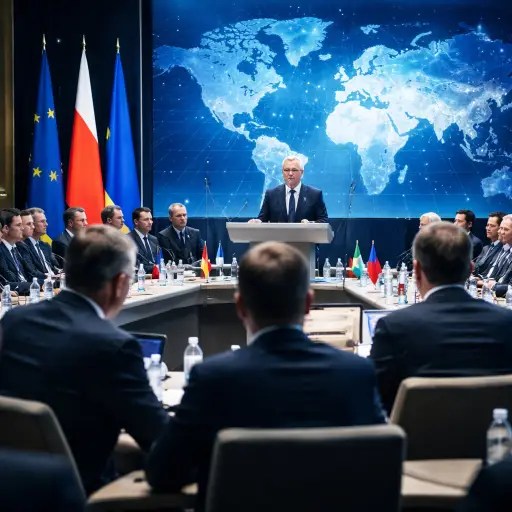
Despite the differences in approach, European governments broadly agree that the continent cannot ignore a conflict with far-reaching global implications. Diplomatic consultations and emergency meetings among EU leaders have intensified as policymakers attempt to define a coordinated response.
The absence of a fully unified strategy remains evident. European officials continue to disagree on questions ranging from sanctions and diplomatic initiatives to the degree of military coordination with allies. Yet many acknowledge that resolving these disagreements will be essential if Europe hopes to maintain influence in shaping the outcome of the crisis.
As the conflict continues to evolve, the choices made by European leaders could shape the European Union’s global posture for years to come. Whether the bloc ultimately prioritizes deeper alignment with its transatlantic partners or moves toward a more autonomous diplomatic role, the Iran crisis is forcing Europe to confront fundamental questions about unity, strategy, and responsibility in an increasingly volatile international system.
 The Tower Post