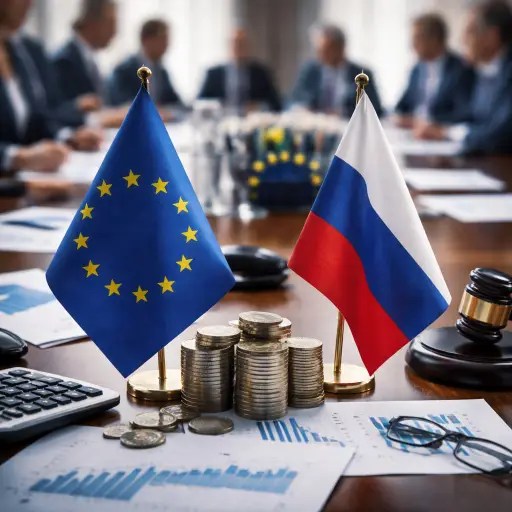
Diplomats finalize a major new package targeting Russia’s economy while fighting in Ukraine continues, signaling Europe’s determination to maintain pressure on the Kremlin.
As the conflict in Ukraine grinds on with no clear end in sight, the European Union is preparing another round of economic sanctions against Russia, marking what would become the bloc’s twentieth package since the full-scale invasion began. Diplomats in Brussels say negotiations have entered their final stage, and approval from member states could come within days if consensus holds.
The new measures are designed to reinforce the European strategy of sustained economic pressure on Moscow. EU officials argue that limiting Russia’s access to technology, financial networks and global markets remains a critical tool in supporting Ukraine while avoiding direct military confrontation between NATO and Russia.
According to diplomats familiar with the discussions, the upcoming package focuses on tightening existing restrictions rather than introducing an entirely new sanctions architecture. In particular, officials are examining ways to close loopholes that have allowed certain goods and technologies to reach Russia indirectly through third countries.
Over the past year, European investigators have documented an increase in so-called “sanctions circumvention,” where products manufactured in Europe or allied countries are exported to intermediary states before eventually appearing in Russian supply chains. The new package is expected to expand monitoring mechanisms and introduce penalties for companies that knowingly facilitate such routes.
One area of particular concern for EU policymakers is the flow of advanced electronics and industrial components that can be used in military equipment. Officials say preventing these items from reaching Russia has become a strategic priority, especially as Ukrainian authorities continue to report that foreign-made components are found inside Russian missiles and drones recovered on the battlefield.
Another element under discussion involves additional restrictions on Russia’s energy sector. While Europe has already significantly reduced its dependence on Russian oil and gas since the invasion, officials believe further measures could still limit Moscow’s ability to generate revenue from global energy exports.
The sanctions may also target segments of Russia’s financial infrastructure. Diplomats are exploring ways to restrict additional banks and financial institutions from accessing European markets, building on earlier steps that cut several major Russian lenders off from international payment systems.
European officials emphasize that sanctions remain part of a broader strategy aimed at weakening Russia’s capacity to sustain the war over the long term. While the immediate impact of each individual package can vary, policymakers argue that the cumulative effect has gradually constrained Moscow’s economic flexibility.
“Sanctions are designed as pressure over time,” said one EU diplomat involved in the negotiations. “The objective is to reduce Russia’s ability to finance and equip its war effort while supporting Ukraine’s sovereignty and security.”
Since the beginning of the war, the EU has imposed sweeping restrictions on Russian trade, financial transactions, technology transfers and energy exports. The measures have targeted hundreds of individuals and entities, including political figures, military officials and companies linked to the Kremlin.
Despite these steps, Russia’s economy has shown resilience in some sectors, partly due to increased trade with countries outside the Western sanctions regime. Analysts say this reality has pushed European policymakers to focus more heavily on enforcement and coordination with international partners.
The United States, the United Kingdom and several allied nations have introduced parallel sanctions, creating what officials describe as a coordinated pressure campaign against Moscow. EU diplomats say cooperation with these partners remains essential in ensuring that sanctions remain effective.
At the same time, the sanctions debate within Europe continues to reflect the delicate balance between political unity and economic concerns. Some EU member states have historically expressed caution about measures that could impact their domestic industries or energy security.
However, the ongoing conflict in Ukraine has largely reinforced political cohesion within the bloc. European leaders have repeatedly stressed that maintaining a unified stance against Russia remains a central pillar of the EU’s foreign policy.
The forthcoming sanctions package also arrives at a moment when Ukraine continues to call for sustained international support. Ukrainian officials argue that economic pressure on Russia plays a crucial role in limiting the resources available for the war.
For Kyiv, each additional sanctions round is seen as another signal of Western commitment. Ukrainian diplomats have urged European partners not only to maintain restrictions but also to strengthen enforcement mechanisms.
Meanwhile, Moscow has consistently condemned Western sanctions, describing them as illegitimate and counterproductive. Russian officials argue that the measures have failed to destabilize the country’s economy and instead accelerated efforts to shift trade toward Asia and other regions.
Economic analysts note that while Russia has managed to adapt in some areas, the long-term effects of isolation from Western technology and financial systems may become increasingly significant. Limitations on access to advanced components, investment and global markets could gradually affect industrial capacity and economic growth.
Within the EU, policymakers frame the sanctions strategy as part of a broader effort to uphold international law and deter aggression. Officials stress that the measures are not only about the present conflict but also about reinforcing the principles governing European security.
If approved, the new sanctions package would mark another milestone in the EU’s evolving response to the war. The repeated rounds of restrictions illustrate how economic measures have become one of Europe’s primary instruments of geopolitical influence.
For now, diplomats say discussions remain focused on ensuring that all member states agree on the final details. Once approved, the measures would add another layer to the complex sanctions framework already in place.
As negotiations conclude in Brussels, the message from European leaders remains consistent: the pressure on Moscow will continue as long as the conflict persists, and the EU is prepared to refine its strategy to maintain that pressure over time.


 The Tower Post