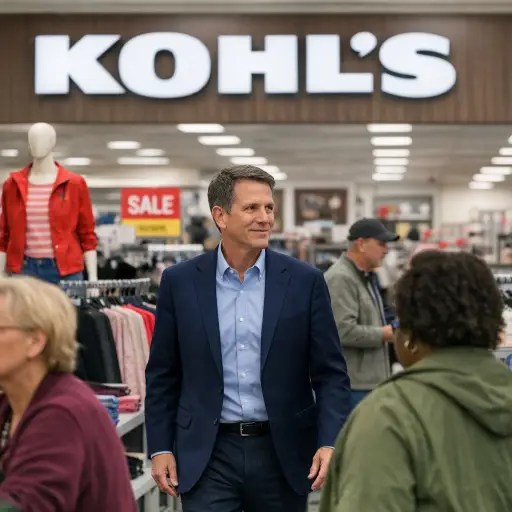
Improving sales trends and strategic restructuring raise cautious optimism for the U.S. department store chain
The American department store sector has spent much of the past decade navigating shifting consumer habits, intense online competition, and evolving expectations around value and convenience. Against this backdrop, Kohl’s is attempting to engineer a fresh start. Early signs from the opening months of the year suggest that the company’s effort to reset its retail strategy may be beginning to gain traction.
Executives at the Wisconsin-based retailer say sales performance at the start of the year has shown measurable improvement compared with recent periods of stagnation. While the gains remain modest, they represent an encouraging signal for a company that has faced persistent pressure from both digital-first competitors and discount chains targeting price-conscious shoppers.
The renewed optimism is closely tied to the arrival of Kohl’s new chief executive, who has moved quickly to reshape the company’s direction. Since taking the helm, the leadership team has begun implementing a series of operational and merchandising changes aimed at simplifying the business and restoring consistent growth.
Industry observers say the company’s challenge is not merely about boosting short-term sales. Instead, it must redefine its place in a retail environment where traditional department stores have struggled to remain relevant.
A Strategy Focused on Core Retail Strengths
The leadership overhaul comes at a time when Kohl’s is re-examining nearly every aspect of its retail model. The company’s strategy centers on refocusing on core strengths: accessible fashion, recognizable national brands, and convenient shopping experiences across both physical stores and digital channels.
Executives have emphasized the importance of making stores easier to navigate and more appealing to everyday shoppers. Several pilot initiatives have begun adjusting store layouts, streamlining product assortments, and highlighting key categories such as casual apparel, activewear, and home goods.
The company is also sharpening its promotional approach. Rather than relying heavily on broad discounting, Kohl’s is experimenting with more targeted offers designed to encourage repeat visits while protecting margins.
Retail analysts say these moves reflect a broader shift across the department store industry. Instead of competing directly with e-commerce giants on endless assortment, traditional retailers are focusing on curated selections and stronger brand identity.
“Kohl’s is trying to reconnect with the shopper who values convenience and recognizable brands without feeling overwhelmed,” said one retail consultant familiar with the sector. “The question is whether the company can sustain that focus long enough to rebuild momentum.”
Leadership Restructuring and Operational Changes
Beyond the sales floor, the company’s internal structure is also undergoing adjustments. The new leadership team has reorganized several business units in an effort to accelerate decision-making and reduce operational complexity.
Among the key priorities is improving inventory management. In recent years, the retailer faced challenges balancing supply with shifting consumer demand, which contributed to markdowns and inconsistent product availability.
By tightening supply chain coordination and focusing on data-driven forecasting, Kohl’s hopes to align merchandise more closely with seasonal trends and regional preferences.
The restructuring also aims to strengthen collaboration between the company’s digital and physical retail teams. Executives have repeatedly stressed that the future of department store retail lies in a seamless integration of online convenience and in-store experience.
The Role of Stores in a Changing Retail Landscape
Despite the steady growth of online shopping, Kohl’s continues to view its nationwide store network as a strategic advantage. The company believes its locations can function as both retail destinations and logistical hubs for digital orders.
Efforts are underway to enhance in-store pickup services and streamline returns for online purchases. By making stores more central to the overall shopping journey, the company hopes to drive additional foot traffic while improving customer satisfaction.
Retail analysts note that this approach mirrors strategies used by several successful omnichannel retailers. Physical stores, once viewed as a liability in the age of e-commerce, are increasingly being repositioned as flexible assets.
Still, turning that potential into measurable growth requires careful execution. For Kohl’s, the balance between investing in store upgrades and maintaining cost discipline will be crucial.
Analysts Watching for Signs of a Turnaround
While early sales improvements have attracted attention, many analysts remain cautious about declaring a full recovery.
Department stores across the United States continue to face structural challenges, including declining mall traffic, evolving fashion trends, and intense price competition from off-price chains.
For Kohl’s, success will depend on maintaining consistent momentum rather than relying on isolated improvements. Analysts say the next several quarters will be critical in determining whether the company’s strategy can translate into sustained growth.
“The early indicators are encouraging,” said one market strategist who tracks the retail sector. “But investors want to see a clear pattern of progress before they conclude the turnaround is real.”
Consumer Sentiment and Competitive Pressures
Another factor influencing Kohl’s outlook is the broader economic environment. Consumer spending patterns remain uneven, with many households balancing discretionary purchases against rising living costs.
Retailers that offer a combination of value and recognizable brands may have an advantage in this climate. Kohl’s has long positioned itself in that middle ground between premium department stores and deep-discount chains.
The company’s partnerships with major apparel and lifestyle brands continue to play an important role in attracting shoppers. Executives believe strengthening these relationships will help differentiate Kohl’s merchandise from that of competitors.
At the same time, the retailer must contend with aggressive competition from online marketplaces and specialty chains that have captured significant market share in categories such as athletic wear and home décor.
A Critical Moment for the Brand
For Kohl’s, the coming year represents a pivotal chapter. The company’s new leadership has signaled a willingness to rethink long-standing strategies while preserving the elements of the brand that resonate with loyal customers.
Early improvements in sales provide a measure of confidence, but the broader test lies ahead: proving that the retailer can adapt to a transformed shopping landscape.
If the current momentum continues, Kohl’s may begin to reestablish itself as a stable presence in the evolving American retail market. If not, the company will face renewed questions about the long-term viability of traditional department store models.
For now, analysts and investors alike are watching closely, searching for signs that Kohl’s retail reset is more than just a promising start.




 The Tower Post