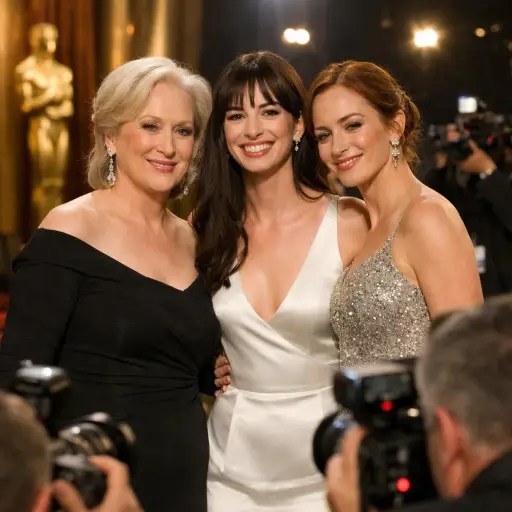
Meryl Streep, Anne Hathaway, and Emily Blunt reunite on the Oscars stage, celebrating a film whose style, wit, and cultural influence continue to shape fashion and cinema.
In a ceremony filled with cinematic triumphs and emotional speeches, one moment captured the collective attention of film lovers and fashion enthusiasts alike: the reunion of the original trio from The Devil Wears Prada. When Meryl Streep, Anne Hathaway, and Emily Blunt appeared together on the Oscars stage, the audience erupted in applause, instantly transforming the segment into one of the most talked-about highlights of the awards season.
Nearly two decades after the beloved fashion comedy first captivated audiences, the reunion carried both nostalgia and cultural resonance. The film, which follows the demanding world of high fashion through the eyes of a young assistant navigating the formidable editor Miranda Priestly, remains one of the most enduring fashion films in modern cinema. Its influence has extended far beyond the screen, shaping discussions about workplace ambition, personal identity, and the power of style.
The Oscars appearance was designed as a tribute to that legacy. As the three actors stepped onto the stage together, the atmosphere inside the theater shifted noticeably. Cameras captured delighted reactions from the audience, many of whom grew up quoting the film’s sharp dialogue or admiring its parade of designer looks. Social media platforms quickly filled with commentary celebrating the reunion, with fans describing it as one of the most anticipated moments of the ceremony.
Meryl Streep’s portrayal of Miranda Priestly remains one of the defining performances of her career. The character—cool, commanding, and quietly intimidating—became a pop culture icon almost instantly. Her presence at the Oscars reunion brought the same sense of authority that defined the film, reminding viewers why the character continues to resonate with audiences who recognize both the humor and the complexity behind her icy composure.
Anne Hathaway, who played aspiring journalist Andy Sachs, represented the audience’s entry point into the film’s glamorous yet unforgiving world. Her character’s transformation—from uncertain newcomer to confident professional—mirrored the challenges faced by many young professionals stepping into demanding industries. The role helped establish Hathaway as one of Hollywood’s most versatile leading actresses and remains a defining early chapter of her career.
Emily Blunt’s performance as the sharp-tongued assistant Emily Charlton added another layer of memorable humor and ambition to the story. Her quick wit and perfectly timed sarcasm turned many of the film’s supporting moments into fan favorites. Over time, her character became emblematic of the high-pressure culture of fashion publishing, capturing both its glamour and its relentless expectations.
Together, the three actors recreated the chemistry that made the film so compelling. Their shared appearance on stage felt less like a scripted segment and more like a reunion among colleagues who helped create a cultural phenomenon. The audience responded with enthusiasm, recognizing the rare opportunity to see the trio together again in such a prominent setting.
The fashion industry, unsurprisingly, embraced the moment as well. For years, The Devil Wears Prada has served as a reference point for designers, stylists, and editors discussing the intersection of fashion and storytelling. The film’s wardrobe—filled with luxury brands and meticulously curated outfits—helped elevate costume design into a central narrative element rather than mere visual decoration.
At the Oscars ceremony, that fashion legacy was visible once again. Each actor arrived with a red-carpet look that paid subtle homage to the elegance and drama associated with the film. The reunion therefore became not only a celebration of cinematic nostalgia but also a reminder of how style itself can function as storytelling.
Industry observers noted that the moment highlighted a broader trend in Hollywood: the growing appreciation for films whose cultural impact deepens over time. While the movie originally succeeded as a smart, entertaining comedy, its themes about ambition, identity, and professional sacrifice have aged remarkably well. Today, the story resonates with audiences navigating modern workplaces that still grapple with similar dynamics.
Fans have long speculated about the possibility of revisiting the story in some form, whether through a sequel or another creative project involving the original cast. Although the Oscars reunion offered no official announcements, it rekindled excitement around the characters and their world. Conversations online quickly turned to favorite scenes, unforgettable quotes, and the film’s enduring relevance.
Perhaps the most striking aspect of the reunion was the sense of shared memory it created. Films often fade from public conversation as new releases dominate the cultural landscape. Yet The Devil Wears Prada has remained firmly embedded in popular culture, continually rediscovered by new audiences through streaming platforms and social media.
By bringing the cast together at one of cinema’s most prestigious ceremonies, the Oscars acknowledged that lasting impact. The moment celebrated not only a beloved film but also the unique intersection of fashion, humor, and storytelling that made it unforgettable.
As the applause subsided and the ceremony continued, the reunion left a lingering impression: a reminder that certain stories never truly go out of style. Much like the iconic characters who brought it to life, The Devil Wears Prada continues to command attention—effortlessly, confidently, and with impeccable style.

 The Tower Post