
Negotiators revive long-delayed talks on digital commerce, tariffs, and resilient supply chains as Brussels and New Delhi aim to forge one of the world’s largest economic partnerships.
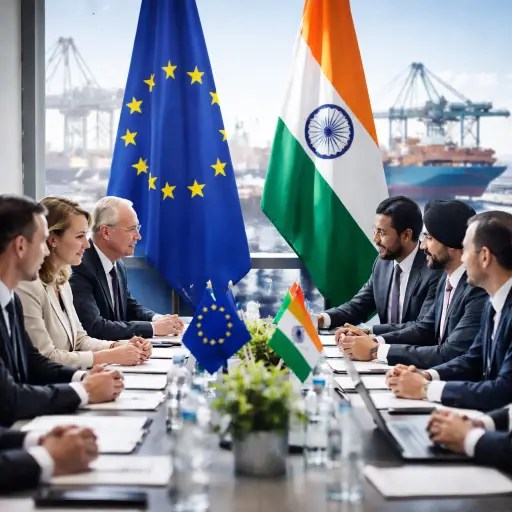
As global trade patterns shift and geopolitical tensions reshape supply chains, the European Union and India are intensifying efforts to finalize a sweeping free trade agreement that could redefine economic ties between the two major markets. Negotiators from both sides have recently resumed discussions after years of stalled progress, signaling renewed political momentum behind a partnership that officials say could become one of the most significant trade deals in the world.
The talks are part of a broader effort by both Brussels and New Delhi to diversify economic relationships and strengthen cooperation in strategic industries. With the European Union representing one of the largest single markets and India emerging as one of the fastest-growing major economies, policymakers believe the potential benefits of a comprehensive agreement are substantial.
At the center of the negotiations are several key pillars: digital trade, tariff reductions, and cooperation on supply chains. Each of these areas reflects changing realities in global commerce, where data flows, technological standards, and manufacturing resilience have become as important as traditional trade in goods.
For European officials, India represents a vast and expanding market with rising demand for high-quality goods, services, and advanced technologies. European companies have long sought improved access to India’s market, particularly in sectors such as automobiles, pharmaceuticals, machinery, and financial services. Lower tariffs and clearer regulatory frameworks could significantly expand business opportunities for firms across the continent.
Indian negotiators, meanwhile, are seeking improved access to European markets for their own exports, including textiles, agricultural products, and a growing range of technology services. India’s thriving digital sector has become a major focus in the discussions, reflecting the country’s ambition to strengthen its role as a global hub for innovation and digital services.
Digital trade has emerged as one of the most complex elements of the negotiations. Both sides are working to bridge differences over data governance, privacy standards, and digital market regulations. European policymakers emphasize strong consumer protections and data safeguards, while India is aiming to preserve policy flexibility as it builds its domestic digital economy.
Despite these differences, officials involved in the talks say there is growing recognition that cooperation in the digital sphere is essential. As cross-border services expand and companies increasingly rely on data flows, establishing clear rules could unlock new opportunities for technology firms and startups across both regions.
Tariffs are another major focus of the negotiations. Many European products entering India currently face relatively high import duties, a long-standing concern for European manufacturers. Reducing these barriers could significantly increase bilateral trade volumes and deepen industrial cooperation.
At the same time, India has traditionally been cautious about rapid tariff liberalization, particularly in sectors considered sensitive for domestic producers. Negotiators are therefore exploring phased reductions and sector-specific arrangements designed to balance market access with economic stability.
Supply-chain resilience has also become a central theme in the discussions. In recent years, disruptions to global logistics networks and shifting geopolitical alliances have prompted governments to rethink how goods are produced and transported. European and Indian officials see closer cooperation as a way to strengthen manufacturing networks and reduce reliance on single-country supply chains.
For India, collaboration with European companies could support the country’s broader ambitions to expand domestic manufacturing and move up global value chains. European firms, in turn, view India as an increasingly attractive destination for investment, particularly in industries such as renewable energy, pharmaceuticals, electronics, and advanced engineering.
Beyond economics, the potential agreement carries significant geopolitical weight. The European Union has been seeking deeper engagement with partners across the Indo-Pacific region, reflecting the area’s growing importance in global trade and security dynamics. Strengthening ties with India fits squarely within that broader strategic vision.
India, meanwhile, has been expanding its network of trade agreements as it seeks to integrate more deeply into the global economy while maintaining strategic autonomy. A comprehensive deal with the European Union would represent a major milestone in that effort.
Analysts note that the scale of a potential EU–India trade agreement could place it among the largest economic partnerships in the world. Together, the two economies represent a massive consumer base, significant industrial capacity, and rapidly growing technological sectors.
However, reaching a final agreement will require navigating complex political and regulatory questions. Previous attempts to finalize a trade deal stalled amid disagreements over market access, intellectual property rights, and environmental standards. While both sides appear determined to avoid repeating past deadlocks, significant negotiation remains ahead.
Still, the renewed pace of discussions suggests a shift in political priorities. Economic diversification, technological cooperation, and resilient supply chains have moved higher on the agenda for governments across the globe. In that context, closer ties between Europe and India increasingly appear not only desirable but strategically necessary.
If negotiators succeed in bridging the remaining gaps, the resulting partnership could reshape trade flows between the two regions and create new opportunities for businesses and consumers alike. For now, the negotiations remain a work in progress—but momentum is clearly building.
As diplomats and trade experts continue their discussions, the outcome of these talks could mark the beginning of a new chapter in economic relations between Europe and one of the world’s most dynamic emerging powers.



 The Tower Post